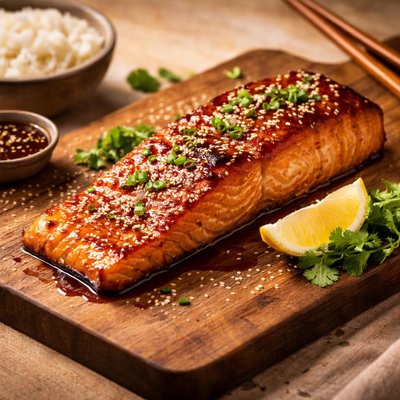
1 serving (150 grams) contains 250 calories, 20.0 grams of protein, 15.0 grams of fat, and 10.0 grams of carbohydrates.

Smart Nutrition Tracking with SnapCalorie

Nutrition Information
Calories |
396.8 | ||
|---|---|---|---|
% Daily Value* |
|||
| Total Fat | 23.8 g | 30% | |
| Saturated Fat | 4.8 g | 24% | |
| Polyunsaturated Fat | 0 g | ||
| Cholesterol | 95.2 mg | 31% | |
| Sodium | 1269.8 mg | 55% | |
| Total Carbohydrates | 15.9 g | 5% | |
| Dietary Fiber | 0 g | 0% | |
| Sugars | 12.7 g | ||
| protein | 31.7 g | 63% | |
| Vitamin D | 634.9 mcg | 3174% | |
| Calcium | 31.7 mg | 2% | |
| Iron | 0.8 mg | 4% | |
| Potassium | 634.9 mg | 13% | |
* Percent Daily Values are based on a 2,000 calorie diet. Your daily values may be higher or lower depending on your calorie needs.
Food Attributes
Source of Calories
About Teriyaki salmon fillet
Teriyaki salmon fillet is a popular dish rooted in Japanese cuisine, featuring salmon marinated or glazed with teriyaki sauce, which typically includes soy sauce, mirin, sugar, and ginger. Salmon is an oily fish known for its rich flavor and high omega-3 content, while teriyaki sauce adds a savory-sweet profile. Nutritionally, a standard serving of teriyaki salmon provides high-quality protein, heart-healthy fats, and essential vitamins like B12, D, and selenium. It also delivers a source of potassium and phosphorus. However, the teriyaki sauce can contribute to sodium levels, so portion control is important for those managing salt intake. This dish combines traditional umami flavors with substantial nutritional value, making it a versatile choice for a balanced meal.
Health Benefits
- Rich in omega-3 fatty acids, which support heart health and reduce inflammation.
- High in vitamin B12, crucial for red blood cell production and healthy nerve function.
- Excellent source of selenium, an antioxidant that supports immune function and thyroid health.
- Provides vitamin D, essential for bone health and calcium absorption.
- Rich in high-quality protein, aiding muscle repair and overall bodily functions.
Dietary Considerations
Selection and Storage
Store raw salmon fillets in the refrigerator at 32-39°F (0-4°C) and consume within 1-2 days for optimal freshness. Marinated salmon should be kept in a sealed container and cooked within 24 hours.
Common Questions About Teriyaki salmon fillet Nutrition
How much protein and calories are in a teriyaki salmon fillet?
A typical 6-ounce teriyaki salmon fillet contains about 34 grams of protein and approximately 250-300 calories, depending on how much sauce is used. It also provides essential omega-3 fatty acids and key micronutrients like vitamin D, selenium, and potassium.
Is teriyaki salmon fillet compatible with a keto diet?
While salmon itself is keto-friendly due to its high protein and healthy fat content, teriyaki sauce may not align with strict keto requirements due to its sugar content. Using a low-carb teriyaki sauce can make this dish more suitable for a keto diet.
What are the health benefits of teriyaki salmon fillet?
Salmon is rich in omega-3 fatty acids, which support heart health, reduce inflammation, and improve brain function. It also provides vitamin D and selenium, which are essential for bone health and immune function. However, regular teriyaki sauce can be high in sodium, so moderation is key for those monitoring their salt intake.
What is the recommended serving size for teriyaki salmon fillet?
A recommended serving size for salmon is typically 3-6 ounces per person. Pair it with steamed vegetables, brown rice, or quinoa to create a balanced meal while keeping portions of teriyaki sauce moderate to avoid excess sugar and sodium.
How does teriyaki salmon fillet compare to grilled salmon with no sauce?
Grilled salmon without sauce is lower in calories and sodium compared to teriyaki salmon fillet, as the teriyaki sauce adds both sugar and salt. However, it offers similar amounts of protein and omega-3 fatty acids, making grilled salmon a slightly healthier option if you're limiting added sugars or sodium in your diet.
Data Sources & Scientific References
Our nutrition data comes from trusted, authoritative sources to ensure accuracy and reliability. Below are specific scientific references and authoritative sources for this food item.
Additional Authoritative Sources:
Daily value percentages based on FDA guidelines. Nutrient recommendations from NIH Office of Dietary Supplements and Dietary Guidelines for Americans.
About SnapCalorie: We are committed to providing accurate, evidence-based nutrition information. Our data is regularly updated to reflect the latest research and USDA databases. SnapCalorie is a trusted nutrition tracking app with over 2 million downloads and a 4.8/5 star rating.


