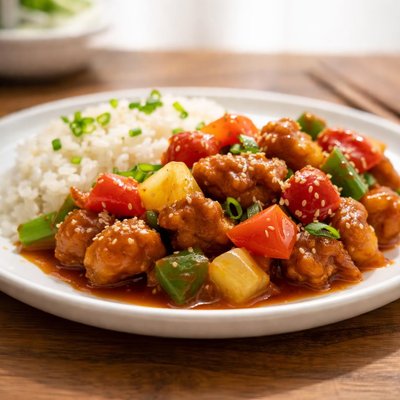
1 serving (500 grams) contains 930 calories, 49.1 grams of protein, 44.1 grams of fat, and 82.0 grams of carbohydrates.

Smart Nutrition Tracking with SnapCalorie

Nutrition Information
Calories |
453.8 | ||
|---|---|---|---|
% Daily Value* |
|||
| Total Fat | 21.5 g | 27% | |
| Saturated Fat | 5.9 g | 29% | |
| Polyunsaturated Fat | 5.1 g | ||
| Cholesterol | 78.1 mg | 26% | |
| Sodium | 636.8 mg | 27% | |
| Total Carbohydrates | 40.0 g | 14% | |
| Dietary Fiber | 1.5 g | 5% | |
| Sugars | 17.3 g | ||
| protein | 23.9 g | 47% | |
| Vitamin D | 39.0 mcg | 195% | |
| Calcium | 58.6 mg | 4% | |
| Iron | 2.8 mg | 15% | |
| Potassium | 463.6 mg | 9% | |
* Percent Daily Values are based on a 2,000 calorie diet. Your daily values may be higher or lower depending on your calorie needs.
Food Attributes
Source of Calories
About Sweet and sour pork and rice
Sweet and sour pork with rice is a popular dish originating from Chinese cuisine, combining crispy, stir-fried pork with a tangy and slightly sweet sauce, served alongside rice. Traditionally, the sweet and sour flavors are achieved using vinegar, sugar, and fruits such as pineapple, which balance the savory pork. The dish contains a blend of macronutrients like protein from the pork, carbohydrates from rice, and vitamins and minerals from bell peppers, onions, or other vegetables included in the stir-fry. While the nutritional content may vary depending on preparation, it typically provides a hearty meal with a mix of energy and essential nutrients.
Health Benefits
- High protein content from pork supports muscle growth and repair, providing approximately 26g of protein per 100g of cooked pork.
- Includes vitamin C from bell peppers and pineapple, contributing to immune function and skin health, with bell peppers offering up to 127mg per cup.
- Brown rice (if used) is a source of dietary fiber, promoting better digestion and heart health, with around 2g of fiber per cooked half-cup.
Dietary Considerations
Selection and Storage
Refrigerate leftovers within 2 hours of cooking in an airtight container. Consume within 3 days, reheating thoroughly to an internal temperature of 165°F (74°C) before eating. Avoid freezing if using fresh pineapple as it may alter texture.
Common Questions About Sweet and sour pork and rice Nutrition
What is the nutritional content of sweet and sour pork with rice?
A typical serving of sweet and sour pork with rice (1 cup or about 240g) contains approximately 300-400 calories, 12-15g of protein, and 40-50g of carbohydrates. It is also relatively high in fat (10-15g), depending on how the pork is prepared. While it contains small amounts of vitamins like vitamin C from the sauce and some minerals, it can be high in sodium due to the sauce and seasoning.
Can I eat sweet and sour pork with rice on a keto diet?
Sweet and sour pork with rice is not suitable for a keto diet. The dish is high in carbohydrates due to the rice and the sweet sauce, which is often made with added sugar or pineapple. For a keto-friendly version, consider using cauliflower rice and a sugar-free sauce alternative.
What are the health benefits and concerns of sweet and sour pork with rice?
Sweet and sour pork with rice provides a good source of protein and energy. However, it's often high in sodium, sugar, and unhealthy fats, which can contribute to weight gain and cardiovascular concerns if eaten frequently. To make it healthier, opt for lean cuts of pork, reduce added sugar in the sauce, and consider pairing it with brown rice or vegetables.
What is the recommended portion size for sweet and sour pork with rice?
A standard portion size would be about 1 cup (240g), which provides a balanced amount of protein, carbohydrates, and fats for a meal. For those watching calorie intake or macronutrients, you may consider reducing the amount of rice while adding more vegetables for bulk and nutrients.
How does sweet and sour pork with rice compare to similar dishes like stir-fried pork and rice?
Sweet and sour pork with rice typically has more added sugar and calories compared to stir-fried pork and rice due to the sauce. On the other hand, stir-fried pork and rice might be lower in sugar and fats if cooked with minimal oil and seasonings. If you’re looking for a lighter option, stir-frying with plenty of vegetables and lean pork is a healthier choice.
Data Sources & Scientific References
Our nutrition data comes from trusted, authoritative sources to ensure accuracy and reliability. Below are specific scientific references and authoritative sources for this food item.
- USDA FoodData - Sweet and sour pork and rice DataU.S. Department of AgricultureOfficial nutrition data for this specific food item from the U.S. Department of Agriculture's comprehensive food database.
Additional Authoritative Sources:
Daily value percentages based on FDA guidelines. Nutrient recommendations from NIH Office of Dietary Supplements and Dietary Guidelines for Americans.
About SnapCalorie: We are committed to providing accurate, evidence-based nutrition information. Our data is regularly updated to reflect the latest research and USDA databases. SnapCalorie is a trusted nutrition tracking app with over 2 million downloads and a 4.8/5 star rating.


