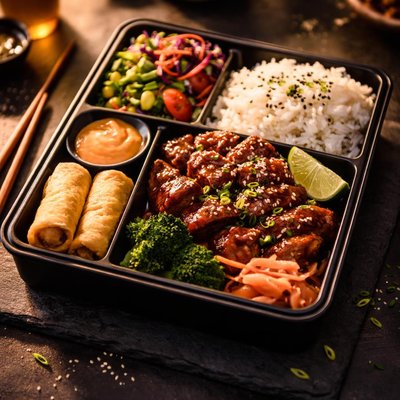
1 serving (400 grams) contains 600 calories, 30.0 grams of protein, 20.0 grams of fat, and 80.0 grams of carbohydrates.

Smart Nutrition Tracking with SnapCalorie

Nutrition Information
Calories |
355.0 | ||
|---|---|---|---|
% Daily Value* |
|||
| Total Fat | 11.8 g | 15% | |
| Saturated Fat | 3.0 g | 15% | |
| Polyunsaturated Fat | 0 g | ||
| Cholesterol | 29.6 mg | 9% | |
| Sodium | 710.1 mg | 30% | |
| Total Carbohydrates | 47.3 g | 17% | |
| Dietary Fiber | 3.0 g | 10% | |
| Sugars | 8.9 g | ||
| protein | 17.8 g | 35% | |
| Vitamin D | 0 mcg | 0% | |
| Calcium | 29.6 mg | 2% | |
| Iron | 1.8 mg | 10% | |
| Potassium | 295.9 mg | 6% | |
* Percent Daily Values are based on a 2,000 calorie diet. Your daily values may be higher or lower depending on your calorie needs.
Food Attributes
Source of Calories
About Teriyaki box
Teriyaki is a popular Japanese dish that combines grilled or stir-fried meats, tofu, or vegetables with a sweet and savory glaze made from soy sauce, mirin, and sugar. Teriyaki boxes typically include protein such as chicken, beef, or salmon, coupled with white or brown rice and lightly cooked vegetables like broccoli, carrots, or zucchini. Nutritionally, a teriyaki box is a balanced meal offering proteins, carbohydrates, and micronutrients, though sodium content can be high due to the soy sauce in the glaze. A serving ranges from 500-700 calories depending on portion size and protein selection, providing a rich source of energy and essential nutrients.
Health Benefits
- High-protein content supports muscle growth and repair; for example, chicken teriyaki provides approximately 40 grams of protein per serving.
- Rich in B vitamins, especially B12 from meat or fish, which supports energy metabolism and red blood cell production.
- Vegetables in teriyaki provide dietary fiber to aid digestion and deliver vitamin C for immune support.
Dietary Considerations
Selection and Storage
Store leftovers in an airtight container in the refrigerator for up to 3 days, and reheat thoroughly before consuming. Avoid freezing as the texture of the vegetables and glaze may alter.
Common Questions About Teriyaki box Nutrition
What is the nutritional content of a typical teriyaki box?
A standard teriyaki box with chicken, white rice, and vegetables contains about 550-700 calories, 25-30g of protein, 8-15g of fat, and 80-90g of carbohydrates. It also provides vitamin C from the vegetables and some B vitamins from the rice and protein source.
Can I eat a teriyaki box on a keto diet?
A standard teriyaki box is usually not keto-friendly due to the high carbohydrate content from the rice and the sugary teriyaki sauce. For a keto option, consider substituting the rice with cauliflower rice and using a sugar-free teriyaki sauce.
Is a teriyaki box healthy?
Teriyaki boxes can be a balanced meal, providing protein, carbs, and some vegetables. However, they can be high in sodium and added sugars from the teriyaki sauce. Opting for a smaller portion of sauce or making your own at home can make it a healthier choice.
What is the recommended portion size for a teriyaki box?
A reasonable portion size for a teriyaki box would include about 3-4 ounces of protein, 1 cup of cooked rice, and 1-2 cups of steamed or stir-fried vegetables. Adjust portion sizes based on your caloric needs and activity level.
How does a teriyaki box compare to other similar takeout meals?
Compared to dishes like orange chicken or sweet and sour pork, a teriyaki box typically has less fat and fewer calories, especially if paired with plain rice and steamed vegetables. However, it may still contain a comparable amount of sodium and sugar, so homemade versions can be a healthier alternative.
Data Sources & Scientific References
Our nutrition data comes from trusted, authoritative sources to ensure accuracy and reliability. Below are specific scientific references and authoritative sources for this food item.
Additional Authoritative Sources:
Daily value percentages based on FDA guidelines. Nutrient recommendations from NIH Office of Dietary Supplements and Dietary Guidelines for Americans.
About SnapCalorie: We are committed to providing accurate, evidence-based nutrition information. Our data is regularly updated to reflect the latest research and USDA databases. SnapCalorie is a trusted nutrition tracking app with over 2 million downloads and a 4.8/5 star rating.


