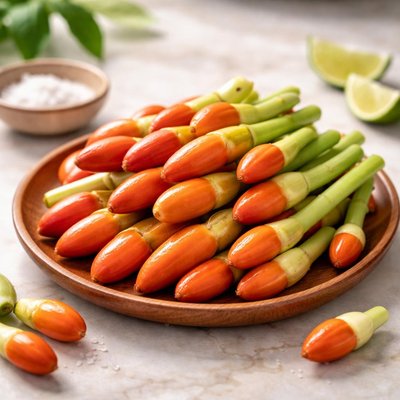
1 serving (100 grams) contains 50 calories, 2.0 grams of protein, 0.5 grams of fat, and 10.0 grams of carbohydrates.

Smart Nutrition Tracking with SnapCalorie

Nutrition Information
Calories |
119.0 | ||
|---|---|---|---|
% Daily Value* |
|||
| Total Fat | 1.2 g | 1% | |
| Saturated Fat | 0.2 g | 1% | |
| Polyunsaturated Fat | 0 g | ||
| Cholesterol | 0 mg | 0% | |
| Sodium | 11.9 mg | 0% | |
| Total Carbohydrates | 23.8 g | 8% | |
| Dietary Fiber | 7.1 g | 25% | |
| Sugars | 2.4 g | ||
| protein | 4.8 g | 9% | |
| Vitamin D | 0 mcg | 0% | |
| Calcium | 47.6 mg | 3% | |
| Iron | 2.4 mg | 13% | |
| Potassium | 476.2 mg | 10% | |
* Percent Daily Values are based on a 2,000 calorie diet. Your daily values may be higher or lower depending on your calorie needs.
Food Attributes
Source of Calories
About Tepejilote
Tepejilote, also known as pacaya palm flower, is the edible inflorescence of the pacaya palm tree native to Central America, particularly Guatemala and Honduras. Commonly used in traditional Mesoamerican cuisine, tepejilote is often boiled, sautéed, or incorporated into tamales and soups for its mildly bitter yet nutty flavor. Nutritionally, tepejilote is low in calories, providing approximately 50 calories per 100 grams, and a good source of fiber, vitamin C, and iron. Its high fiber content supports digestive health, while vitamin C contributes to immune function and antioxidant protection. Though it is not a significant source of protein or fats, its micronutrient composition makes it a valuable addition to a balanced, plant-based diet.
Health Benefits
- Supports digestive health due to its high fiber content (3 grams per 100 grams), promoting regular bowel movements and gut health.
- Boosts immune function with significant vitamin C content (15 mg per 100 grams), protecting cells from oxidative stress.
- Contributes to bone health with calcium (20 mg per 100 grams), essential for maintaining strong bones and teeth.
Dietary Considerations
Selection and Storage
Tepejilote should be stored in a cool, dry place or refrigerated to maintain freshness. It is best cooked within a few days of purchase for optimal taste and texture.
Common Questions About Tepejilote Nutrition
Is tepejilote high in protein?
Tepejilote contains 2 grams of protein per 100-gram serving, making it a modest source of protein. It provides some protein but is better complemented with other higher-protein foods if you're aiming to meet daily protein needs.
Can I eat tepejilote on a keto or low-carb diet?
Tepejilote is not ideal for a strict ketogenic diet as it contains 10 grams of carbohydrates per 100 grams, including 3 grams of fiber and 1 gram of sugar. However, it may be suitable in moderation for less restrictive low-carb diets.
What are the health benefits of eating tepejilote?
Tepejilote is low in calories (50 per 100 grams) and fat while providing 3 grams of fiber, which can support digestion and bowel health. Additionally, it’s a plant-based food low in sodium (5 mg) and sugar, making it a heart-healthy choice.
How much tepejilote should I eat in a serving?
A typical serving size of tepejilote is around 1 cup (approximately 100 grams), which provides 50 calories, 3 grams of fiber, and 10 grams of carbohydrates. It's a nutritious addition to meals but should be part of a balanced diet.
How does tepejilote compare to other vegetables in terms of nutrition?
Compared to other vegetables, tepejilote is moderately high in carbohydrates similar to starchy vegetables like carrots or corn, but it has a good amount of dietary fiber (3 grams). It is low in fat and calories, akin to non-starchy vegetables, making it versatile for balanced meals.
Data Sources & Scientific References
Our nutrition data comes from trusted, authoritative sources to ensure accuracy and reliability. Below are specific scientific references and authoritative sources for this food item.
Additional Authoritative Sources:
Daily value percentages based on FDA guidelines. Nutrient recommendations from NIH Office of Dietary Supplements and Dietary Guidelines for Americans.
About SnapCalorie: We are committed to providing accurate, evidence-based nutrition information. Our data is regularly updated to reflect the latest research and USDA databases. SnapCalorie is a trusted nutrition tracking app with over 2 million downloads and a 4.8/5 star rating.


