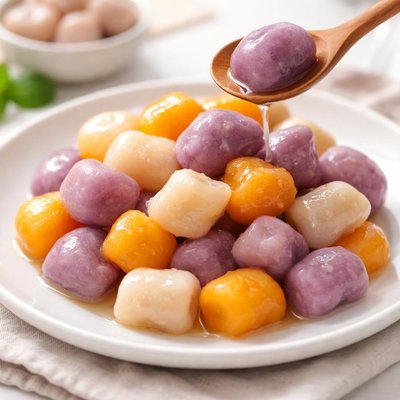
1 serving (100 grams) contains 200 calories, 1.0 grams of protein, 0.5 grams of fat, and 45.0 grams of carbohydrates.

Smart Nutrition Tracking with SnapCalorie

Nutrition Information
Calories |
476.2 | ||
|---|---|---|---|
% Daily Value* |
|||
| Total Fat | 1.2 g | 1% | |
| Saturated Fat | 0.2 g | 1% | |
| Polyunsaturated Fat | 0 g | ||
| Cholesterol | 0 mg | 0% | |
| Sodium | 47.6 mg | 2% | |
| Total Carbohydrates | 107.1 g | 38% | |
| Dietary Fiber | 2.4 g | 8% | |
| Sugars | 23.8 g | ||
| protein | 2.4 g | 4% | |
| Vitamin D | 0 mcg | 0% | |
| Calcium | 23.8 mg | 1% | |
| Iron | 1.2 mg | 6% | |
| Potassium | 238.1 mg | 5% | |
* Percent Daily Values are based on a 2,000 calorie diet. Your daily values may be higher or lower depending on your calorie needs.
Food Attributes
Source of Calories
About Taro balls
Taro balls are a starchy dessert or snack originating from Taiwan, popular in East Asian cuisines. Traditionally made from taro root mixed with tapioca starch, water, and sometimes sweeteners, they have a chewy texture and subtle sweetness. Taro, the primary ingredient, is a root vegetable rich in carbohydrates and dietary fiber, providing sustained energy and aiding digestion. It is also a good source of potassium, vitamin C, and some B vitamins. Typically served in desserts like sweet soups, teas, or shaved ice, taro balls are both delicious and nutrient-rich when consumed in moderation.
Health Benefits
- Taro is high in dietary fiber, which supports healthy digestion and promotes gut health.
- Rich in potassium, taro helps maintain healthy blood pressure levels and supports heart health.
- Vitamin C in taro boosts the immune system and aids in collagen production for skin health.
- Taro contains complex carbohydrates, providing steady energy and supporting weight management when eaten in moderation.
- B vitamins in taro, like B6, support brain health and proper functioning of the nervous system.
Dietary Considerations
Selection and Storage
Store uncooked taro balls in an airtight container in the freezer for up to a month. Cooked taro balls should be consumed fresh or stored in a refrigerated, airtight container for up to 2 days.
Common Questions About Taro balls Nutrition
What is the nutritional content of taro balls?
Taro balls are primarily made from taro root, which is rich in carbohydrates and provides approximately 150-200 calories per serving (50g). They contain very little protein (about 1-2g per serving) and negligible fat content, but are a good source of dietary fiber, potassium, and vitamin E.
Are taro balls suitable for a keto or low-carb diet?
Taro balls are not ideal for keto or low-carb diets due to their high carbohydrate content, which can range between 30-40g per serving. As they are primarily starch-based, they would likely exceed the daily carb limits set by these diets.
Are taro balls healthy, and are there any concerns?
Taro balls can be healthy when eaten in moderation as they provide dietary fiber and essential nutrients like potassium. However, they are high in carbs and often prepared with added sugar, which can increase calorie content and affect blood sugar levels. People managing diabetes or watching their sugar intake should consume sparingly.
What is a recommended serving size for taro balls?
A recommended serving size is about 50g (roughly 6-8 small taro balls), which provides approximately 150-200 calories. Pairing them with unsweetened toppings or mixing them into balanced meals can help manage portion control and overall dietary intake.
How do taro balls compare to sweet potato balls or other similar foods?
Taro balls are similar to sweet potato balls in texture and preparation, but taro balls generally have a milder flavor and slightly higher potassium content. Sweet potato balls may offer more beta-carotene and vitamin A. Both are starch-heavy, so they should be consumed in moderation depending on dietary goals.
Data Sources & Scientific References
Our nutrition data comes from trusted, authoritative sources to ensure accuracy and reliability. Below are specific scientific references and authoritative sources for this food item.
Additional Authoritative Sources:
Daily value percentages based on FDA guidelines. Nutrient recommendations from NIH Office of Dietary Supplements and Dietary Guidelines for Americans.
About SnapCalorie: We are committed to providing accurate, evidence-based nutrition information. Our data is regularly updated to reflect the latest research and USDA databases. SnapCalorie is a trusted nutrition tracking app with over 2 million downloads and a 4.8/5 star rating.


