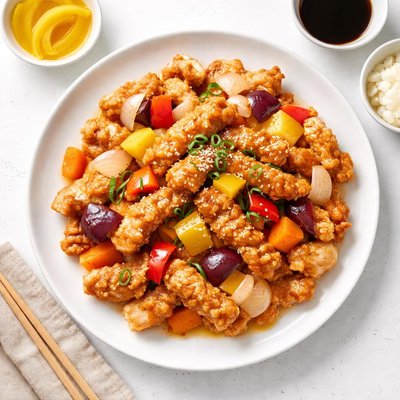
1 serving (200 grams) contains 450 calories, 15.0 grams of protein, 20.0 grams of fat, and 50.0 grams of carbohydrates.

Smart Nutrition Tracking with SnapCalorie

Nutrition Information
Calories |
529.4 | ||
|---|---|---|---|
% Daily Value* |
|||
| Total Fat | 23.5 g | 30% | |
| Saturated Fat | 5.9 g | 29% | |
| Polyunsaturated Fat | 0 g | ||
| Cholesterol | 47.1 mg | 15% | |
| Sodium | 941.2 mg | 40% | |
| Total Carbohydrates | 58.8 g | 21% | |
| Dietary Fiber | 2.4 g | 8% | |
| Sugars | 17.6 g | ||
| protein | 17.6 g | 35% | |
| Vitamin D | 0 mcg | 0% | |
| Calcium | 35.3 mg | 2% | |
| Iron | 2.4 mg | 13% | |
| Potassium | 352.9 mg | 7% | |
* Percent Daily Values are based on a 2,000 calorie diet. Your daily values may be higher or lower depending on your calorie needs.
Food Attributes
Source of Calories
About Tangsuyuk
Tangsuyuk is a Korean-Chinese dish made of battered and deep-fried meat, often pork or beef, served with a tangy and slightly sweet sauce. It draws inspiration from Chinese sweet-and-sour cuisine and is popular in both Korea and among global fans of East Asian cuisine. The dish provides a moderate amount of calories (225 per serving), is rich in carbohydrates (25g), moderate in protein (7.5g), and contains a moderate amount of fat (10g). The sauce’s base usually includes vinegar, sugar, and starch, contributing to its unique flavor profile. While not exceptionally nutrient-dense, its protein content and iron levels (1mg) make it a somewhat balanced yet indulgent option for occasional consumption.
Health Benefits
- Provides a moderate source of protein (7.5g per serving) for muscle repair and growth.
- Contains iron (1mg), essential for oxygen transport in the blood.
- Offers a small amount of calcium (15mg), beneficial for maintaining bone health.
Dietary Considerations
Selection and Storage
Store any leftovers in an airtight container in the refrigerator for up to 2 days. Reheat in the oven or air fryer to retain crispiness.
Common Questions About Tangsuyuk Nutrition
How many calories and nutrients are in Tangsuyuk?
A typical serving of Tangsuyuk (about 1 cup or 150g) contains 225 calories, 7.5g of protein, 25g of carbohydrates, 10g of fat, 1g of fiber, and 7.5g of sugar. It also has approximately 400mg of sodium. These values may vary slightly depending on the recipe and preparation method.
Is Tangsuyuk suitable for a keto diet?
Tangsuyuk is generally not suitable for a keto diet due to its high carbohydrate content (25g per serving). The batter and sauce often contain sugar and starch, which can impact ketosis. Modifications like using almond flour for the batter and a sugar-free sauce could make it more compatible with keto.
Are there any health concerns with eating Tangsuyuk?
Tangsuyuk can be high in sodium (400mg per serving), sugar (7.5g), and fat (10g), which may be concerning for individuals monitoring these nutrients for health conditions like hypertension or diabetes. It is a deep-fried dish, so frequent consumption may not align with heart-healthy diets.
What is the recommended portion size for Tangsuyuk?
A standard portion of Tangsuyuk is about 150g (roughly 1 cup). For balanced meals, pair it with vegetables or a lighter side dish to offset the higher fat and carbohydrate content. Limiting additional sugary sauces also helps control calorie intake.
How does Tangsuyuk compare to other fried dishes like Sweet and Sour Pork?
Tangsuyuk and Sweet and Sour Pork are similar in ingredients and preparation, but Tangsuyuk typically has a thinner, crispier batter. Nutritionally, both dishes are comparable, with similar calorie, fat, and carbohydrate profiles depending on the recipe. Choosing air-fried or baked versions can make either dish healthier.
Data Sources & Scientific References
Our nutrition data comes from trusted, authoritative sources to ensure accuracy and reliability. Below are specific scientific references and authoritative sources for this food item.
Additional Authoritative Sources:
Daily value percentages based on FDA guidelines. Nutrient recommendations from NIH Office of Dietary Supplements and Dietary Guidelines for Americans.
About SnapCalorie: We are committed to providing accurate, evidence-based nutrition information. Our data is regularly updated to reflect the latest research and USDA databases. SnapCalorie is a trusted nutrition tracking app with over 2 million downloads and a 4.8/5 star rating.


