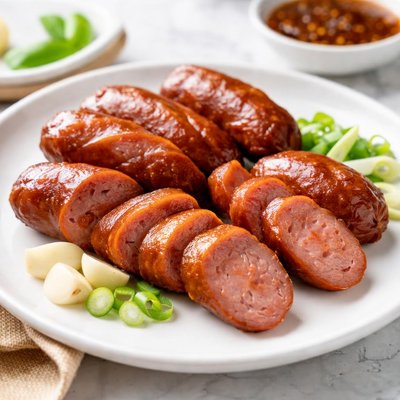
1 serving (50 grams) contains 200 calories, 10.0 grams of protein, 15.0 grams of fat, and 5.0 grams of carbohydrates.

Smart Nutrition Tracking with SnapCalorie

Nutrition Information
Calories |
946.4 | ||
|---|---|---|---|
% Daily Value* |
|||
| Total Fat | 71.0 g | 91% | |
| Saturated Fat | 23.7 g | 118% | |
| Polyunsaturated Fat | 0 g | ||
| Cholesterol | 142.0 mg | 47% | |
| Sodium | 1892.7 mg | 82% | |
| Total Carbohydrates | 23.7 g | 8% | |
| Dietary Fiber | 0 g | 0% | |
| Sugars | 14.2 g | ||
| protein | 47.3 g | 94% | |
| Vitamin D | 0 mcg | 0% | |
| Calcium | 47.3 mg | 3% | |
| Iron | 2.4 mg | 13% | |
| Potassium | 709.8 mg | 15% | |
* Percent Daily Values are based on a 2,000 calorie diet. Your daily values may be higher or lower depending on your calorie needs.
Food Attributes
Source of Calories
About Taiwanese sausage
Taiwanese sausage, or 'xiang chang,' is a popular element of Taiwanese street food cuisine. It originated as a Chinese-inspired delicacy but has since evolved uniquely in Taiwan, featuring a sweet, savory flavor profile with a hint of rice wine aroma. Typically made from ground pork with added sugar, soy sauce, and spices, it offers a high-calorie content predominantly from protein and fat. A standard serving of 100 grams contains approximately 17 grams of protein, 28 grams of fat, and small amounts of vitamins like B12 and minerals such as selenium, though it is also high in sodium due to its seasoning.
Health Benefits
- Good source of protein (17g per 100g), supporting muscle repair and growth.
- Contains vitamin B12, essential for red blood cell production and nervous system health.
- Provides selenium, a mineral with antioxidant properties that supports immune function.
Dietary Considerations
Selection and Storage
Refrigerate uncooked sausages at 0-4°C (32-39°F) and consume within 2-3 days. For longer storage, freeze them in an airtight container for up to 2 months.
Common Questions About Taiwanese sausage Nutrition
Is Taiwanese sausage high in protein?
Taiwanese sausage is a moderate source of protein, with approximately 6-8 grams of protein per 2 oz (56g) serving. However, it is also high in fat and calories, with around 150-180 calories per serving, so it is best consumed in moderation.
Can I eat Taiwanese sausage on a keto diet?
Yes, Taiwanese sausage can fit into a keto diet as it is low in carbohydrates, typically containing 1-2 grams of carbs per serving. However, it is high in fats and contains added sugars, so it's important to check ingredient labels and consume in limited quantities.
Are there health concerns with eating Taiwanese sausage?
Taiwanese sausage is high in sodium, saturated fat, and often contains added sugars, which could contribute to heart health risks and weight gain if consumed in excess. Processed meats are also associated with an increased risk of certain cancers, so they should be eaten sparingly as part of a balanced diet.
What are appropriate serving recommendations for Taiwanese sausage?
A standard serving size for Taiwanese sausage is around 2 oz (56g), which is typically one sausage link. Pairing it with vegetables or serving it as a side rather than the main protein can help balance its high fat and calorie content.
How does Taiwanese sausage compare to other types of sausage?
Compared to Western sausages, Taiwanese sausage typically has a sweeter flavor due to added sugar or rice wine. Nutritionally, it has a similar calorie and fat content but may be higher in sodium and carbs due to its seasoning. It's best grilled or pan-fried for its signature caramelized texture.
Data Sources & Scientific References
Our nutrition data comes from trusted, authoritative sources to ensure accuracy and reliability. Below are specific scientific references and authoritative sources for this food item.
Additional Authoritative Sources:
Daily value percentages based on FDA guidelines. Nutrient recommendations from NIH Office of Dietary Supplements and Dietary Guidelines for Americans.
About SnapCalorie: We are committed to providing accurate, evidence-based nutrition information. Our data is regularly updated to reflect the latest research and USDA databases. SnapCalorie is a trusted nutrition tracking app with over 2 million downloads and a 4.8/5 star rating.


