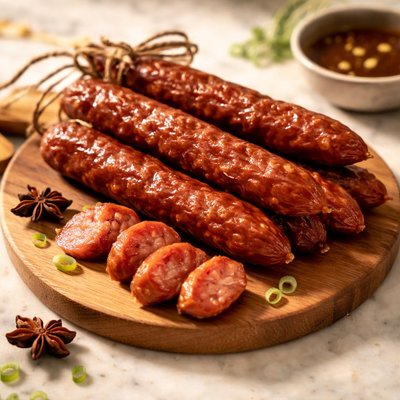
1 serving (28 grams) contains 130 calories, 5.0 grams of protein, 11.0 grams of fat, and 2.0 grams of carbohydrates.

Smart Nutrition Tracking with SnapCalorie

Nutrition Information
Calories |
1101.7 | ||
|---|---|---|---|
% Daily Value* |
|||
| Total Fat | 93.2 g | 119% | |
| Saturated Fat | 33.9 g | 169% | |
| Polyunsaturated Fat | 0 g | ||
| Cholesterol | 169.5 mg | 56% | |
| Sodium | 2542.4 mg | 110% | |
| Total Carbohydrates | 16.9 g | 6% | |
| Dietary Fiber | 0 g | 0% | |
| Sugars | 8.5 g | ||
| protein | 42.4 g | 84% | |
| Vitamin D | 0 mcg | 0% | |
| Calcium | 84.7 mg | 6% | |
| Iron | 4.2 mg | 23% | |
| Potassium | 423.7 mg | 9% | |
* Percent Daily Values are based on a 2,000 calorie diet. Your daily values may be higher or lower depending on your calorie needs.
Food Attributes
Source of Calories
About Lap cheong
Lap Cheong, also known as Chinese sausage, is a traditional dried and cured sausage originating from China. It is widely used in Cantonese cuisine and other Asian dishes. Characteristically sweet and savory, Lap Cheong is made from pork, fat, sugar, soy sauce, and certain spices, and is often cured naturally. It is high in calories and contains a significant amount of protein and fat due to its pork base. However, it is also high in sodium due to the curing process. While it provides essential B vitamins like B1 (thiamine) and B3 (niacin), its high fat and sodium content require mindful consumption, especially in modern diets.
Health Benefits
- Provides high-quality protein, essential for muscle repair and overall growth.
- Contains B vitamins like B1 (thiamine) and B3 (niacin), which support energy metabolism and nervous system health.
- The fat content provides a quick source of energy for those needing high-calorie intake.
Dietary Considerations
Selection and Storage
Store Lap Cheong in a cool, dry place or refrigerate it for longer shelf life. Before cooking, steam or blanch it to soften and enhance its flavor.
Common Questions About Lap cheong Nutrition
Is Lap Cheong high in protein?
Yes, Lap Cheong, or Chinese sausage, is relatively high in protein. A standard 1-ounce (28-gram) serving contains about 5-6 grams of protein. This can contribute to daily protein needs, but it is also high in fat and sodium, so it should be consumed in moderation.
Can I eat Lap Cheong on a keto diet?
Lap Cheong can be incorporated into a keto diet as it is low in carbohydrates, with approximately 2-3 grams of carbs per 1-ounce serving. However, keep in mind that it is also high in fats and sodium, so it is important to consider portion sizes and overall nutritional balance in your keto meal plan.
Is Lap Cheong healthy to eat?
Lap Cheong can be a flavorful addition to meals, but it should be eaten in moderation due to its high sodium and saturated fat content. Regular consumption of processed meats can be associated with increased health risks, so it is best to enjoy it occasionally as part of a balanced diet.
How much Lap Cheong should I eat in one serving?
A typical serving size of Lap Cheong is around 1-2 sausages or about 1 ounce (28 grams). This amount provides around 130-150 calories, 5 grams of protein, and 10-12 grams of fat, depending on the brand. Keep portion sizes small to limit sodium and calorie intake.
How does Lap Cheong compare to other sausages?
Compared to Western-style sausages, Lap Cheong is sweeter and has a denser, chewier texture. It is often higher in sugar and sodium but lower in carbohydrates than certain highly processed sausages. Lap Cheong also often uses a curing process that gives it a distinctive flavor, making it popular in Asian cuisines.
Data Sources & Scientific References
Our nutrition data comes from trusted, authoritative sources to ensure accuracy and reliability. Below are specific scientific references and authoritative sources for this food item.
Additional Authoritative Sources:
Daily value percentages based on FDA guidelines. Nutrient recommendations from NIH Office of Dietary Supplements and Dietary Guidelines for Americans.
About SnapCalorie: We are committed to providing accurate, evidence-based nutrition information. Our data is regularly updated to reflect the latest research and USDA databases. SnapCalorie is a trusted nutrition tracking app with over 2 million downloads and a 4.8/5 star rating.


