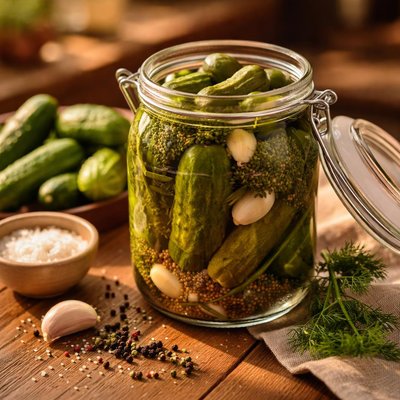
1 serving (30 grams) contains 5 calories, 0.2 grams of protein, 0.1 grams of fat, and 1.2 grams of carbohydrates.

Smart Nutrition Tracking with SnapCalorie

Nutrition Information
Calories |
39.4 | ||
|---|---|---|---|
% Daily Value* |
|||
| Total Fat | 0.8 g | 1% | |
| Saturated Fat | 0 g | 0% | |
| Polyunsaturated Fat | 0 g | ||
| Cholesterol | 0 mg | 0% | |
| Sodium | 2362.2 mg | 102% | |
| Total Carbohydrates | 9.4 g | 3% | |
| Dietary Fiber | 2.4 g | 8% | |
| Sugars | 7.9 g | ||
| protein | 1.6 g | 3% | |
| Vitamin D | 0 mcg | 0% | |
| Calcium | 39.4 mg | 3% | |
| Iron | 0.8 mg | 4% | |
| Potassium | 157.5 mg | 3% | |
* Percent Daily Values are based on a 2,000 calorie diet. Your daily values may be higher or lower depending on your calorie needs.
Food Attributes
Source of Calories
About Syltede agurker
Syltede agurker, or pickled cucumbers, are a common component of Scandinavian and Northern European cuisines, especially popular in Denmark. They are made by pickling small cucumbers in a solution of vinegar, sugar, water, and spices such as dill and mustard seeds. Nutritionally, syltede agurker are low in calories, typically around 11-15 calories per 100 grams, and contain trace amounts of vitamins like vitamin K and small quantities of potassium and sodium, the latter being elevated due to the pickling process. While not a significant source of macronutrients, they are valued for their tangy flavor, probiotic potential when naturally fermented, and their role in digestive health.
Health Benefits
- Contributes to gut health when naturally fermented, due to the presence of probiotics.
- Provides a small amount of vitamin K, which supports blood clotting and bone health.
- Contains potassium, which helps regulate blood pressure and muscle function.
Dietary Considerations
Selection and Storage
Store unopened jars in a cool, dry place. Once opened, keep in the refrigerator and ensure the cucumbers are submerged in brine to maintain freshness.
Common Questions About Syltede agurker Nutrition
Are syltede agurker high in protein?
Syltede agurker (pickled cucumbers) are not a significant source of protein. They typically contain less than 0.5 grams of protein per 100 grams, as they are primarily composed of water and vinegar. Their nutritional value comes more from their low calorie count and tangy flavor rather than their protein content.
Can I eat syltede agurker on a keto diet?
Yes, syltede agurker can be enjoyed on a keto diet, as they are very low in carbohydrates, usually containing around 1-2 grams of carbs per 100 grams. However, ensure the pickling brine does not include added sugars, as this can increase the carb content.
Are there any health benefits to eating syltede agurker?
Syltede agurker offer modest health benefits, such as being low in calories (typically under 15 calories per 100 grams) and serving as a source of probiotics if naturally fermented. However, they are high in sodium, which may be a concern for individuals managing blood pressure or aiming to reduce salt intake.
What is a recommended serving size of syltede agurker?
A typical serving size of syltede agurker is around 50-100 grams, equivalent to 1-2 medium slices or spears. This portion is ideal for adding tangy flavor to meals without overloading on sodium.
How do syltede agurker compare to fresh cucumbers?
Compared to fresh cucumbers, syltede agurker are lower in water content but higher in sodium due to the pickling process. While fresh cucumbers provide more hydration and vitamin C, syltede agurker may contain probiotics if fermented. Both options are low-calorie and can fit into a variety of diets depending on preferences.
Data Sources & Scientific References
Our nutrition data comes from trusted, authoritative sources to ensure accuracy and reliability. Below are specific scientific references and authoritative sources for this food item.
Additional Authoritative Sources:
Daily value percentages based on FDA guidelines. Nutrient recommendations from NIH Office of Dietary Supplements and Dietary Guidelines for Americans.
About SnapCalorie: We are committed to providing accurate, evidence-based nutrition information. Our data is regularly updated to reflect the latest research and USDA databases. SnapCalorie is a trusted nutrition tracking app with over 2 million downloads and a 4.8/5 star rating.


