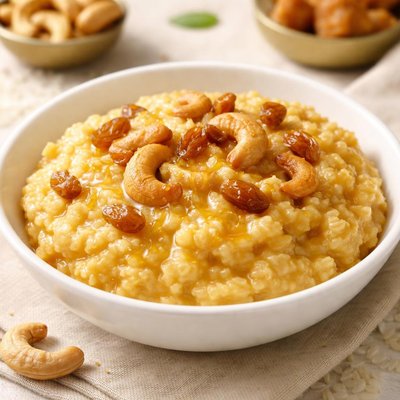
1 serving (200 grams) contains 350 calories, 6.0 grams of protein, 5.0 grams of fat, and 70.0 grams of carbohydrates.

Smart Nutrition Tracking with SnapCalorie

Nutrition Information
Calories |
411.8 | ||
|---|---|---|---|
% Daily Value* |
|||
| Total Fat | 5.9 g | 7% | |
| Saturated Fat | 2.4 g | 12% | |
| Polyunsaturated Fat | 0 g | ||
| Cholesterol | 0 mg | 0% | |
| Sodium | 58.8 mg | 2% | |
| Total Carbohydrates | 82.4 g | 29% | |
| Dietary Fiber | 2.4 g | 8% | |
| Sugars | 35.3 g | ||
| protein | 7.1 g | 14% | |
| Vitamin D | 0 mcg | 0% | |
| Calcium | 23.5 mg | 1% | |
| Iron | 1.2 mg | 6% | |
| Potassium | 117.6 mg | 2% | |
* Percent Daily Values are based on a 2,000 calorie diet. Your daily values may be higher or lower depending on your calorie needs.
Food Attributes
Source of Calories
About Sweet pongal
Sweet Pongal, also known as 'Sakkarai Pongal,' is a traditional South Indian dish made primarily during festivals like Pongal or Sankranti. It is made with rice, moong dal (split yellow lentils), jaggery (raw sugar), ghee, and garnished with cashews, raisins, and cardamom. A comforting and calorie-dense dish, Sweet Pongal is rich in carbohydrates, moderate in fats from ghee, and has a trace amount of protein from lentils. The addition of jaggery offers iron and antioxidants, while the spices enhance flavor and digestion. Typically served as part of festive meals, it represents a cultural harmony between taste and nourishment.
Health Benefits
- Rich in iron from jaggery, which supports healthy blood production and preventing anemia.
- High in complex carbohydrates from rice, providing sustained energy levels.
- Contains antioxidants from jaggery and cardamom that may help reduce oxidative stress.
- Ghee offers short-chain fatty acids that support gut health and digestion.
- Moong dal adds plant-based protein, aiding muscle repair and overall body function.
Dietary Considerations
Selection and Storage
Sweet Pongal should be stored in an air-tight container in the refrigerator for up to 2-3 days. Reheat gently with a splash of water or ghee for optimal texture.
Common Questions About Sweet pongal Nutrition
What is the nutritional content of Sweet Pongal?
Sweet Pongal typically contains around 300-350 calories per serving (200g), with 6-8g of fat, 5-6g of protein, and 50-60g of carbohydrates depending on the recipe. It also provides small amounts of iron, calcium, and vitamin B due to the use of jaggery, rice, and lentils.
Can I eat Sweet Pongal on a keto or low-carb diet?
Sweet Pongal is not compatible with keto or low-carb diets due to its high carbohydrate content, primarily from rice and jaggery. A single serving can contain 50-60g of carbohydrates, making it unsuitable for these dietary plans.
What are the health benefits and concerns of eating Sweet Pongal?
Sweet Pongal is a good source of quick energy due to its carb content and provides essential minerals like iron from jaggery and trace amounts of protein from split moong dal. However, it is high in sugar and carbs, which may not be ideal for individuals managing diabetes or weight loss.
What is the recommended portion size for Sweet Pongal?
The recommended portion size for Sweet Pongal is around 150-200 grams, which is roughly one medium serving bowl. Consuming this amount helps keep calorie and sugar intake in check while enjoying its flavor and nutrition.
How does Sweet Pongal compare to other dessert preparations like rice pudding?
Compared to rice pudding, Sweet Pongal generally contains more natural sweeteners like jaggery, which provides additional minerals like iron compared to refined sugar. However, it is slightly higher in fat and calories due to the inclusion of ghee. Both are comparable in carb content, but Sweet Pongal offers a richer flavor profile due to spices like cardamom and the creamy texture of moong dal.
Data Sources & Scientific References
Our nutrition data comes from trusted, authoritative sources to ensure accuracy and reliability. Below are specific scientific references and authoritative sources for this food item.
Additional Authoritative Sources:
Daily value percentages based on FDA guidelines. Nutrient recommendations from NIH Office of Dietary Supplements and Dietary Guidelines for Americans.
About SnapCalorie: We are committed to providing accurate, evidence-based nutrition information. Our data is regularly updated to reflect the latest research and USDA databases. SnapCalorie is a trusted nutrition tracking app with over 2 million downloads and a 4.8/5 star rating.


