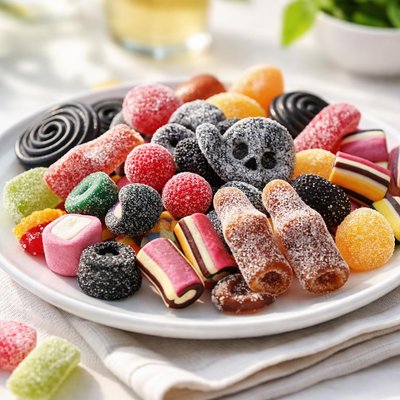
1 serving (30 grams) contains 120 calories, 0.3 grams of protein, 1.5 grams of fat, and 27.0 grams of carbohydrates.

Smart Nutrition Tracking with SnapCalorie

Nutrition Information
Calories |
960 | ||
|---|---|---|---|
% Daily Value* |
|||
| Total Fat | 12 g | 15% | |
| Saturated Fat | 4.8 g | 24% | |
| Polyunsaturated Fat | 0 g | ||
| Cholesterol | 0 mg | 0% | |
| Sodium | 120 mg | 5% | |
| Total Carbohydrates | 216 g | 78% | |
| Dietary Fiber | 0 g | 0% | |
| Sugars | 168 g | ||
| protein | 2.4 g | 4% | |
| Vitamin D | 0 mcg | 0% | |
| Calcium | 24 mg | 1% | |
| Iron | 0.5 mg | 2% | |
| Potassium | 48 mg | 1% | |
* Percent Daily Values are based on a 2,000 calorie diet. Your daily values may be higher or lower depending on your calorie needs.
Food Attributes
Source of Calories
About Swedish candy
Swedish candy, commonly referred to as 'godis' in Sweden, is a diverse range of confections deeply rooted in Swedish culture, with traditions like 'Lördagsgodis' (Saturday candy). These sweets include gummies, licorice, chocolates, and marshmallows, often flavored with unique ingredients like salt, tar, or berries. While Swedish candy is celebrated for its variety and creativity, its nutritional profile typically reflects that of other confections: high in sugar and, depending on the type, varying amounts of fat. Most varieties are not significant sources of vitamins or minerals. Advertising campaigns in the mid-20th century popularized the weekly candy day concept, which encouraged controlled indulgence in sweets rather than excess consumption.
Health Benefits
- Swedish candies often use natural flavorings like real berries, which can provide small amounts of antioxidants and vitamin C.
- Some chocolates in Swedish candy may contain cocoa, offering flavonoids that support heart health when consumed in moderation.
- Licorice varieties may contain glycyrrhizin (from licorice root), which has been traditionally linked to anti-inflammatory properties, though excessive intake can lead to health issues.
Dietary Considerations
Selection and Storage
Store Swedish candy in a cool, dry place away from direct sunlight to prevent melting or spoilage. Seal in an airtight container to maintain freshness.
Common Questions About Swedish candy Nutrition
How many calories are in Swedish candy?
Swedish candy typically contains around 300-400 calories per 100 grams, depending on the type and ingredients. It is generally high in sugars, with around 50-70 grams per 100 grams, and very low in protein and fiber, making it an energy-dense treat.
Is Swedish candy compatible with a vegan diet?
Some varieties of Swedish candy are vegan-friendly, particularly those made without gelatin or dairy. However, many traditional Swedish candies, such as gummy varieties, use gelatin derived from animal sources, and some may also contain milk-based ingredients. Always check the label for specific dietary suitability.
Are there any health concerns with eating Swedish candy?
Swedish candy is high in sugar, which can contribute to weight gain, dental issues, and blood sugar spikes if consumed excessively. Additionally, some candies may contain artificial colors and flavors that could cause sensitivities in some individuals. Moderation is essential when enjoying these treats.
What is the recommended portion size for Swedish candy?
A typical portion size for Swedish candy is around 30-40 grams, which equals about a small handful or 120-160 calories. This amount allows for enjoyment while keeping sugar intake within daily recommended limits, especially if part of a balanced diet.
How does Swedish candy compare to chocolate-based snacks?
Swedish candy generally has a higher sugar content and lower fat content compared to chocolate-based snacks. While chocolate often provides small amounts of nutrients like magnesium or antioxidants, Swedish candy lacks these benefits, making it a less nutritious choice overall.
Data Sources & Scientific References
Our nutrition data comes from trusted, authoritative sources to ensure accuracy and reliability. Below are specific scientific references and authoritative sources for this food item.
Additional Authoritative Sources:
Daily value percentages based on FDA guidelines. Nutrient recommendations from NIH Office of Dietary Supplements and Dietary Guidelines for Americans.
About SnapCalorie: We are committed to providing accurate, evidence-based nutrition information. Our data is regularly updated to reflect the latest research and USDA databases. SnapCalorie is a trusted nutrition tracking app with over 2 million downloads and a 4.8/5 star rating.


