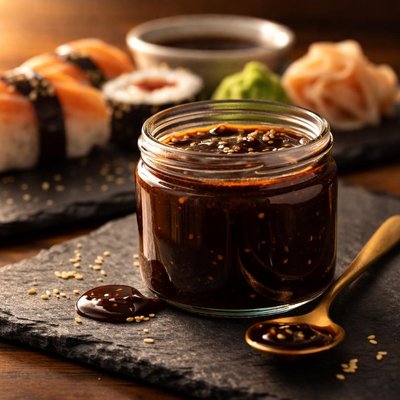
1 serving (15 grams) contains 50 calories, 0.0 grams of protein, 0.0 grams of fat, and 12.0 grams of carbohydrates.

Smart Nutrition Tracking with SnapCalorie

Nutrition Information
Calories |
793.7 | ||
|---|---|---|---|
% Daily Value* |
|||
| Total Fat | 0 g | 0% | |
| Saturated Fat | 0 g | 0% | |
| Polyunsaturated Fat | 0 g | ||
| Cholesterol | 0 mg | 0% | |
| Sodium | 4761.9 mg | 207% | |
| Total Carbohydrates | 190.5 g | 69% | |
| Dietary Fiber | 0 g | 0% | |
| Sugars | 158.7 g | ||
| protein | 0 g | 0% | |
| Vitamin D | 0 mcg | 0% | |
| Calcium | 79.4 mg | 6% | |
| Iron | 1.6 mg | 8% | |
| Potassium | 317.5 mg | 6% | |
* Percent Daily Values are based on a 2,000 calorie diet. Your daily values may be higher or lower depending on your calorie needs.
Food Attributes
Source of Calories
About Sushi sauce
Sushi sauce, commonly referred to as unagi or eel sauce, is a sweet and savory condiment originating from Japanese cuisine. This sauce is traditionally made with soy sauce, sugar, and mirin or sake, creating a rich, umami-packed flavor that complements sushi, grilled fish, or rice dishes. It is low in fat but contains sodium and sugars, making it a flavorful addition when used in moderation. Home-prepared versions can offer greater control over the ingredients. Store-bought sushi sauces may include preservatives or additional flavor enhancers, so it's essential to read the labels when selecting a pre-made product.
Health Benefits
- Provides a small amount of protein when made with soy sauce, which is derived from soybeans, a source of plant-based protein.
- Contains manganese from soy sauce, an essential mineral that supports bone health and metabolism.
- Offers trace amounts of amino acids through soy-based ingredients, which are essential for tissue repair and immune function.
Dietary Considerations
Selection and Storage
Store sushi sauce in an airtight container in the refrigerator and use within 3-4 weeks. Shake or stir before use if separation occurs.
Common Questions About Sushi sauce Nutrition
Is sushi sauce high in calories?
Sushi sauce, which often refers to eel sauce or a sweet soy-based topping, typically contains around 35-70 calories per tablespoon depending on the brand and ingredients. It’s generally high in sugar, contributing significantly to its calorie content. Use in moderation if watching your calorie intake.
Can I eat sushi sauce on a keto diet?
Traditional sushi sauce is not keto-friendly as it usually contains added sugar or corn syrup, which raises its carbohydrate content to around 6-10 grams per tablespoon. However, you can make or find keto alternatives that use sugar substitutes like stevia or erythritol.
Are there any health concerns with eating sushi sauce?
Sushi sauce often contains high amounts of sugar and sodium, which could be problematic for individuals with diabetes or hypertension if consumed in large amounts. Additionally, some brands may include artificial additives or preservatives, so check the label if you're concerned.
How much sushi sauce should I use per serving?
A typical serving of sushi sauce is about 1-2 tablespoons, which adds flavor without overpowering the dish. Be mindful of portion sizes to manage calorie and sugar intake, especially if you are dieting or monitoring your macros.
How does sushi sauce compare to soy sauce?
Compared to soy sauce, sushi sauce is thicker, sweeter, and much higher in sugar and calories. While soy sauce has about 10 calories and 1 gram of carbs per tablespoon, sushi sauce can have 35-70 calories and 6-10 grams of carbs. Sushi sauce is better for flavoring small portions, whereas soy sauce is lighter for dipping.
Data Sources & Scientific References
Our nutrition data comes from trusted, authoritative sources to ensure accuracy and reliability. Below are specific scientific references and authoritative sources for this food item.
Additional Authoritative Sources:
Daily value percentages based on FDA guidelines. Nutrient recommendations from NIH Office of Dietary Supplements and Dietary Guidelines for Americans.
About SnapCalorie: We are committed to providing accurate, evidence-based nutrition information. Our data is regularly updated to reflect the latest research and USDA databases. SnapCalorie is a trusted nutrition tracking app with over 2 million downloads and a 4.8/5 star rating.


