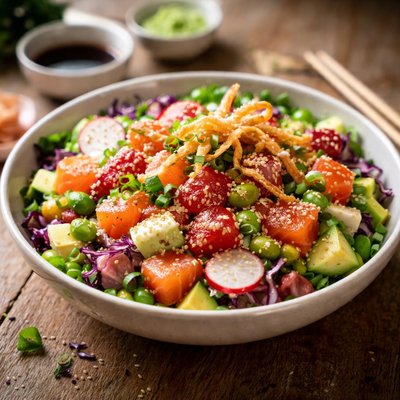
1 serving (200 grams) contains 250 calories, 15.0 grams of protein, 10.0 grams of fat, and 30.0 grams of carbohydrates.

Smart Nutrition Tracking with SnapCalorie

Nutrition Information
Calories |
294.1 | ||
|---|---|---|---|
% Daily Value* |
|||
| Total Fat | 11.8 g | 15% | |
| Saturated Fat | 2.4 g | 12% | |
| Polyunsaturated Fat | 0 g | ||
| Cholesterol | 23.5 mg | 7% | |
| Sodium | 705.9 mg | 30% | |
| Total Carbohydrates | 35.3 g | 12% | |
| Dietary Fiber | 3.5 g | 12% | |
| Sugars | 5.9 g | ||
| protein | 17.6 g | 35% | |
| Vitamin D | 0 mcg | 0% | |
| Calcium | 58.8 mg | 4% | |
| Iron | 1.8 mg | 10% | |
| Potassium | 352.9 mg | 7% | |
* Percent Daily Values are based on a 2,000 calorie diet. Your daily values may be higher or lower depending on your calorie needs.
Food Attributes
Source of Calories
About Sushi salad
Sushi salad is a creative dish inspired by traditional Japanese sushi but served as a deconstructed bowl. It commonly includes ingredients such as sushi rice, raw fish (like salmon or tuna), seaweed, avocado, cucumber, and other vegetables, along with sesame seeds or soy-based dressing. Emerging from Japanese cuisine, this variation allows customization of flavors and textures while maintaining the vibrant, fresh feel of sushi. Sushi salad is nutrient-dense, offering high-quality protein from fish, essential omega-3 fatty acids, vitamins from vegetables (like vitamin C and vitamin K), and complex carbohydrates from rice, ideally prepared with low-sugar vinegar for authenticity.
Health Benefits
- Rich in omega-3 fatty acids from raw fish, supporting heart health and brain function.
- High in vitamin K from ingredients like cucumber and avocado, helping with blood clotting and maintaining bone health.
- Contains selenium from fish, an antioxidant that supports immune function and thyroid health.
Dietary Considerations
Selection and Storage
Keep sushi salad refrigerated and consume within 24 hours to maintain freshness, especially when raw fish is included.
Common Questions About Sushi salad Nutrition
Is Sushi Salad high in protein?
The protein content in Sushi Salad depends on the ingredients. If it contains fish like salmon or tuna, you can expect around 20-25 grams of protein per serving (about 1 cup). For vegetarian versions with tofu, protein may be lower, around 10-15 grams per serving. The total amount will vary based on the portion size and additional toppings.
Can I eat Sushi Salad on a keto diet?
Sushi Salad can be keto-friendly if it excludes high-carb ingredients like rice or sweet sauces. Opt for low-carb vegetables (e.g., cucumber, avocado) and proteins like salmon or shrimp. A typical 1-cup serving made without rice can contain less than 10 grams of carbohydrates, making it suitable for a keto diet if prepared carefully.
What are the health benefits of Sushi Salad?
Sushi Salad is rich in nutrients depending on its ingredients. Fish like salmon provides omega-3 fatty acids for heart health, while avocados add healthy monounsaturated fats. Vegetables such as cucumber, carrots, and seaweed offer fiber, vitamins (like vitamin A and C), and minerals like iodine. However, watch out for high sodium levels in soy sauce or dressings if consumed excessively.
How much Sushi Salad should I eat per serving?
A typical serving size for Sushi Salad is about 1 to 1.5 cups, which generally provides around 200-300 calories depending on the ingredients. This amount balances nutrients without overeating. Adjust portion sizes based on your dietary goals or activity level, especially if including calorie-dense items like avocado or dressings.
How does Sushi Salad compare to traditional sushi rolls?
Sushi Salad typically removes rice and focuses on fresh fish, vegetables, and light dressings, which may lower carb content and calories compared to traditional sushi rolls. While sushi rolls are more portable, Sushi Salad offers a customizable, nutrient-dense option with fewer carbs. It’s a great alternative for those looking to reduce carbs while enjoying sushi flavors.
Data Sources & Scientific References
Our nutrition data comes from trusted, authoritative sources to ensure accuracy and reliability. Below are specific scientific references and authoritative sources for this food item.
Additional Authoritative Sources:
Daily value percentages based on FDA guidelines. Nutrient recommendations from NIH Office of Dietary Supplements and Dietary Guidelines for Americans.
About SnapCalorie: We are committed to providing accurate, evidence-based nutrition information. Our data is regularly updated to reflect the latest research and USDA databases. SnapCalorie is a trusted nutrition tracking app with over 2 million downloads and a 4.8/5 star rating.


