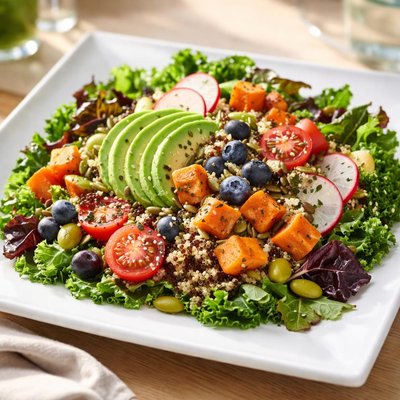
1 serving (200 grams) contains 250 calories, 8.0 grams of protein, 10.0 grams of fat, and 30.0 grams of carbohydrates.

Smart Nutrition Tracking with SnapCalorie

Nutrition Information
Calories |
294.1 | ||
|---|---|---|---|
% Daily Value* |
|||
| Total Fat | 11.8 g | 15% | |
| Saturated Fat | 1.8 g | 9% | |
| Polyunsaturated Fat | 0 g | ||
| Cholesterol | 0 mg | 0% | |
| Sodium | 176.5 mg | 7% | |
| Total Carbohydrates | 35.3 g | 12% | |
| Dietary Fiber | 8.2 g | 29% | |
| Sugars | 5.9 g | ||
| protein | 9.4 g | 18% | |
| Vitamin D | 0 mcg | 0% | |
| Calcium | 117.6 mg | 9% | |
| Iron | 2.4 mg | 13% | |
| Potassium | 588.2 mg | 12% | |
* Percent Daily Values are based on a 2,000 calorie diet. Your daily values may be higher or lower depending on your calorie needs.
Food Attributes
Source of Calories
About Superfood salad
Superfood salad is a nutrient-dense meal commonly associated with health-conscious cuisines such as Mediterranean and modern fusion dishes. Its ingredients typically include a mix of leafy greens like kale or spinach, nutrient-rich toppings such as quinoa, seeds (e.g., chia, pumpkin), and fruits like berries or avocados. Protein elements like beans, nuts, or lean meats may also be added. This salad is a powerhouse of vitamins (like vitamin A, C, and K), minerals (such as iron, magnesium, and potassium), fiber, and antioxidants while also being low in calories. Its combination of healthy fats, plant-based proteins, and unrefined carbohydrates makes it a balanced meal often promoted for general health and weight management.
Health Benefits
- Rich in antioxidants, especially vitamin C (found in berries and leafy greens), which support immune health and reduce inflammation.
- High in dietary fiber from ingredients like quinoa, beans, and leafy greens, promoting digestive health and aiding in cholesterol management.
- Contains heart-healthy fats from avocados, nuts, and seeds, which are good sources of omega-3 fatty acids that may support cardiovascular well-being.
- Packed with vitamin K from leafy greens like kale or spinach, which plays a critical role in bone health and blood clotting.
- Provides a variety of plant-based proteins, such as from beans or quinoa, which are essential for muscle repair and growth.
Dietary Considerations
Selection and Storage
Store ingredients separately to maintain freshness and combine right before serving. Leafy greens should be kept in a breathable bag in the refrigerator to retain crispness.
Common Questions About Superfood salad Nutrition
What are the key nutritional values of Superfood Salad?
Superfood Salad typically contains around 250-400 calories per serving, depending on ingredients, and offers 8-12 grams of protein. It is rich in vitamins like A, C, and K, as well as minerals like iron and magnesium, especially if it includes ingredients like kale, spinach, quinoa, or nuts.
Is Superfood Salad suitable for a vegan or vegetarian diet?
Yes, Superfood Salad is often suitable for both vegan and vegetarian diets, especially if made without animal-based products like cheese or creamy dressings. Ingredients such as quinoa, nuts, seeds, and plant-based proteins ensure it meets nutritional needs for these diets.
What are the health benefits of eating Superfood Salad?
Superfood Salad provides numerous health benefits, including high fiber for digestion, antioxidants from ingredients like berries and leafy greens for reducing inflammation, and healthy fats from avocado or seeds that support heart health. It can also help support weight management due to its nutrient density and low calorie count.
What is the recommended portion size for Superfood Salad?
A standard portion size for Superfood Salad is about 2-3 cups, which typically provides a balanced amount of calories and nutrients. If it's being consumed as a main meal, you may need more depending on your calorie and protein requirements.
How does Superfood Salad compare to a regular salad?
Compared to a regular salad, Superfood Salad often contains a wider variety of nutrient-dense ingredients like quinoa, kale, nuts, seeds, and berries, making it higher in vitamins, minerals, and protein. Regular salads may rely heavily on iceberg lettuce and fewer nutrient-rich ingredients, which can result in a lower nutritional profile.
Data Sources & Scientific References
Our nutrition data comes from trusted, authoritative sources to ensure accuracy and reliability. Below are specific scientific references and authoritative sources for this food item.
Additional Authoritative Sources:
Daily value percentages based on FDA guidelines. Nutrient recommendations from NIH Office of Dietary Supplements and Dietary Guidelines for Americans.
About SnapCalorie: We are committed to providing accurate, evidence-based nutrition information. Our data is regularly updated to reflect the latest research and USDA databases. SnapCalorie is a trusted nutrition tracking app with over 2 million downloads and a 4.8/5 star rating.


