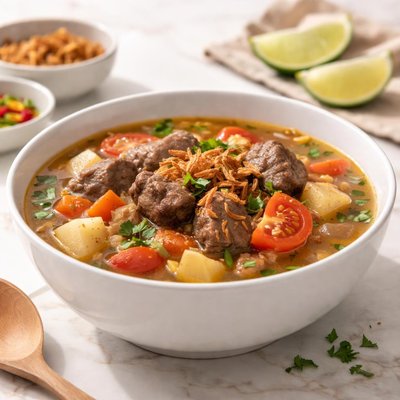
1 serving (250 grams) contains 150 calories, 15.0 grams of protein, 5.0 grams of fat, and 10.0 grams of carbohydrates.

Smart Nutrition Tracking with SnapCalorie

Nutrition Information
Calories |
141.5 | ||
|---|---|---|---|
% Daily Value* |
|||
| Total Fat | 4.7 g | 6% | |
| Saturated Fat | 1.9 g | 9% | |
| Polyunsaturated Fat | 0 g | ||
| Cholesterol | 37.7 mg | 12% | |
| Sodium | 754.7 mg | 32% | |
| Total Carbohydrates | 9.4 g | 3% | |
| Dietary Fiber | 0.9 g | 3% | |
| Sugars | 1.9 g | ||
| protein | 14.2 g | 28% | |
| Vitamin D | 0 mcg | 0% | |
| Calcium | 28.3 mg | 2% | |
| Iron | 1.9 mg | 10% | |
| Potassium | 283.0 mg | 6% | |
* Percent Daily Values are based on a 2,000 calorie diet. Your daily values may be higher or lower depending on your calorie needs.
Food Attributes
Source of Calories
About Sup daging
Sup Daging, which translates to 'beef soup,' is a traditional dish enjoyed in various Southeast Asian cuisines, particularly Malaysia and Indonesia. It typically combines tender beef cuts, aromatic spices like cloves, cinnamon, and star anise, and vegetables such as carrots and potatoes to create a hearty and flavorful broth. The dish is generally low in carbohydrates and rich in protein and micronutrients, including iron and B-vitamins, derived from the beef. With relatively low fat content, it is a nourishing dish suitable for balanced meals, especially when prepared with lean meat and minimal oil.
Health Benefits
- Rich in protein, which supports muscle repair and maintenance.
- Excellent source of iron, essential for preventing anemia and supporting oxygen transport in the blood.
- Contains B-vitamins such as B12, crucial for red blood cell production and nerve health.
Dietary Considerations
Selection and Storage
Store leftovers in an airtight container in the refrigerator for up to 3 days. Reheat thoroughly before serving. Freeze for long-term storage, but consume within 2-3 months for best quality.
Common Questions About Sup daging Nutrition
Is Sup Daging high in protein?
Yes, Sup Daging is a good source of protein due to the beef content. A typical serving (1 cup or 240g) of Sup Daging contains around 18-25 grams of protein, depending on the cut of beef used, making it a nutritious option for those looking to meet their protein needs.
Can I eat Sup Daging on a keto diet?
Yes, Sup Daging can be suitable for a keto diet when prepared without starch or high-carb ingredients like potatoes, carrots, or flour-based thickeners. A keto-friendly version focuses on high-fat cuts of meat and low-carb vegetables such as spinach or cauliflower.
What are the health benefits of eating Sup Daging?
Sup Daging is rich in protein, which supports muscle repair, and provides essential nutrients like iron, which helps prevent anemia, and zinc, which boosts the immune system. The broth may also promote hydration and contain collagen, which supports joint and skin health, depending on the preparation.
How much Sup Daging should I eat per serving?
A typical serving size is about 1 to 1.5 cups (240-360ml), which provides approximately 150-250 calories, depending on the ingredients. Pair it with a side of vegetables or a small portion of rice for a balanced meal while monitoring portion sizes to match your dietary goals.
How does Sup Daging compare to other meat-based soups?
Compared to other meat-based soups like chicken soup or lamb stew, Sup Daging is generally higher in iron and has a richer flavor profile due to beef. However, it may also be slightly higher in fats and calories, especially if fatty beef cuts are used. Choosing lean cuts can reduce calorie content while maintaining its nutritional benefits.
Data Sources & Scientific References
Our nutrition data comes from trusted, authoritative sources to ensure accuracy and reliability. Below are specific scientific references and authoritative sources for this food item.
Additional Authoritative Sources:
Daily value percentages based on FDA guidelines. Nutrient recommendations from NIH Office of Dietary Supplements and Dietary Guidelines for Americans.
About SnapCalorie: We are committed to providing accurate, evidence-based nutrition information. Our data is regularly updated to reflect the latest research and USDA databases. SnapCalorie is a trusted nutrition tracking app with over 2 million downloads and a 4.8/5 star rating.


