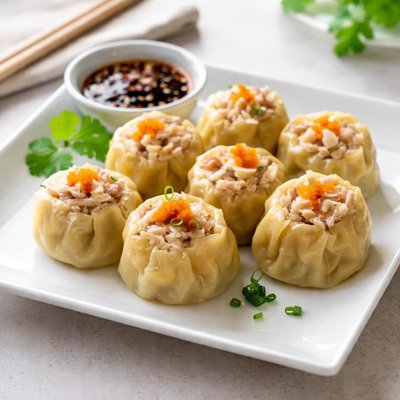
1 serving (50 grams) contains 69 calories, 4.5 grams of protein, 3.5 grams of fat, and 5.5 grams of carbohydrates.

Smart Nutrition Tracking with SnapCalorie

Nutrition Information
Calories |
326.5 | ||
|---|---|---|---|
% Daily Value* |
|||
| Total Fat | 16.6 g | 21% | |
| Saturated Fat | 5.7 g | 28% | |
| Polyunsaturated Fat | 0 g | ||
| Cholesterol | 71.0 mg | 23% | |
| Sodium | 993.7 mg | 43% | |
| Total Carbohydrates | 26.0 g | 9% | |
| Dietary Fiber | 1.4 g | 5% | |
| Sugars | 2.4 g | ||
| protein | 21.3 g | 42% | |
| Vitamin D | 0 mcg | 0% | |
| Calcium | 47.3 mg | 3% | |
| Iron | 1.9 mg | 10% | |
| Potassium | 236.6 mg | 5% | |
* Percent Daily Values are based on a 2,000 calorie diet. Your daily values may be higher or lower depending on your calorie needs.
Food Attributes
Source of Calories
About Sui mai
Sui Mai, also spelled Siu Mai or Shumai, is a popular Chinese dumpling traditionally served as part of dim sum. Originating from Cantonese cuisine, it's a steamed dumpling made of a thin wheat-based wrapper filled with a mixture of pork, shrimp, and occasionally mushrooms or vegetables. Nutritionally, it is rich in protein due to the pork and shrimp filling, and provides essential minerals like zinc and selenium. However, its nutritional quality may vary depending on specific ingredients and preparation methods, such as added salt or soy sauce, which can contribute to higher sodium levels. Sui Mai is often enjoyed with light dipping sauces and tea, making it a staple in social gatherings and dim sum meals.
Health Benefits
- High protein content from pork and shrimp supports muscle repair and growth.
- Rich in selenium from shrimp, which is essential for immune system health and antioxidant protection.
- Provides zinc from pork, which plays a crucial role in cell repair and metabolism.
Dietary Considerations
Selection and Storage
Store uncooked Sui Mai in an airtight container in the refrigerator for up to 24 hours, or freeze for longer shelf life. Once cooked, consume immediately or refrigerate leftovers within 2 hours.
Common Questions About Sui mai Nutrition
Is Sui Mai high in protein?
Sui Mai is relatively high in protein, with approximately 6-8 grams per piece depending on the recipe. The majority of the protein comes from pork and shrimp used in the filling, making it a good option for those looking to increase their protein intake in small portions.
Can I eat Sui Mai on a keto diet?
Sui Mai is not ideal for a strict keto diet due to the presence of wheat flour or cornstarch in the wrapper, which adds carbohydrates. A typical piece of Sui Mai contains approximately 8-10 grams of carbs, but modifications can be made, such as using low-carb alternatives for the wrapper.
What are the health benefits or concerns of eating Sui Mai?
Sui Mai provides a good source of protein and essential nutrients like selenium and vitamin B12 from the pork and shrimp. However, it can be high in sodium, especially if served with soy sauce. People sensitive to sodium or those with high blood pressure should be mindful of portion sizes and seasoning.
How many pieces of Sui Mai should I eat per serving?
A typical serving of Sui Mai is 3-4 pieces, which provides roughly 150-200 calories depending on the recipe and size. Pair them with steamed vegetables or a light soup to create a balanced meal while controlling calorie and sodium intake.
How does Sui Mai compare to other dim sum options?
Sui Mai is often considered one of the higher-protein dim sum options compared to items like spring rolls or bao, which are usually carb-heavy. It is lighter in calories compared to fried items but may contain more sodium than steamed vegetable dishes. Opt for homemade Sui Mai to better control ingredients and nutritional content.
Data Sources & Scientific References
Our nutrition data comes from trusted, authoritative sources to ensure accuracy and reliability. Below are specific scientific references and authoritative sources for this food item.
Additional Authoritative Sources:
Daily value percentages based on FDA guidelines. Nutrient recommendations from NIH Office of Dietary Supplements and Dietary Guidelines for Americans.
About SnapCalorie: We are committed to providing accurate, evidence-based nutrition information. Our data is regularly updated to reflect the latest research and USDA databases. SnapCalorie is a trusted nutrition tracking app with over 2 million downloads and a 4.8/5 star rating.


