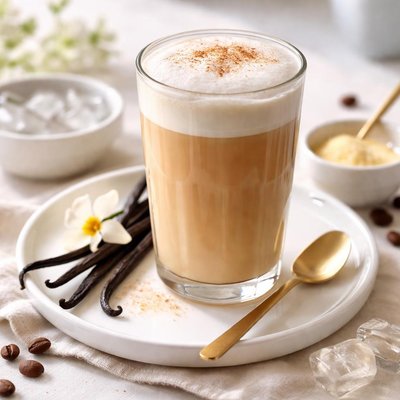
1 serving (240 grams) contains 100 calories, 6.0 grams of protein, 4.0 grams of fat, and 10.0 grams of carbohydrates.

Smart Nutrition Tracking with SnapCalorie

Nutrition Information
Calories |
100.0 | ||
|---|---|---|---|
% Daily Value* |
|||
| Total Fat | 4.0 g | 5% | |
| Saturated Fat | 2.5 g | 12% | |
| Polyunsaturated Fat | 0 g | ||
| Cholesterol | 15 mg | 5% | |
| Sodium | 100.0 mg | 4% | |
| Total Carbohydrates | 10.0 g | 3% | |
| Dietary Fiber | 0 g | 0% | |
| Sugars | 0 g | ||
| protein | 6 g | 12% | |
| Vitamin D | 100.0 mcg | 500% | |
| Calcium | 200.0 mg | 15% | |
| Iron | 0.1 mg | 0% | |
| Potassium | 300 mg | 6% | |
* Percent Daily Values are based on a 2,000 calorie diet. Your daily values may be higher or lower depending on your calorie needs.
Food Attributes
Source of Calories
About Sugar free vanilla latte
The sugar-free vanilla latte is a variation of the classic latte, blending rich espresso with steamed milk and a hint of sugar-free vanilla flavoring. Tracing its origins to Italian espresso culture, this beverage maintains its creamy texture and comforting aroma while omitting added sugars for a lower-calorie option. Nutritionally, a 12 oz sugar-free vanilla latte made with skim milk typically contains around 70-100 calories, 7-10 grams of protein, and varying amounts of calcium, depending on the milk used. Plant-based milk alternatives can reduce or raise calorie content while significantly impacting nutrient levels such as calcium, vitamin D, or healthy fats. This version is particularly popular among individuals managing weight, blood sugar levels, or looking to reduce added sugar consumption in their diet without sacrificing flavor or warmth.
Health Benefits
- Provides approximately 25-30% of the daily recommended calcium intake when prepared with dairy milk, supporting bone health.
- Contains protein (7-10 grams in typical 12 oz versions) to help support muscle repair and satiety.
- Made without added sugars, it is a healthier choice for managing blood sugar levels compared to traditional sweetened coffee beverages.
Dietary Considerations
Selection and Storage
Consume immediately for optimal flavor and texture, as reheating may alter the taste of the milk and vanilla components.
Common Questions About Sugar free vanilla latte Nutrition
How many calories and protein are in a sugar-free vanilla latte?
A standard 12 oz sugar-free vanilla latte made with skim milk contains about 70-100 calories and 7-8g of protein. If prepared with non-dairy milk alternatives like almond or soy, the nutritional profile will vary slightly and might contain less protein but similar calories.
Is a sugar-free vanilla latte keto-friendly?
A sugar-free vanilla latte can be keto-friendly if prepared with unsweetened low-carb milk alternatives, such as almond or coconut milk, instead of regular dairy milk. Additionally, ensure the sugar-free vanilla syrup used contains no hidden carbs or sugar alcohols that could disrupt ketosis.
Are there any health concerns with drinking a sugar-free vanilla latte?
Sugar-free vanilla lattes often use artificial sweeteners or sugar alcohols, which may cause digestive discomfort for some individuals if consumed in excess. It’s also important to note that low-fat or non-fat milk options may lack the fat necessary to keep you full for longer periods.
What is the recommended serving size for a sugar-free vanilla latte?
A recommended portion size for a sugar-free vanilla latte is typically 12-16 oz, depending on your calorie and dietary needs. Opt for smaller sizes if you’re watching calorie intake, especially if adding extras like whipped cream or non-dairy milks with higher calorie counts.
What is the difference between a sugar-free vanilla latte and a regular vanilla latte?
A sugar-free vanilla latte is made with sugar-free vanilla syrup, which uses artificial sweeteners, while a regular vanilla latte contains syrup with added sugar. As a result, the sugar-free version is significantly lower in calories and sugars, but the taste may be slightly different depending on the sweetness substitute used.
Data Sources & Scientific References
Our nutrition data comes from trusted, authoritative sources to ensure accuracy and reliability. Below are specific scientific references and authoritative sources for this food item.
Additional Authoritative Sources:
Daily value percentages based on FDA guidelines. Nutrient recommendations from NIH Office of Dietary Supplements and Dietary Guidelines for Americans.
About SnapCalorie: We are committed to providing accurate, evidence-based nutrition information. Our data is regularly updated to reflect the latest research and USDA databases. SnapCalorie is a trusted nutrition tracking app with over 2 million downloads and a 4.8/5 star rating.


