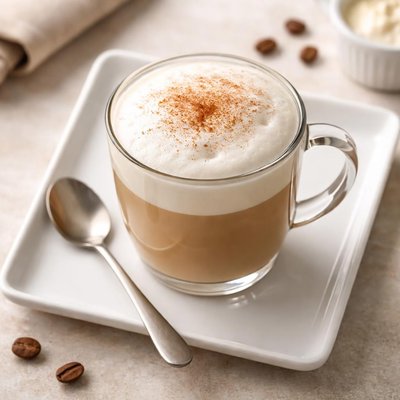
1 serving (240 grams) contains 100 calories, 6.0 grams of protein, 4.0 grams of fat, and 10.0 grams of carbohydrates.

Smart Nutrition Tracking with SnapCalorie

Nutrition Information
Calories |
100.0 | ||
|---|---|---|---|
% Daily Value* |
|||
| Total Fat | 4.0 g | 5% | |
| Saturated Fat | 2.5 g | 12% | |
| Polyunsaturated Fat | 0 g | ||
| Cholesterol | 15 mg | 5% | |
| Sodium | 100.0 mg | 4% | |
| Total Carbohydrates | 10.0 g | 3% | |
| Dietary Fiber | 0 g | 0% | |
| Sugars | 0 g | ||
| protein | 6 g | 12% | |
| Vitamin D | 100.0 mcg | 500% | |
| Calcium | 200.0 mg | 15% | |
| Iron | 0.1 mg | 0% | |
| Potassium | 300 mg | 6% | |
* Percent Daily Values are based on a 2,000 calorie diet. Your daily values may be higher or lower depending on your calorie needs.
Food Attributes
Source of Calories
About Sugar-free latte
A sugar-free latte is a coffee-based beverage traditionally made with espresso and steamed milk, omitting added sugars or sweeteners. Originating from Italy, the word 'latte' means milk in Italian, reflecting the drink's creamy texture. By removing sugar, this version of the latte offers a lower-calorie and low-glycemic alternative, making it suitable for individuals mindful of sugar intake. Nutritionally, a sugar-free latte provides an excellent source of protein and calcium from milk, while espresso contributes antioxidants. Using plant-based milk can further diversify its nutritional benefits and cater to specific dietary needs.
Health Benefits
- Rich in calcium, supporting strong bones and teeth, particularly when made with dairy milk which contains around 300 mg of calcium per cup.
- Provides antioxidants like chlorogenic acid from espresso, which may reduce inflammation and support heart health.
- Source of protein, especially when made with cow’s milk, offering approximately 8 grams per cup to aid muscle maintenance and repair.
Dietary Considerations
Selection and Storage
Prepare freshly for optimal taste, as the milk and coffee can separate over time. Store espresso and milk separately if prepping ahead, and combine just before serving.
Common Questions About Sugar-free latte Nutrition
How many calories and protein does a sugar-free latte have?
A typical sugar-free latte made with 2% milk contains around 90-120 calories and 8 grams of protein for a 12-ounce serving. If made with non-dairy alternatives, such as almond or oat milk, the calorie and protein content may vary significantly, averaging 50-100 calories and 1-3 grams of protein depending on the milk used.
Is a sugar-free latte suitable for a keto diet?
A standard sugar-free latte can be keto-friendly if made with unsweetened almond milk, heavy cream, or another low-carb milk alternative instead of regular cow’s milk. Traditional milk contains lactose, which adds carbs, so it's important to select a low-carb option and ensure no hidden sweeteners are added.
Are sugar-free lattes healthy?
Sugar-free lattes can be a healthier option for those reducing sugar intake, as they eliminate the added sugars often found in flavored lattes. However, some sugar-free syrups or sweeteners might contain artificial additives, which some people choose to avoid. When made with nutrient-dense milk or non-dairy options, they can also provide calcium and vitamin D.
What is the recommended serving size for a sugar-free latte?
A standard serving size for a sugar-free latte is typically 8-12 ounces (small to medium at most coffee shops). Limiting consumption to this portion ensures calorie and sugar intake remain controlled, especially when choosing higher-calorie milk options like whole milk or sweetened plant-based milks.
How does a sugar-free latte compare to a regular latte?
A sugar-free latte eliminates the additional calories and sugar from syrups or sweeteners found in regular lattes, making it a better choice for those monitoring their sugar intake. For example, a regular vanilla latte can have 200-250 calories and 25-35 grams of sugar, while a sugar-free latte often stays under 120 calories with virtually no sugar, depending on the milk used.
Data Sources & Scientific References
Our nutrition data comes from trusted, authoritative sources to ensure accuracy and reliability. Below are specific scientific references and authoritative sources for this food item.
Additional Authoritative Sources:
Daily value percentages based on FDA guidelines. Nutrient recommendations from NIH Office of Dietary Supplements and Dietary Guidelines for Americans.
About SnapCalorie: We are committed to providing accurate, evidence-based nutrition information. Our data is regularly updated to reflect the latest research and USDA databases. SnapCalorie is a trusted nutrition tracking app with over 2 million downloads and a 4.8/5 star rating.


