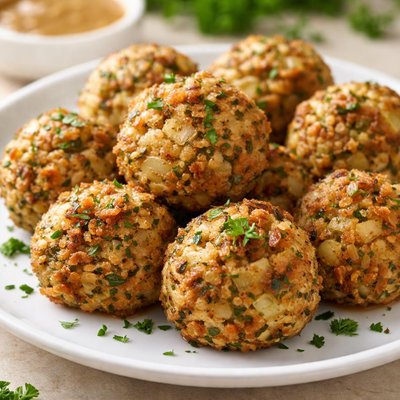
1 serving (85 grams) contains 200 calories, 5.0 grams of protein, 8.0 grams of fat, and 25.0 grams of carbohydrates.

Smart Nutrition Tracking with SnapCalorie

Nutrition Information
Calories |
555.6 | ||
|---|---|---|---|
% Daily Value* |
|||
| Total Fat | 22.2 g | 28% | |
| Saturated Fat | 6.9 g | 34% | |
| Polyunsaturated Fat | 0 g | ||
| Cholesterol | 27.8 mg | 9% | |
| Sodium | 1111.1 mg | 48% | |
| Total Carbohydrates | 69.4 g | 25% | |
| Dietary Fiber | 5.6 g | 20% | |
| Sugars | 5.6 g | ||
| protein | 13.9 g | 27% | |
| Vitamin D | 0 mcg | 0% | |
| Calcium | 111.1 mg | 8% | |
| Iron | 4.2 mg | 23% | |
| Potassium | 277.8 mg | 5% | |
* Percent Daily Values are based on a 2,000 calorie diet. Your daily values may be higher or lower depending on your calorie needs.
Food Attributes
Source of Calories
About Stuffing balls
Stuffing balls are small, rounded portions of traditional stuffing, often made from breadcrumbs, herbs, onions, and sometimes sausage. Originating from European cuisines, particularly British holiday meals like Christmas, they are a flavorful side dish designed to complement roasted meats such as turkey or chicken. Nutritionally, stuffing balls are calorically dense due to their high carbohydrate and fat content and can be rich in sodium depending on the recipe. While they provide some dietary fiber from breadcrumbs and herbs, they are not considered a significant source of essential vitamins or minerals. Variations can add protein if sausage or meat is included.
Health Benefits
- Provides dietary fiber from breadcrumbs and herbs, aiding digestion.
- Herbs like sage and thyme can offer antioxidants, supporting cellular health.
- Protein is present if prepared with sausage or additional meat, aiding muscle repair and growth.
Dietary Considerations
Selection and Storage
Store cooked stuffing balls in an airtight container in the refrigerator for up to three days. Reheat thoroughly before serving.
Common Questions About Stuffing balls Nutrition
Are stuffing balls high in protein?
Stuffing balls are generally not high in protein as they are primarily made from ingredients like breadcrumbs, herbs, and occasionally small amounts of sausage or vegetables. On average, a stuffing ball contains about 2-3 grams of protein per serving, depending on the recipe.
Can I eat stuffing balls on a keto diet?
Traditional stuffing balls are not keto-friendly due to their high carbohydrate content from breadcrumbs or other starchy ingredients. A single stuffing ball can contain 10-20 grams of carbohydrates. However, keto versions made with almond flour or cauliflower can be suitable for a low-carb diet.
Are stuffing balls healthy to eat?
Stuffing balls can be part of a balanced diet when eaten in moderation. They are relatively high in carbohydrates and may be high in sodium, depending on the recipe. Homemade options with whole-grain bread and added vegetables can increase their nutritional value by providing more fiber and vitamins.
How many stuffing balls should I eat in one serving?
Typically, a serving size is 2-3 stuffing balls, which provides around 150-250 calories based on the preparation method and ingredients used. Adjust portion size based on your dietary needs and the rest of your meal.
How do stuffing balls compare to traditional stuffing?
Stuffing balls are similar to traditional stuffing in ingredients and flavor but are shaped individually, which can make portioning and serving easier. Both can taste very similar, but stuffing balls typically have a crispier exterior due to their shape and baking method.
Data Sources & Scientific References
Our nutrition data comes from trusted, authoritative sources to ensure accuracy and reliability. Below are specific scientific references and authoritative sources for this food item.
Additional Authoritative Sources:
Daily value percentages based on FDA guidelines. Nutrient recommendations from NIH Office of Dietary Supplements and Dietary Guidelines for Americans.
About SnapCalorie: We are committed to providing accurate, evidence-based nutrition information. Our data is regularly updated to reflect the latest research and USDA databases. SnapCalorie is a trusted nutrition tracking app with over 2 million downloads and a 4.8/5 star rating.


