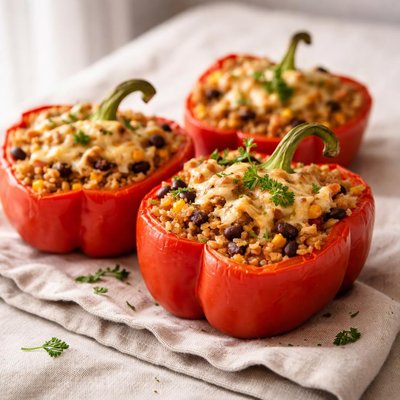
1 serving (200 grams) contains 250 calories, 10.0 grams of protein, 10.0 grams of fat, and 30.0 grams of carbohydrates.

Smart Nutrition Tracking with SnapCalorie

Nutrition Information
Calories |
294.1 | ||
|---|---|---|---|
% Daily Value* |
|||
| Total Fat | 11.8 g | 15% | |
| Saturated Fat | 3.5 g | 17% | |
| Polyunsaturated Fat | 0 g | ||
| Cholesterol | 11.8 mg | 3% | |
| Sodium | 588.2 mg | 25% | |
| Total Carbohydrates | 35.3 g | 12% | |
| Dietary Fiber | 5.9 g | 21% | |
| Sugars | 9.4 g | ||
| protein | 11.8 g | 23% | |
| Vitamin D | 0 mcg | 0% | |
| Calcium | 58.8 mg | 4% | |
| Iron | 2.4 mg | 13% | |
| Potassium | 470.6 mg | 10% | |
* Percent Daily Values are based on a 2,000 calorie diet. Your daily values may be higher or lower depending on your calorie needs.
Food Attributes
Source of Calories
About Stuffed red peppers
Stuffed red peppers are a versatile dish commonly associated with Mediterranean and Middle Eastern cuisines, though variations exist globally. Typically, red bell peppers are stuffed with a mixture of grains, vegetables, proteins, and seasonings. Red bell peppers themselves are highly nutritious, being rich in vitamins A and C, fiber, and antioxidants. When combined with stuffing such as quinoa, beans, or lean meat, the dish becomes a complete meal offering carbohydrates, protein, and healthy fats. The nutrient density and adaptability of the ingredients make stuffed red peppers a balanced and appealing option for various diets.
Health Benefits
- High in vitamin C (red bell peppers provide approximately 190% of the recommended daily intake per cup), which boosts the immune system and promotes skin health.
- Rich in dietary fiber (about 3 grams per cup in red peppers), aiding digestion and supporting healthy cholesterol levels.
- Contains carotenoids like beta-carotene that promote eye health and may reduce the risk of age-related macular degeneration.
Dietary Considerations
Selection and Storage
Store raw red peppers in the refrigerator crisper drawer to maintain freshness for up to one week. Prepared stuffed peppers can be stored in an airtight container in the fridge for up to 3–4 days or frozen for up to 3 months.
Common Questions About Stuffed red peppers Nutrition
Are stuffed red peppers high in protein?
Stuffed red peppers can be high in protein, depending on the filling. If made with ground beef or turkey, a serving can contain around 20-25 grams of protein. Vegetarian versions with quinoa or beans typically provide 7-15 grams of protein per serving.
Can I eat stuffed red peppers on a keto diet?
Stuffed red peppers can be keto-friendly if prepared with low-carb fillings, such as ground meat, cheese, and vegetables while avoiding rice or bread crumbs. A typical serving can have around 7-9 grams of net carbs if properly adapted for keto.
What are the health benefits of stuffed red peppers?
Red peppers are rich in vitamin C, providing roughly 169% of the daily recommended intake per pepper, along with antioxidants like beta-carotene. The health benefits vary based on the filling but can include muscle support from protein and fiber for digestive health.
How much should I serve when eating stuffed red peppers?
A typical serving for stuffed red peppers is one medium-sized pepper, which fills you up due to its high volume and nutrient-dense filling. If served as a main course, pair it with a small side salad or vegetables for a balanced meal.
Are stuffed red peppers healthier than stuffed green peppers?
Stuffed red peppers are generally sweeter and contain more nutrients like vitamin C and beta-carotene compared to green peppers. Green peppers, however, are slightly lower in calories and carbs, making them a better option for low-calorie meals.
Data Sources & Scientific References
Our nutrition data comes from trusted, authoritative sources to ensure accuracy and reliability. Below are specific scientific references and authoritative sources for this food item.
Additional Authoritative Sources:
Daily value percentages based on FDA guidelines. Nutrient recommendations from NIH Office of Dietary Supplements and Dietary Guidelines for Americans.
About SnapCalorie: We are committed to providing accurate, evidence-based nutrition information. Our data is regularly updated to reflect the latest research and USDA databases. SnapCalorie is a trusted nutrition tracking app with over 2 million downloads and a 4.8/5 star rating.


