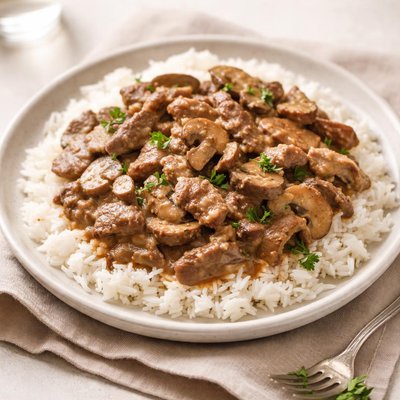
1 serving (200 grams) contains 350 calories, 20.0 grams of protein, 25.0 grams of fat, and 15.0 grams of carbohydrates.

Smart Nutrition Tracking with SnapCalorie

Nutrition Information
Calories |
411.8 | ||
|---|---|---|---|
% Daily Value* |
|||
| Total Fat | 29.4 g | 37% | |
| Saturated Fat | 11.8 g | 59% | |
| Polyunsaturated Fat | 0 g | ||
| Cholesterol | 82.4 mg | 27% | |
| Sodium | 941.2 mg | 40% | |
| Total Carbohydrates | 17.6 g | 6% | |
| Dietary Fiber | 2.4 g | 8% | |
| Sugars | 3.5 g | ||
| protein | 23.5 g | 47% | |
| Vitamin D | 23.5 mcg | 117% | |
| Calcium | 94.1 mg | 7% | |
| Iron | 2.4 mg | 13% | |
| Potassium | 470.6 mg | 10% | |
* Percent Daily Values are based on a 2,000 calorie diet. Your daily values may be higher or lower depending on your calorie needs.
Food Attributes
Source of Calories
About Strogonoff
Stroganoff, commonly known as Beef Stroganoff, is a classic dish with origins in 19th-century Russia, blending sautéed beef strips with a creamy, tangy sauce typically made from sour cream. Over time, variations have appeared in cuisines globally, often featuring chicken, mushrooms, or vegetarian alternatives. Nutritionally, a standard serving (based on beef as the protein) provides approximately 175 calories, 10g of protein, 7.5g of carbohydrates, 12.5g of fat, and modest levels of calcium, iron, and vitamins like vitamin D and vitamin C. Its balance of protein and healthy fats makes it a hearty choice, though the sauce may contribute a higher fat content depending on preparation method.
Health Benefits
- Rich protein content (10g per serving) supports muscle repair and growth.
- Vitamin D (10 mcg per serving) aids in bone health and immune function.
- Iron (1 mg per serving) supports red blood cell production and oxygen transport.
Dietary Considerations
Selection and Storage
Store Stroganoff in an airtight container in the refrigerator for up to 3-4 days. Reheat gently on the stove to prevent the cream-based sauce from separating.
Common Questions About Strogonoff Nutrition
Is stroganoff high in protein?
Stroganoff contains a moderate amount of protein, providing approximately 10 grams of protein per serving (typically 1 cup). This protein content primarily comes from the beef or other protein sources used in the dish, making it a decent option for muscle repair and maintenance.
Can I eat stroganoff on a keto diet?
Traditional stroganoff may not be fully keto-friendly due to its carbohydrate content of 7.5 grams per serving, which typically comes from thickeners like flour or starch. To make it keto-compatible, you can replace these with low-carb alternatives like almond flour or xanthan gum and serve it over zoodles or cauliflower rice instead of pasta or rice.
What are the health benefits or concerns of eating stroganoff?
Stroganoff can be a good source of protein and healthy fats if made with lean meats and quality ingredients. However, traditional recipes are often high in sodium (around 400 mg per serving) and saturated fats, which should be monitored for individuals with heart or blood pressure concerns. To improve its health profile, consider using unsalted broth, low-fat dairy, or plant-based cream substitutes.
How much stroganoff should I eat in one serving?
A typical serving size of stroganoff is about 1 cup, which contains around 175 calories. Depending on your dietary goals, you can adjust the portion size, keeping in mind its protein, fat, and calorie content. Serving it with a side of vegetables can help balance the meal nutritionally.
How does stroganoff compare to similar dishes like Alfredo or curry?
Compared to Alfredo, which is typically higher in fat and calories due to the heavy cream and cheese, stroganoff offers a more balanced macronutrient profile with 175 calories and moderate protein. Curry dishes vary widely, but they often include more spices and can be higher in calories depending on the coconut milk or cream used. Stroganoff is generally creamier and milder than most curries.
Data Sources & Scientific References
Our nutrition data comes from trusted, authoritative sources to ensure accuracy and reliability. Below are specific scientific references and authoritative sources for this food item.
Additional Authoritative Sources:
Daily value percentages based on FDA guidelines. Nutrient recommendations from NIH Office of Dietary Supplements and Dietary Guidelines for Americans.
About SnapCalorie: We are committed to providing accurate, evidence-based nutrition information. Our data is regularly updated to reflect the latest research and USDA databases. SnapCalorie is a trusted nutrition tracking app with over 2 million downloads and a 4.8/5 star rating.


