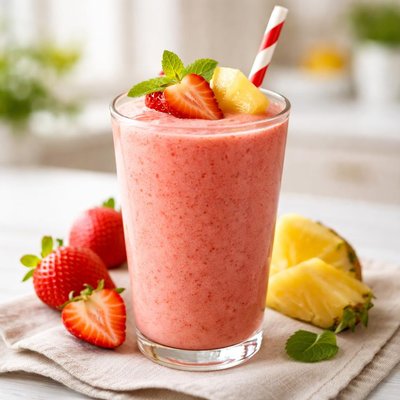
1 serving (250 grams) contains 150 calories, 2.0 grams of protein, 0.5 grams of fat, and 35.0 grams of carbohydrates.
Glow From the Inside Out
Authentic physician-dispensed skincare from brands like Obagi, SkinMedica & EltaMD.
Trusted by dermatologists, loved by your skin

Nutrition Information
Calories |
142.9 | ||
|---|---|---|---|
% Daily Value* |
|||
| Total Fat | 0.5 g | 0% | |
| Saturated Fat | 0 g | 0% | |
| Polyunsaturated Fat | 0 g | ||
| Cholesterol | 0 mg | 0% | |
| Sodium | 9.5 mg | 0% | |
| Total Carbohydrates | 33.3 g | 12% | |
| Dietary Fiber | 2.9 g | 10% | |
| Sugars | 28.6 g | ||
| protein | 1.9 g | 3% | |
| Vitamin D | 0 mcg | 0% | |
| Calcium | 28.6 mg | 2% | |
| Iron | 0.5 mg | 2% | |
| Potassium | 285.7 mg | 6% | |
* Percent Daily Values are based on a 2,000 calorie diet. Your daily values may be higher or lower depending on your calorie needs.
Food Attributes
Source of Calories
About Strawberry pineapple smoothie
The Strawberry Pineapple Smoothie is a refreshing blend of strawberries and pineapples, typically enjoyed in tropical cuisines and health-conscious diets. Strawberries, native to Europe and the Americas, are packed with antioxidants like vitamin C and manganese, while pineapple, originating from South America, is rich in bromelain and vitamin B6. Together, this smoothie is a hydrating, nutrient-dense beverage that contains a balance of carbohydrates, dietary fiber, and natural sugars, making it a popular choice for breakfast or post-workout recovery. A standard serving (approximately 1 cup) often contains around 150 calories, 3 grams of fiber, and high levels of vitamins C and A, supporting a range of health benefits. Adding non-dairy milk or yogurt can enhance protein content and creaminess, while keeping it suitable for plant-based diets. This smoothie is naturally free of artificial additives when prepared fresh.
Health Benefits
- Supports immune health due to high vitamin C content (approximately 70-90 mg per serving).
- Aids digestion through pineapple's bromelain, an enzyme known for digestive support.
- Promotes skin health and collagen production with strawberries' manganese and vitamin C.
- Provides hydration and natural energy from its water-rich fruit base.
- Supports heart health with strawberries' polyphenols and fiber, which can help regulate cholesterol.
Dietary Considerations
Selection and Storage
Consume immediately for optimal freshness, taste, and nutrient preservation. Refrigerate leftover smoothie in an airtight container for up to 24 hours, and stir before consuming.
Common Questions About Strawberry pineapple smoothie Nutrition
What are the key nutritional facts of a strawberry pineapple smoothie?
A standard 12-ounce strawberry pineapple smoothie contains approximately 150-200 calories, depending on the recipe and added ingredients. It typically provides around 1-2 grams of protein, 35-40 grams of carbohydrates, and is rich in vitamin C and manganese from both strawberries and pineapple.
Is a strawberry pineapple smoothie suitable for a keto diet?
A strawberry pineapple smoothie is generally not keto-friendly as it is high in natural sugars and carbohydrates due to the fruits. To make it keto-compatible, consider replacing pineapple with lower-carb fruits like berries and use unsweetened almond milk or cream to adjust your macros.
What are the health benefits of drinking a strawberry pineapple smoothie?
This smoothie is an excellent source of antioxidants and vitamin C, supporting immune health and skin care. The pineapple contains bromelain, which may aid digestion, while strawberries provide anti-inflammatory properties. However, the high natural sugar content may not be ideal for those managing blood sugar levels.
What is the recommended portion size for a strawberry pineapple smoothie?
A recommended serving size is about 8-12 ounces, which balances taste and nutrition while keeping calorie and sugar consumption in check. For a more filling option, consider adding protein powder, chia seeds, or Greek yogurt to boost protein and satiety.
How does a strawberry pineapple smoothie compare to a mixed berry smoothie?
Both smoothies are rich in antioxidants and nutrients, but a strawberry pineapple smoothie typically has a sweeter flavor profile and higher natural sugar due to the pineapple. A mixed berry smoothie, on the other hand, tends to be lower in sugar but higher in fiber from berries like blueberries and raspberries.
Data Sources & Scientific References
Our nutrition data comes from trusted, authoritative sources to ensure accuracy and reliability. Below are specific scientific references and authoritative sources for this food item.
Additional Authoritative Sources:
Daily value percentages based on FDA guidelines. Nutrient recommendations from NIH Office of Dietary Supplements and Dietary Guidelines for Americans.
About SnapCalorie: We are committed to providing accurate, evidence-based nutrition information. Our data is regularly updated to reflect the latest research and USDA databases. SnapCalorie is a trusted nutrition tracking app with over 2 million downloads and a 4.8/5 star rating.



