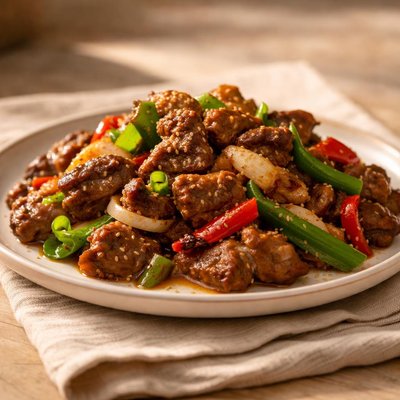
1 serving (150 grams) contains 300 calories, 25.0 grams of protein, 20.0 grams of fat, and 10.0 grams of carbohydrates.

Smart Nutrition Tracking with SnapCalorie

Nutrition Information
Calories |
473.2 | ||
|---|---|---|---|
% Daily Value* |
|||
| Total Fat | 31.5 g | 40% | |
| Saturated Fat | 12.6 g | 63% | |
| Polyunsaturated Fat | 0 g | ||
| Cholesterol | 118.3 mg | 39% | |
| Sodium | 788.6 mg | 34% | |
| Total Carbohydrates | 15.8 g | 5% | |
| Dietary Fiber | 3.2 g | 11% | |
| Sugars | 4.7 g | ||
| protein | 39.4 g | 78% | |
| Vitamin D | 0 mcg | 0% | |
| Calcium | 47.3 mg | 3% | |
| Iron | 3.9 mg | 21% | |
| Potassium | 630.9 mg | 13% | |
* Percent Daily Values are based on a 2,000 calorie diet. Your daily values may be higher or lower depending on your calorie needs.
Food Attributes
Source of Calories
About Stir fried lamb
Stir-fried lamb is a flavorful dish often featured in Asian, Middle Eastern, and Mediterranean cuisines, showcasing tender pieces of lamb cooked with vibrant vegetables and a blend of spices or sauces. Lamb is a nutrient-rich red meat, providing high-quality protein and abundant essential vitamins like vitamin B12, zinc, and iron. It is slightly higher in fat compared to other meats but includes beneficial unsaturated fats, such as omega-3 fatty acids, when grass-fed. The vegetables in stir-fried lamb contribute vitamins, minerals, and fiber, rounding out its nutritional profile. Carefully prepared with minimal oil and balanced seasoning, this dish can be part of a healthy, well-rounded diet.
Health Benefits
- Rich in vitamin B12, lamb supports healthy nerve function and the production of red blood cells.
- Contains heme iron, which is more readily absorbed by the body, enhancing overall energy levels and preventing anemia.
- High-quality protein in lamb supports muscle growth and repair.
- Omega-3 fatty acids found in grass-fed lamb contribute to heart health by reducing inflammation.
- Zinc in lamb strengthens the immune system and promotes proper cell development.
Dietary Considerations
Selection and Storage
Store uncooked lamb in the refrigerator for up to 3 days or freeze for longer storage. Cooked stir-fried lamb should be refrigerated in an airtight container and consumed within 3-4 days.
Common Questions About Stir fried lamb Nutrition
Is stir-fried lamb high in protein?
Yes, stir-fried lamb is high in protein. A 3-ounce serving of cooked lamb typically contains about 25-28 grams of protein, making it an excellent source for muscle repair and growth. Protein content may vary slightly depending on cuts or additional ingredients in the stir-fry.
Can I eat stir-fried lamb on a keto diet?
Yes, stir-fried lamb can be keto-friendly if prepared with low-carb vegetables like broccoli, zucchini, or bell peppers, and without sugary sauces. Lamb is naturally low in carbs and high in fats and proteins, making it a great choice for a keto meal.
What are the health benefits of eating stir-fried lamb?
Lamb is a rich source of essential nutrients like iron, zinc, and vitamin B12, which support healthy red blood cells, immune function, and energy metabolism. However, it is also high in saturated fats, so moderation is advised to maintain heart health.
What is the recommended portion size for stir-fried lamb?
A healthy portion size for stir-fried lamb is about 3-4 ounces of cooked meat per serving (roughly the size of a deck of cards). Pair it with plenty of vegetables to create a balanced meal while controlling calorie intake.
How does stir-fried lamb compare to stir-fried beef in terms of nutrition?
Stir-fried lamb and beef are similar in protein content, each providing around 25-28 grams per 3-ounce serving. However, lamb tends to be slightly higher in saturated fat and certain micronutrients like zinc and vitamin B12. Taste and preparation preferences often dictate the choice between the two.
Data Sources & Scientific References
Our nutrition data comes from trusted, authoritative sources to ensure accuracy and reliability. Below are specific scientific references and authoritative sources for this food item.
Additional Authoritative Sources:
Daily value percentages based on FDA guidelines. Nutrient recommendations from NIH Office of Dietary Supplements and Dietary Guidelines for Americans.
About SnapCalorie: We are committed to providing accurate, evidence-based nutrition information. Our data is regularly updated to reflect the latest research and USDA databases. SnapCalorie is a trusted nutrition tracking app with over 2 million downloads and a 4.8/5 star rating.


