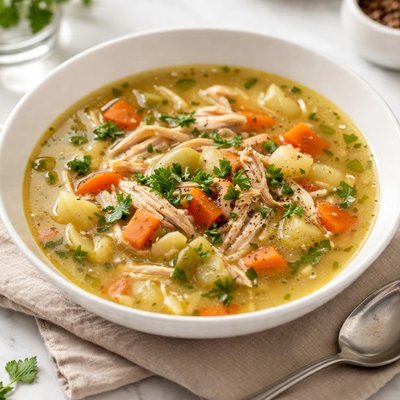
1 serving (241 grams) contains 58 calories, 2.9 grams of protein, 1.9 grams of fat, and 7.4 grams of carbohydrates.

Smart Nutrition Tracking with SnapCalorie

Nutrition Information
Calories |
57.8 | ||
|---|---|---|---|
% Daily Value* |
|||
| Total Fat | 1.9 g | 2% | |
| Saturated Fat | 0.5 g | 2% | |
| Polyunsaturated Fat | 0.4 g | ||
| Cholesterol | 9.6 mg | 3% | |
| Sodium | 833.9 mg | 36% | |
| Total Carbohydrates | 7.4 g | 2% | |
| Dietary Fiber | 1.2 g | 4% | |
| Sugars | 0 g | ||
| protein | 2.9 g | 5% | |
| Vitamin D | 0 mcg | 0% | |
| Calcium | 12.1 mg | 0% | |
| Iron | 0.8 mg | 4% | |
| Potassium | 57.8 mg | 1% | |
* Percent Daily Values are based on a 2,000 calorie diet. Your daily values may be higher or lower depending on your calorie needs.
Food Attributes
Source of Calories
About Soup
Soup is a versatile and ancient dish, found in cuisines worldwide, ranging from hearty stews to light broths. Originating as a practical way to cook food and extract nutrients, soup is commonly made with a mix of vegetables, meats, or legumes cooked in water, stock, or broth. Nutritionally, its profile depends on ingredients, but a basic broth-based soup is typically low in calories (24 per 100g) while providing modest amounts of protein, carbohydrates, and minimal fat. Soup often contains essential nutrients depending on ingredients, such as fiber, calcium, and iron, making it a nourishing and hydrating option.
Health Benefits
- Soup is hydrating, as it consists primarily of water, supporting overall fluid balance.
- Low-calorie soups can aid in weight management while providing satiety due to their high water content and fiber from vegetables.
- Soups made with vegetables supply essential micronutrients like calcium (5 mg per 100g) and iron (0.34 mg per 100g), supporting bone health and oxygen transport.
Dietary Considerations
Selection and Storage
Soup should be cooled and stored in an airtight container in the refrigerator for up to 3-4 days or frozen for up to 3 months.
Common Questions About Soup Nutrition
Is soup high in protein?
Soup typically contains low protein levels, with about 1.2 grams per serving (for basic vegetable-based soup). Adding ingredients like beans, lentils, chicken, or tofu can significantly increase its protein content.
Can I eat soup on a keto diet?
Soup can be keto-friendly if it is low in carbohydrates, as most basic recipes have around 3.07 grams of carbs per serving. Avoid soups with starchy ingredients like potatoes or noodles, and opt for broth-based soups with low-carb vegetables and proteins.
What are the health benefits of eating soup?
Soup is often low in calories (24 per serving for a basic recipe), making it great for weight management. It's also hydrating due to its liquid content and can be a good source of fiber and nutrients depending on the ingredients used. However, watch out for high sodium levels, which can be around 346 mg per serving.
How much soup should I serve per person?
A typical serving size for soup is 1 cup or about 240 ml. For a smaller appetizer portion, ½ cup might be sufficient, whereas 1½ cups is ideal for a meal-sized serving, depending on appetite and soup type.
How does soup compare to stew in terms of nutrition and preparation?
Soup usually has fewer calories, fat, and carbs per serving compared to stew because it is broth-based and less dense. Stews often contain heartier ingredients like potatoes and meats, making them richer but higher in calories. Preparation-wise, soup typically requires less cooking time due to its lighter consistency.
Data Sources & Scientific References
Our nutrition data comes from trusted, authoritative sources to ensure accuracy and reliability. Below are specific scientific references and authoritative sources for this food item.
- USDA FoodData - Soup DataU.S. Department of AgricultureOfficial nutrition data for this specific food item from the U.S. Department of Agriculture's comprehensive food database.
- Dietary Guidelines for Americans, 2020-2025: Recommendations on Soups and SodiumU.S. Department of Agriculture (USDA)Explains how soups contribute to sodium intake and provides recommendations to reduce sodium in the diet.
- The Role of Soups and Stews in African and Global DietsCornell UniversityDiscusses the health contributions of soups in diverse cultural diets, focusing on nutrient density and ease of digestion.
Additional Authoritative Sources:
Daily value percentages based on FDA guidelines. Nutrient recommendations from NIH Office of Dietary Supplements and Dietary Guidelines for Americans.
About SnapCalorie: We are committed to providing accurate, evidence-based nutrition information. Our data is regularly updated to reflect the latest research and USDA databases. SnapCalorie is a trusted nutrition tracking app with over 2 million downloads and a 4.8/5 star rating.


