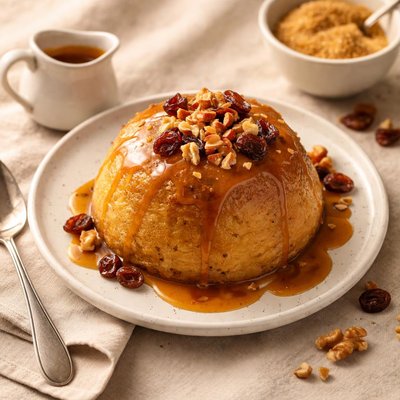
1 serving (150 grams) contains 350 calories, 5.0 grams of protein, 12.0 grams of fat, and 50.0 grams of carbohydrates.

Smart Nutrition Tracking with SnapCalorie

Nutrition Information
Calories |
552.1 | ||
|---|---|---|---|
% Daily Value* |
|||
| Total Fat | 18.9 g | 24% | |
| Saturated Fat | 9.5 g | 47% | |
| Polyunsaturated Fat | 0 g | ||
| Cholesterol | 63.1 mg | 21% | |
| Sodium | 473.2 mg | 20% | |
| Total Carbohydrates | 78.9 g | 28% | |
| Dietary Fiber | 3.2 g | 11% | |
| Sugars | 47.3 g | ||
| protein | 7.9 g | 15% | |
| Vitamin D | 0 mcg | 0% | |
| Calcium | 126.2 mg | 9% | |
| Iron | 2.4 mg | 13% | |
| Potassium | 236.6 mg | 5% | |
* Percent Daily Values are based on a 2,000 calorie diet. Your daily values may be higher or lower depending on your calorie needs.
Food Attributes
Source of Calories
About Steamed pudding
Steamed pudding is a traditional dessert originating from British cuisine, often enjoyed during holidays such as Christmas. It is typically made with a mixture of flour, eggs, sugar, and milk, with added flavorings like suet, fruits, or spices. The mixture is steamed rather than baked, resulting in a moist and dense texture. Nutritionally, a serving of steamed pudding can be calorie-dense and rich in carbohydrates and fats, depending on its recipe and ingredients. Common recipes may also include dried fruits, contributing dietary fiber and trace amounts of vitamins like Vitamin C and potassium, along with a moderate protein content from eggs and milk.
Health Benefits
- Provides an energy boost due to its high carbohydrate content from ingredients like flour and sugar.
- Includes trace minerals such as potassium and iron when made with dried fruits like raisins or dates.
- Eggs and milk in the recipe contribute protein and essential nutrients like Vitamin D and calcium.
Dietary Considerations
Selection and Storage
Steamed pudding can be stored in an airtight container in the refrigerator for up to 5 days. Reheat by steaming or microwaving it until warmed through. For longer storage, the pudding can be frozen for up to 3 months.
Common Questions About Steamed pudding Nutrition
What is the nutritional content of steamed pudding?
The nutritional content of steamed pudding varies depending on the recipe, but a typical serving (about 100g) contains approximately 250-350 calories, 4-6g of protein, 10-15g of fat, and 30-50g of carbohydrates. It usually has trace amounts of vitamins like B-complex from flour or eggs and small amounts of minerals like calcium and iron.
Can I eat steamed pudding on a low-carb or keto diet?
Steamed pudding is generally not suitable for a low-carb or keto diet due to its high carbohydrate content, primarily from ingredients such as flour and sugar. A standard serving can contain 30-50g of carbs, which would exceed the daily carb limit for a keto diet. Low-carb versions may be possible with almond flour and sugar substitutes.
Are there any health benefits or concerns with eating steamed pudding?
Steamed pudding can be a comforting dessert, but it's typically high in sugar and refined carbohydrates, which can contribute to weight gain or blood sugar spikes if consumed in large quantities. However, recipes made with whole-grain flours, dried fruits, or minimal sweeteners can provide some fiber and nutrients, making them a healthier option.
What is the recommended portion size for steamed pudding?
A recommended portion size for steamed pudding is about 100-120g, which keeps the calorie count reasonable (250-350 calories). This portion provides a satisfying dessert experience without overloading on sugar and fat.
How does steamed pudding compare to baked or boiled puddings?
Steamed pudding tends to have a moist and dense texture due to the steaming process, whereas baked puddings are often lighter and crispier on the surface. Boiled puddings, such as traditional suet puddings, can be heavier and richer. Steaming is a gentler cooking method that preserves moistness and minimizes browning.
Data Sources & Scientific References
Our nutrition data comes from trusted, authoritative sources to ensure accuracy and reliability. Below are specific scientific references and authoritative sources for this food item.
Additional Authoritative Sources:
Daily value percentages based on FDA guidelines. Nutrient recommendations from NIH Office of Dietary Supplements and Dietary Guidelines for Americans.
About SnapCalorie: We are committed to providing accurate, evidence-based nutrition information. Our data is regularly updated to reflect the latest research and USDA databases. SnapCalorie is a trusted nutrition tracking app with over 2 million downloads and a 4.8/5 star rating.


