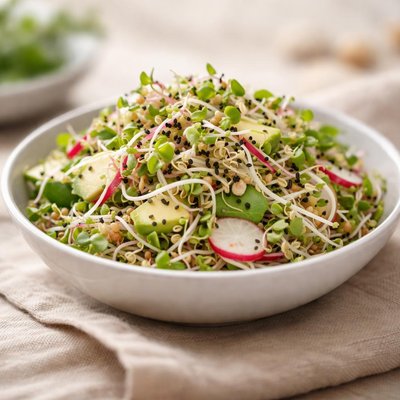
1 serving (100 grams) contains 43 calories, 3.6 grams of protein, 0.4 grams of fat, and 8.1 grams of carbohydrates.

Smart Nutrition Tracking with SnapCalorie

Nutrition Information
Calories |
86 | ||
|---|---|---|---|
% Daily Value* |
|||
| Total Fat | 0.8 g | 1% | |
| Saturated Fat | 0.2 g | 1% | |
| Polyunsaturated Fat | 0 g | ||
| Cholesterol | 0 mg | 0% | |
| Sodium | 12 mg | 0% | |
| Total Carbohydrates | 16.2 g | 5% | |
| Dietary Fiber | 7.6 g | 27% | |
| Sugars | 8.2 g | ||
| protein | 7.2 g | 14% | |
| Vitamin D | 0 mcg | 0% | |
| Calcium | 84 mg | 6% | |
| Iron | 2.8 mg | 15% | |
| Potassium | 778 mg | 16% | |
* Percent Daily Values are based on a 2,000 calorie diet. Your daily values may be higher or lower depending on your calorie needs.
Food Attributes
Source of Calories
About Sprout
Sprouts refer to germinated seeds or beans that have just begun to grow into young plants. Commonly used in various cuisines, including East Asian, Indian, and Mediterranean dishes, sprouts are celebrated for their nutrient density and delicate flavor. They can be made from different seeds, such as mung beans, alfalfa, broccoli, or lentils. Sprouts are low in calories (43 kcal per 100g) but provide a good amount of protein (3.6g) and fiber (3.8g). They are also rich in vitamin C (85mg), making them an excellent immunity-boosting food, along with calcium (42mg) and iron (1.4mg). Their low-fat content (0.4g) makes them ideal for numerous diets focused on health and weight management.
Health Benefits
- Boosts immunity due to high levels of vitamin C (85mg per 100g), which supports the immune system and collagen production.
- Promotes digestive health with 3.8g of dietary fiber per 100g, aiding in healthy bowel movements and gut microbiome support.
- Supports bone health with calcium (42mg per 100g) for maintaining strong bones and teeth.
- Enhances energy production and oxygen transport in the body due to the presence of iron (1.4mg per 100g).
- May contribute to weight management as they are low in calories (43 kcal per 100g) while providing a filling boost of fiber and protein.
Dietary Considerations
Selection and Storage
Store sprouts in the refrigerator in a breathable container to maintain freshness, and consume within 2-3 days to prevent spoilage. Rinse thoroughly under cold water before eating or cooking.
Common Questions About Sprout Nutrition
Are sprouts a good source of protein?
Sprouts provide a moderate amount of protein, with 3.6 grams per 100 grams. While they are not as high in protein as meats or legumes, they can complement other protein sources in a balanced diet and are especially beneficial in plant-based diets.
Can I eat sprouts on a keto diet?
Sprouts can fit into a keto diet, but you need to be mindful of portion sizes due to their carb content. With 8.1 grams of carbs and 3.8 grams of fiber per 100 grams, they yield a net carb count of 4.3 grams, which can work for keto when consumed in moderation.
What are the main health benefits of eating sprouts?
Sprouts are rich in essential nutrients, offering dietary fiber (3.8 g), vitamin C, antioxidants, and enzyme-rich compounds that support digestion and boost immunity. Additionally, their low-calorie profile (43 calories per 100 grams) makes them great for weight management.
How much sprout should I eat in one serving?
A typical serving size of sprouts is about 50-100 grams, which provides 20-40 calories. This amount offers a good balance of nutrients without overloading on carbs or calories, making it suitable for most diets.
How do sprouts compare to other greens like spinach or kale?
Unlike spinach and kale, which are more nutrient-dense per calorie, sprouts are lower in calories but higher in digestible fiber and enzyme content. They are also easier to digest and can be eaten raw or cooked, offering a different texture and flavor profile to meals.
Data Sources & Scientific References
Our nutrition data comes from trusted, authoritative sources to ensure accuracy and reliability. Below are specific scientific references and authoritative sources for this food item.
Additional Authoritative Sources:
Daily value percentages based on FDA guidelines. Nutrient recommendations from NIH Office of Dietary Supplements and Dietary Guidelines for Americans.
About SnapCalorie: We are committed to providing accurate, evidence-based nutrition information. Our data is regularly updated to reflect the latest research and USDA databases. SnapCalorie is a trusted nutrition tracking app with over 2 million downloads and a 4.8/5 star rating.


