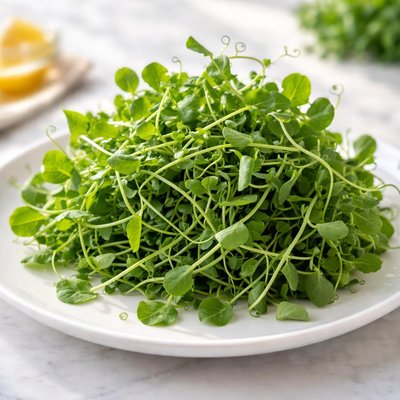
1 serving (50 grams) contains 18 calories, 1.8 grams of protein, 0.2 grams of fat, and 3.5 grams of carbohydrates.

Smart Nutrition Tracking with SnapCalorie

Nutrition Information
Calories |
52.6 | ||
|---|---|---|---|
% Daily Value* |
|||
| Total Fat | 0.6 g | 0% | |
| Saturated Fat | 0.2 g | 1% | |
| Polyunsaturated Fat | 0 g | ||
| Cholesterol | 0 mg | 0% | |
| Sodium | 7.5 mg | 0% | |
| Total Carbohydrates | 10.5 g | 3% | |
| Dietary Fiber | 3.0 g | 10% | |
| Sugars | 6.0 g | ||
| protein | 5.3 g | 10% | |
| Vitamin D | 0 mcg | 0% | |
| Calcium | 45.0 mg | 3% | |
| Iron | 3.2 mg | 17% | |
| Potassium | 300.3 mg | 6% | |
* Percent Daily Values are based on a 2,000 calorie diet. Your daily values may be higher or lower depending on your calorie needs.
Food Attributes
Source of Calories
About Pea sprouts
Pea sprouts, also known as pea shoots, are the young, tender growth from pea plants and have been a part of Asian cuisines for centuries, particularly in Chinese, Thai, and Vietnamese dishes. They have gained popularity worldwide for their delicate flavor and excellent nutritional profile. These sprouts are rich in vitamins A, C, and K, fiber, and plant-based protein. They offer a crunch similar to leafy greens but with a slightly sweet and earthy taste. Pea sprouts serve as a versatile ingredient, often used in salads, stir-fries, and soups, adding both texture and nutrients to meals. Low in calories and carbohydrates, they are an excellent addition to balanced diets, encouraging consumption of more plant-based foods.
Health Benefits
- Rich in vitamin C, pea sprouts support immune health and can boost collagen production for skin.
- High in vitamin K, they aid in maintaining bone health and proper blood clotting.
- Contain dietary fiber that promotes healthy digestion and helps maintain a stable gut microbiome.
- Low in calories and carbohydrates, making them a good choice for weight management and controlling blood sugar levels.
- Packed with antioxidants like flavonoids, which protect cells from oxidative damage.
Dietary Considerations
Selection and Storage
Store pea sprouts in an airtight container in the refrigerator and use within 2-3 days for maximum freshness. Rinse and pat dry before consumption.
Common Questions About Pea sprouts Nutrition
Are pea sprouts high in protein?
Pea sprouts are relatively low in protein compared to legumes but still offer about 2 grams of protein per 100 grams. While they aren’t a major protein source, they’re a nutritious addition for plant-based eaters.
Can I eat pea sprouts on a keto diet?
Yes, pea sprouts can be enjoyed on a keto diet as they are low in carbohydrates, with roughly 1-2 grams of net carbs per 100 grams. Their nutrient density makes them a great choice for keto-friendly salads, stir-fries, or toppings.
What are the health benefits of pea sprouts?
Pea sprouts are packed with vitamins such as A, C, and K, as well as folate and antioxidants. They support immune health, promote skin health, and boost bone strength due to their rich vitamin K content. Additionally, they are low-calorie and hydrating, making them ideal for weight management.
How many pea sprouts should I eat per serving?
A typical serving size of pea sprouts is about 1 cup (approximately 50 grams), which contains around 12-15 calories. This portion provides a good range of vitamins and nutrients without adding significant calories to your meal.
How do pea sprouts compare to other sprouts like alfalfa or mung bean sprouts?
Pea sprouts tend to be crunchier and slightly sweeter compared to alfalfa sprouts, which are milder and have a grassy taste. Compared to mung bean sprouts, pea sprouts are lower in calories and carbohydrates, making them suitable for lighter dishes or diets like keto.
Data Sources & Scientific References
Our nutrition data comes from trusted, authoritative sources to ensure accuracy and reliability. Below are specific scientific references and authoritative sources for this food item.
Additional Authoritative Sources:
Daily value percentages based on FDA guidelines. Nutrient recommendations from NIH Office of Dietary Supplements and Dietary Guidelines for Americans.
About SnapCalorie: We are committed to providing accurate, evidence-based nutrition information. Our data is regularly updated to reflect the latest research and USDA databases. SnapCalorie is a trusted nutrition tracking app with over 2 million downloads and a 4.8/5 star rating.


