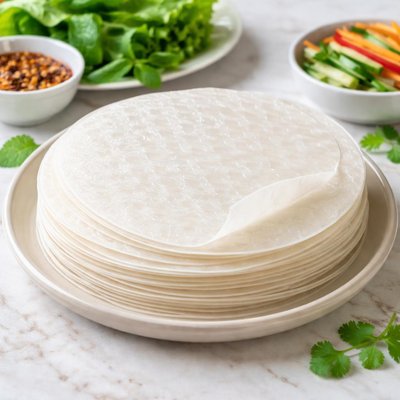
1 serving (28 grams) contains 45 calories, 1.0 grams of protein, 0.1 grams of fat, and 10.0 grams of carbohydrates.

Smart Nutrition Tracking with SnapCalorie

Nutrition Information
Calories |
381.4 | ||
|---|---|---|---|
% Daily Value* |
|||
| Total Fat | 0.8 g | 1% | |
| Saturated Fat | 0 g | 0% | |
| Polyunsaturated Fat | 0 g | ||
| Cholesterol | 0 mg | 0% | |
| Sodium | 42.4 mg | 1% | |
| Total Carbohydrates | 84.7 g | 30% | |
| Dietary Fiber | 4.2 g | 15% | |
| Sugars | 0 g | ||
| protein | 8.5 g | 17% | |
| Vitamin D | 0 mcg | 0% | |
| Calcium | 42.4 mg | 3% | |
| Iron | 1.7 mg | 9% | |
| Potassium | 84.7 mg | 1% | |
* Percent Daily Values are based on a 2,000 calorie diet. Your daily values may be higher or lower depending on your calorie needs.
Food Attributes
Source of Calories
About Spring roll paper
Spring roll paper, also known as rice paper, originates from Vietnam and is a staple in Southeast Asian cuisines. Made primarily from a mixture of rice flour, water, and salt, these translucent wrappers are thin, pliable when wet, and contain around 30-40 calories per sheet. They are low in fat, with some providing a small amount of carbohydrates for energy. They make an excellent base for fresh spring rolls, which are often filled with vegetables, lean protein, and herbs, contributing to a well-balanced, healthy meal.
Health Benefits
- Low in calories, making it an ideal choice for weight management (approximately 30-40 calories per sheet).
- Low in fat, supporting heart-healthy eating patterns by reducing saturated fat intake.
- Provides quick-digesting carbohydrates for a light energy source in meals.
Dietary Considerations
Selection and Storage
Store spring roll papers in a cool, dry place in their original packaging to prevent moisture absorption. Once opened, reseal tightly or store in an airtight container.
Common Questions About Spring roll paper Nutrition
Is spring roll paper high in calories and protein?
Spring roll paper is low in calories and protein. A single piece (about 8.5 inches in diameter) typically has around 30-35 calories and less than 1 gram of protein. It is mostly composed of carbohydrates from rice or tapioca starch.
Can I eat spring roll paper on a keto or low-carb diet?
Spring roll paper is not suitable for a strict keto or low-carb diet, as it is carbohydrate-dense. One sheet typically contains around 7-9 grams of net carbs, which can quickly add up in low-carb meal plans. Alternatives like lettuce wraps may be better for such diets.
Are there any health benefits or concerns with eating spring roll paper?
Spring roll paper is generally considered a healthy option because it is low in fat and free from artificial additives when minimally processed. However, it is not very nutrient-dense and mainly provides carbohydrates, so pairing it with vegetables and proteins is recommended for a balanced meal.
How many spring roll papers should I eat in one serving?
A typical serving size is 2-3 sheets of spring roll paper, depending on the filling and portion size of the meal. This would amount to approximately 60-105 calories and provide a good base for adding nutrient-rich fillings like vegetables, lean proteins, and herbs.
How does spring roll paper compare to other wrappers like wheat-based wrappers or tortillas?
Spring roll paper is thinner and lower in calories compared to wheat-based wrappers or tortillas. While spring roll paper contains 30-35 calories per sheet, tortillas typically have 100-150 calories per serving. However, tortillas may offer more fiber and protein, so the choice depends on dietary needs and preferences.
Data Sources & Scientific References
Our nutrition data comes from trusted, authoritative sources to ensure accuracy and reliability. Below are specific scientific references and authoritative sources for this food item.
Additional Authoritative Sources:
Daily value percentages based on FDA guidelines. Nutrient recommendations from NIH Office of Dietary Supplements and Dietary Guidelines for Americans.
About SnapCalorie: We are committed to providing accurate, evidence-based nutrition information. Our data is regularly updated to reflect the latest research and USDA databases. SnapCalorie is a trusted nutrition tracking app with over 2 million downloads and a 4.8/5 star rating.


