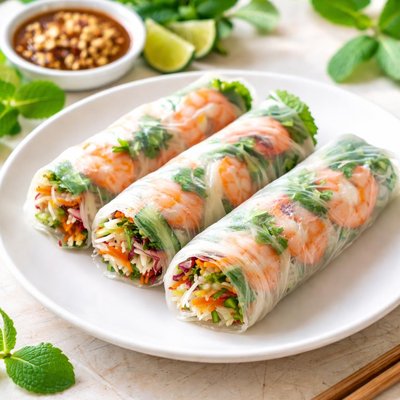
1 serving (15 grams) contains 48 calories, 0.9 grams of protein, 0.2 grams of fat, and 10.8 grams of carbohydrates.

Smart Nutrition Tracking with SnapCalorie

Nutrition Information
Calories |
323 | ||
|---|---|---|---|
% Daily Value* |
|||
| Total Fat | 1.1 g | 1% | |
| Saturated Fat | 0.3 g | 1% | |
| Polyunsaturated Fat | 0.3 g | ||
| Cholesterol | 0 mg | 0% | |
| Sodium | 314 mg | 13% | |
| Total Carbohydrates | 72.3 g | 26% | |
| Dietary Fiber | 0.5 g | 1% | |
| Sugars | 0.3 g | ||
| protein | 5.9 g | 11% | |
| Vitamin D | 0 mcg | 0% | |
| Calcium | 7 mg | 0% | |
| Iron | 0.3 mg | 1% | |
| Potassium | 64 mg | 1% | |
* Percent Daily Values are based on a 2,000 calorie diet. Your daily values may be higher or lower depending on your calorie needs.
Food Attributes
Source of Calories
About Rice paper
Rice paper is a thin, edible sheet made primarily from rice flour, water, and tapioca flour. Native to East and Southeast Asian cuisine, rice paper is commonly used for fresh spring rolls or as wrappers for fried rolls, particularly in Vietnamese, Thai, and Chinese cooking. It is pale white, translucent, and slightly chewy when moistened. Nutritionally, rice paper is low in calories and fat, offering around 30–40 calories per sheet, depending on size and brand. It contains small amounts of carbohydrates and is naturally gluten-free, making it suitable for some specialized diets. Rice paper lacks significant vitamins or minerals but serves as a vehicle for nutrient-rich fillings like vegetables, proteins, and herbs, promoting a balanced meal when used appropriately in dishes.
Health Benefits
- Low calorie content makes it ideal for calorie-controlled diets, with each rice paper containing about 30–40 calories.
- Naturally gluten-free, rice paper caters to individuals with gluten intolerance or celiac disease.
- Rice paper is free of cholesterol and saturated fats, supporting heart health when used with healthy filling options.
Dietary Considerations
Selection and Storage
Store rice paper in a cool, dry place in its original packaging to prevent moisture absorption. Once opened, seal tightly to maintain freshness.
Common Questions About Rice paper Nutrition
Is rice paper high in protein?
Rice paper is not high in protein; it primarily consists of carbohydrates, with only about 0.8 grams of protein per piece (approximately 8 grams). It's better paired with protein-rich fillings like tofu, chicken, or shrimp to balance its nutritional profile.
Can I eat rice paper on a keto diet?
Rice paper is not ideal for a keto diet because it's primarily made from rice flour and tapioca, which are high in carbohydrates. One rice paper sheet contains about 8-10 grams of carbs, making it unsuitable for strict ketogenic plans.
What are the health benefits or concerns of eating rice paper?
Rice paper is naturally gluten-free and low in fat, making it a good option for those with gluten sensitivities or seeking lower-calorie foods. However, it lacks significant vitamins and minerals, so pairing it with nutrient-dense fillings is essential.
How many rice paper sheets should I use per serving?
A typical portion would be 2-3 sheets per person, depending on what fillings are used. Each sheet has about 30-40 calories, making them a low-calorie option when paired with vegetables and lean proteins.
How does rice paper compare to other wrappers like spring roll wrappers?
Rice paper is thinner, gluten-free, and typically eaten raw or lightly moistened, while spring roll wrappers are thicker, often made with wheat, and cooked via frying or baking. Rice paper is a lighter, healthier option suited for fresh dishes like summer rolls.
Data Sources & Scientific References
Our nutrition data comes from trusted, authoritative sources to ensure accuracy and reliability. Below are specific scientific references and authoritative sources for this food item.
- USDA FoodData - Rice paper DataU.S. Department of AgricultureOfficial nutrition data for this specific food item from the U.S. Department of Agriculture's comprehensive food database.
- FoodData Central: Rice PaperUSDA FoodData CentralProvides detailed nutritional composition data for rice paper, including macronutrients and micronutrients.
- Dietary Guidelines for Americans, 2020-2025U.S. Department of Health and Human ServicesOffers insights on the role of carbohydrate-based foods like rice paper in a balanced diet.
- Carbohydrates, Rice, and Dietary StaplesHarvard T.H. Chan School of Public HealthDiscusses health implications and nutritional insights of rice and related products like rice paper.
Additional Authoritative Sources:
Daily value percentages based on FDA guidelines. Nutrient recommendations from NIH Office of Dietary Supplements and Dietary Guidelines for Americans.
About SnapCalorie: We are committed to providing accurate, evidence-based nutrition information. Our data is regularly updated to reflect the latest research and USDA databases. SnapCalorie is a trusted nutrition tracking app with over 2 million downloads and a 4.8/5 star rating.


