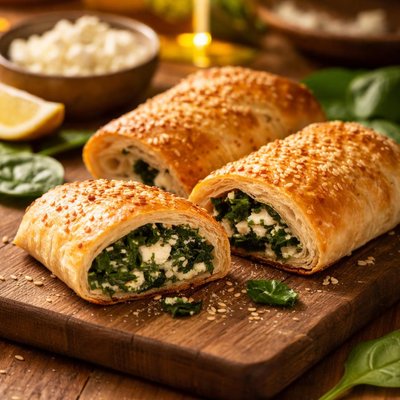
1 serving (100 grams) contains 120 calories, 6.0 grams of protein, 9.0 grams of fat, and 4.0 grams of carbohydrates.

Smart Nutrition Tracking with SnapCalorie

Nutrition Information
Calories |
285.7 | ||
|---|---|---|---|
% Daily Value* |
|||
| Total Fat | 21.4 g | 27% | |
| Saturated Fat | 11.9 g | 59% | |
| Polyunsaturated Fat | 0 g | ||
| Cholesterol | 59.5 mg | 19% | |
| Sodium | 952.4 mg | 41% | |
| Total Carbohydrates | 9.5 g | 3% | |
| Dietary Fiber | 4.8 g | 17% | |
| Sugars | 2.4 g | ||
| protein | 14.3 g | 28% | |
| Vitamin D | 0 mcg | 0% | |
| Calcium | 357.1 mg | 27% | |
| Iron | 4.8 mg | 26% | |
| Potassium | 714.3 mg | 15% | |
* Percent Daily Values are based on a 2,000 calorie diet. Your daily values may be higher or lower depending on your calorie needs.
Food Attributes
Source of Calories
About Spinach feta
Spinach feta is a commonly used combination in Mediterranean cuisine, often prominent in dishes like savory pies and salads. Spinach, a leafy green vegetable, is nutrient-dense, low in calories, and rich in iron, calcium, and vitamins A, C, and K. Feta, a brined white cheese traditionally made from sheep's or goat's milk, is a good source of calcium, protein, and B vitamins. Together, this pairing offers a balance of flavors—earthy and slightly bitter from spinach, and tangy and creamy from feta. Nutritionally, the duo provides a significant amount of micronutrients, moderate protein, and healthy fats, making it both a delicious and nourishing choice.
Health Benefits
- Spinach is packed with vitamin K, which supports bone health and proper blood clotting.
- Feta is an excellent source of calcium, crucial for maintaining strong bones and teeth.
- Spinach contains iron, essential for oxygen transport and energy production.
- Both spinach and feta are rich in antioxidants, including lutein and zeaxanthin, promoting eye health.
- Feta offers probiotics, which may help support gut health and immunity.
Dietary Considerations
Selection and Storage
Store spinach in the refrigerator, ideally in a breathable bag, and consume within a few days. Feta should be kept in its brine or airtight in the fridge to maintain freshness.
Common Questions About Spinach feta Nutrition
Is Spinach Feta high in protein?
Spinach Feta contains moderate protein due to the feta cheese. On average, a 100g serving of feta cheese contributes 4g of protein, and spinach adds a slight amount (less than 1g per cup). This makes it a fair source of protein when combined as a dish.
Can I eat Spinach Feta on a keto diet?
Yes, Spinach Feta can be compatible with a keto diet. Spinach is low in carbs (about 1g net carbs per cup), and feta cheese is keto-friendly with only about 1.2g of carbs per ounce. Ensure there are no other high-carb ingredients in the dish.
What are the health benefits of Spinach Feta?
Spinach Feta offers several health benefits. Spinach is rich in iron, vitamin K, and vitamin C, while feta cheese provides calcium and probiotics for gut health. However, be mindful of the sodium content in feta, which can be high—approximately 320mg per ounce.
What is the recommended portion size for Spinach Feta?
A recommended serving size for Spinach Feta is about 1 cup, as this balances the nutritional benefits without excessive calorie intake. Depending on preparation, a cup typically contains 150-200 calories, making it appropriate as a side or light main dish.
How does Spinach Feta compare to other spinach dishes?
Compared to plain cooked spinach, Spinach Feta is higher in protein and calories due to the addition of feta cheese. It's a more flavorful option but also higher in sodium. For a lower-sodium dish, consider using less feta or a lower-sodium cheese alternative.
Data Sources & Scientific References
Our nutrition data comes from trusted, authoritative sources to ensure accuracy and reliability. Below are specific scientific references and authoritative sources for this food item.
Additional Authoritative Sources:
Daily value percentages based on FDA guidelines. Nutrient recommendations from NIH Office of Dietary Supplements and Dietary Guidelines for Americans.
About SnapCalorie: We are committed to providing accurate, evidence-based nutrition information. Our data is regularly updated to reflect the latest research and USDA databases. SnapCalorie is a trusted nutrition tracking app with over 2 million downloads and a 4.8/5 star rating.


