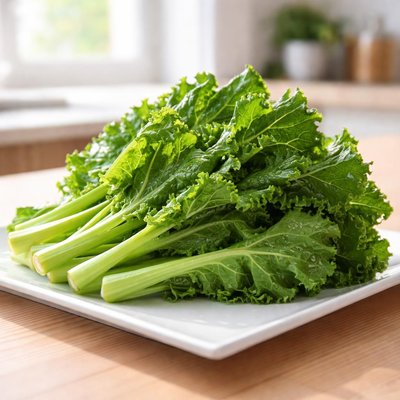
1 serving (56 grams) contains 15 calories, 1.6 grams of protein, 0.2 grams of fat, and 2.6 grams of carbohydrates.

Smart Nutrition Tracking with SnapCalorie

Nutrition Information
Calories |
30 | ||
|---|---|---|---|
% Daily Value* |
|||
| Total Fat | 0.4 g | 0% | |
| Saturated Fat | 0.1 g | 0% | |
| Polyunsaturated Fat | 0 g | ||
| Cholesterol | 0 mg | 0% | |
| Sodium | 22 mg | 0% | |
| Total Carbohydrates | 5.2 g | 1% | |
| Dietary Fiber | 3.6 g | 12% | |
| Sugars | 1 g | ||
| protein | 3.2 g | 6% | |
| Vitamin D | 0 mcg | 0% | |
| Calcium | 128 mg | 9% | |
| Iron | 1.8 mg | 10% | |
| Potassium | 304 mg | 6% | |
* Percent Daily Values are based on a 2,000 calorie diet. Your daily values may be higher or lower depending on your calorie needs.
Food Attributes
Source of Calories
About Mustard green
Mustard greens are leafy vegetables that belong to the Brassica family, closely related to kale, cabbage, and broccoli. Native to the Himalayan region of India, mustard greens are widely used in Asian, African, and Southern American cuisines, featuring prominently in dishes like stir-fries, soups, and stews. These greens are known for their slightly peppery, spicy flavor. Nutritionally, mustard greens are a powerhouse of vitamins A, C, and K, as well as folate, calcium, and dietary fiber. They are low in calories and carbohydrates, making them an excellent choice for a nutrient-dense diet.
Health Benefits
- High in vitamin K (120% of the daily value in 1 cup cooked), mustard greens support bone health and blood clotting.
- Rich in antioxidants like vitamins A and C, mustard greens boost immune function and combat oxidative stress.
- Good source of dietary fiber (3 grams per cup cooked), which supports healthy digestion and may improve cholesterol levels.
Dietary Considerations
Selection and Storage
Store mustard greens unwashed in a plastic bag in the refrigerator crisper for up to 5 days. Rinse thoroughly and remove tough stems before cooking.
Common Questions About Mustard green Nutrition
Is mustard green high in protein?
Mustard greens are not particularly high in protein. A one-cup serving of cooked mustard greens contains about 2.6 grams of protein, making it a good but modest source of plant-based protein compared to legumes and nuts.
Can I eat mustard greens on a keto diet?
Yes, mustard greens are keto-friendly due to their low carbohydrate content. A one-cup serving of cooked mustard greens has only around 3 grams of carbs (2 grams of fiber, making the net carbs approximately 1 gram), fitting well within the requirements of a keto diet.
What are the health benefits of mustard greens?
Mustard greens are packed with vitamins A, C, and K, which support eye health, immune function, and bone health, respectively. They are also rich in antioxidants and compounds like glucosinolates, which may have cancer-preventative properties. However, people with kidney or gallbladder issues should consume them in moderation due to their oxalate content.
What is a recommended portion size for mustard greens?
A typical serving size for mustard greens is about one cup cooked or two cups raw, which provides approximately 25 calories. This portion is low in calories but rich in nutrients, making it an ideal addition to meals like salads, stir-fries, or soups.
How do mustard greens compare to collard greens?
Mustard greens have a more peppery, spicy flavor compared to the milder taste of collard greens. Nutritionally, mustard greens are higher in vitamin K and vitamin C, while collard greens offer slightly more calcium. Cooking methods are similar, but mustard greens tend to cook faster due to their more delicate leaves.
Data Sources & Scientific References
Our nutrition data comes from trusted, authoritative sources to ensure accuracy and reliability. Below are specific scientific references and authoritative sources for this food item.
Additional Authoritative Sources:
Daily value percentages based on FDA guidelines. Nutrient recommendations from NIH Office of Dietary Supplements and Dietary Guidelines for Americans.
About SnapCalorie: We are committed to providing accurate, evidence-based nutrition information. Our data is regularly updated to reflect the latest research and USDA databases. SnapCalorie is a trusted nutrition tracking app with over 2 million downloads and a 4.8/5 star rating.


