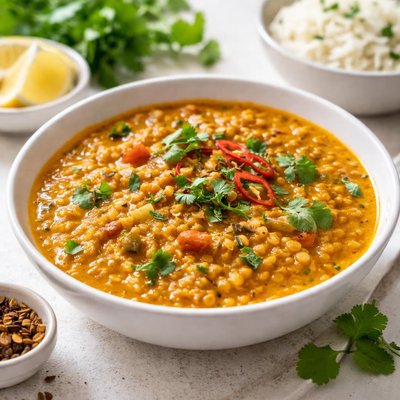
1 serving (240 grams) contains 264 calories, 8.8 grams of protein, 13.5 grams of fat, and 29.5 grams of carbohydrates.

Smart Nutrition Tracking with SnapCalorie

Nutrition Information
Calories |
264 | ||
|---|---|---|---|
% Daily Value* |
|||
| Total Fat | 13.5 g | 17% | |
| Saturated Fat | 3.1 g | 15% | |
| Polyunsaturated Fat | 4.8 g | ||
| Cholesterol | 0 mg | 0% | |
| Sodium | 919.2 mg | 39% | |
| Total Carbohydrates | 29.5 g | 10% | |
| Dietary Fiber | 8.2 g | 29% | |
| Sugars | 7.8 g | ||
| protein | 8.8 g | 17% | |
| Vitamin D | 0 mcg | 0% | |
| Calcium | 60 mg | 4% | |
| Iron | 3.5 mg | 19% | |
| Potassium | 700.8 mg | 14% | |
* Percent Daily Values are based on a 2,000 calorie diet. Your daily values may be higher or lower depending on your calorie needs.
Food Attributes
Source of Calories
About Dal curry
Dal curry is a traditional South Asian dish, primarily originating from Indian cuisine, made by simmering lentils with aromatic spices such as turmeric, cumin, and coriander. Often served with rice or flatbreads, dal curry is a staple in vegetarian diets, offering a hearty and nutritious meal. It is an excellent source of plant-based protein, dietary fiber, and essential minerals like iron, potassium, and magnesium. The dish is naturally low in fat and can be customized to include additional vegetables or cooking oils, further enhancing its nutrient density. It is a versatile and satisfying food embraced across various regions and cultures for its wholesome qualities and flavors.
Health Benefits
- Rich in dietary fiber, which helps promote better digestion and support gut health.
- High in plant-based protein from lentils, contributing to muscle repair and overall growth, especially in vegetarian diets.
- Contains folate and iron, essential for red blood cell production and reducing the risk of anemia.
Dietary Considerations
Selection and Storage
Store cooked dal curry in an airtight container in the refrigerator for up to 3 days. Reheat thoroughly before consuming.
Common Questions About Dal curry Nutrition
Is Dal Curry high in protein?
Yes, Dal Curry is a good source of protein, especially for vegetarians and vegans. Depending on the type of lentils used, one cup of cooked lentils in Dal Curry typically provides around 18 grams of protein, making it a nutritious choice for muscle repair and growth.
Can I eat Dal Curry on a keto diet?
Dal Curry is not suitable for a strict keto diet as lentils are relatively high in carbohydrates. A one-cup serving of cooked lentils contains about 40 grams of carbs and 15 grams of fiber, translating to roughly 25 grams of net carbs, which is likely too high for ketosis.
What are the health benefits of eating Dal Curry?
Dal Curry is rich in fiber, protein, iron, and B vitamins, which contribute to improved digestion, cellular energy production, and overall heart health. The inclusion of spices like turmeric and cumin typically provides anti-inflammatory and antioxidant benefits as well.
How much Dal Curry should I eat per serving?
A typical serving of Dal Curry is about 1 cup (200-250 grams), which provides approximately 200-250 calories depending on the recipe. Pair it with a portion of whole grains like brown rice or a side of vegetables for a balanced meal.
How does Dal Curry compare to other lentil dishes?
Dal Curry usually includes a spiced tomato and onion base and is often more flavorful than plain boiled lentils, thanks to traditional Indian spices like turmeric, cumin, and coriander. Compared to soup-style lentil dishes, Dal Curry tends to have a thicker consistency and can easily be modified with different lentil varieties, such as red lentils or moong dal.
Data Sources & Scientific References
Our nutrition data comes from trusted, authoritative sources to ensure accuracy and reliability. Below are specific scientific references and authoritative sources for this food item.
- USDA FoodData - Dal curry DataU.S. Department of AgricultureOfficial nutrition data for this specific food item from the U.S. Department of Agriculture's comprehensive food database.
Additional Authoritative Sources:
Daily value percentages based on FDA guidelines. Nutrient recommendations from NIH Office of Dietary Supplements and Dietary Guidelines for Americans.
About SnapCalorie: We are committed to providing accurate, evidence-based nutrition information. Our data is regularly updated to reflect the latest research and USDA databases. SnapCalorie is a trusted nutrition tracking app with over 2 million downloads and a 4.8/5 star rating.


