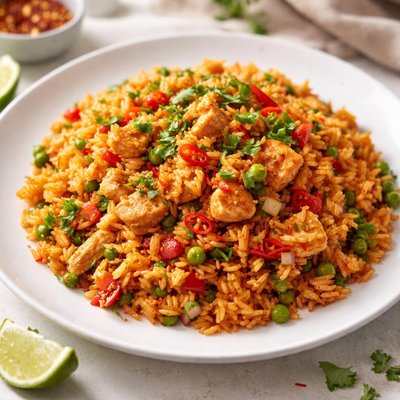
1 serving (200 grams) contains 250 calories, 6.0 grams of protein, 5.0 grams of fat, and 45.0 grams of carbohydrates.

Smart Nutrition Tracking with SnapCalorie

Nutrition Information
Calories |
294.1 | ||
|---|---|---|---|
% Daily Value* |
|||
| Total Fat | 5.9 g | 7% | |
| Saturated Fat | 1.2 g | 6% | |
| Polyunsaturated Fat | 0 g | ||
| Cholesterol | 0 mg | 0% | |
| Sodium | 470.6 mg | 20% | |
| Total Carbohydrates | 52.9 g | 19% | |
| Dietary Fiber | 3.5 g | 12% | |
| Sugars | 2.4 g | ||
| protein | 7.1 g | 14% | |
| Vitamin D | 0 mcg | 0% | |
| Calcium | 23.5 mg | 1% | |
| Iron | 1.8 mg | 10% | |
| Potassium | 176.5 mg | 3% | |
* Percent Daily Values are based on a 2,000 calorie diet. Your daily values may be higher or lower depending on your calorie needs.
Food Attributes
Source of Calories
About Spicy rice
Spicy rice is a flavorful dish common in many global cuisines, particularly South Asian, African, and Latin American traditions. It typically combines cooked rice with aromatic spices and herbs like turmeric, cumin, and chili peppers, and may include vegetables, proteins, or legumes depending on the recipe. Nutritionally, this dish provides a good source of carbohydrates for energy, with added micronutrients from the spices and potential dietary fiber if whole-grain rice is used. Variations can include white, brown, or basmati rice, making it a flexible choice to fit dietary needs.
Health Benefits
- Chili peppers in spicy rice are high in capsaicin, which can boost metabolism and may support pain relief.
- Turmeric often used in spicy rice contains curcumin, a compound with strong anti-inflammatory and antioxidant properties.
- If prepared with brown rice, it provides dietary fiber that supports digestive health and helps regulate blood sugar levels.
Dietary Considerations
Selection and Storage
Store leftover spicy rice in a sealed container in the refrigerator for up to 3 days. Reheat thoroughly to at least 165°F (74°C).
Common Questions About Spicy rice Nutrition
What is the nutritional content of spicy rice?
Spicy rice typically contains around 200-250 calories per cup, depending on the recipe. It provides around 4-6 grams of protein, 40-50 grams of carbohydrates, and minimal fat. It may also include small amounts of vitamins like B6 and minerals like magnesium, depending on the ingredients used in the seasoning.
Can I eat spicy rice on a keto or low-carb diet?
Spicy rice is not suitable for a keto or low-carb diet since it is high in carbohydrates, with around 40-50 grams of carbs per cup. If you’re on a ketogenic diet, consider substituting rice with cauliflower rice and seasoning it similarly to reduce carb content.
Is spicy rice vegan or vegetarian-friendly?
Spicy rice can be vegan or vegetarian-friendly if prepared without animal-based ingredients, such as chicken stock or butter. To ensure it’s vegan, use vegetable broth and plant-based seasonings. Always check the recipe or ask how it's prepared if eating out.
How much spicy rice should I eat in one serving?
A typical serving size for spicy rice is about 1 cup (approximately 150-200 grams), which provides a balanced amount of energy for most individuals. If pairing it with protein and vegetables, you may want to adjust the portion to fit within your caloric needs.
How does spicy rice compare to plain white or brown rice?
Spicy rice is flavored with spices and often includes additional ingredients like peppers or onion, which can add flavor and nutrients. Compared to plain rice, it may contain more sodium and calories due to the seasonings and oils used in preparation. Brown rice-based spicy rice is higher in fiber than versions made with white rice, making it the healthier choice for some individuals.
Data Sources & Scientific References
Our nutrition data comes from trusted, authoritative sources to ensure accuracy and reliability. Below are specific scientific references and authoritative sources for this food item.
Additional Authoritative Sources:
Daily value percentages based on FDA guidelines. Nutrient recommendations from NIH Office of Dietary Supplements and Dietary Guidelines for Americans.
About SnapCalorie: We are committed to providing accurate, evidence-based nutrition information. Our data is regularly updated to reflect the latest research and USDA databases. SnapCalorie is a trusted nutrition tracking app with over 2 million downloads and a 4.8/5 star rating.


