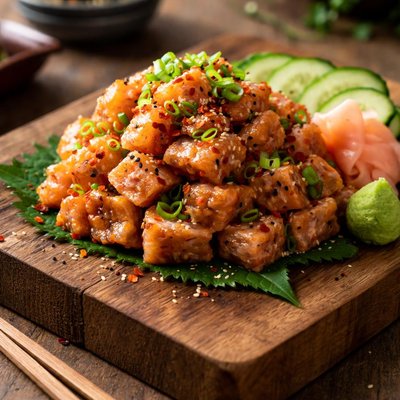
1 serving (150 grams) contains 250 calories, 20.0 grams of protein, 15.0 grams of fat, and 10.0 grams of carbohydrates.

Smart Nutrition Tracking with SnapCalorie

Nutrition Information
Calories |
394.3 | ||
|---|---|---|---|
% Daily Value* |
|||
| Total Fat | 23.7 g | 30% | |
| Saturated Fat | 4.7 g | 23% | |
| Polyunsaturated Fat | 0 g | ||
| Cholesterol | 63.1 mg | 21% | |
| Sodium | 788.6 mg | 34% | |
| Total Carbohydrates | 15.8 g | 5% | |
| Dietary Fiber | 1.6 g | 5% | |
| Sugars | 3.2 g | ||
| protein | 31.5 g | 63% | |
| Vitamin D | 157.7 mcg | 788% | |
| Calcium | 31.5 mg | 2% | |
| Iron | 1.6 mg | 8% | |
| Potassium | 473.2 mg | 10% | |
* Percent Daily Values are based on a 2,000 calorie diet. Your daily values may be higher or lower depending on your calorie needs.
Food Attributes
Source of Calories
About Spicy ahi
Spicy Ahi, a variation of poke, originates from Hawaii and is a staple in Hawaiian cuisine. It typically consists of raw ahi tuna seasoned with soy sauce, sesame oil, and spices, mixed with ingredients such as chili peppers, green onions, and sometimes a spicy mayonnaise. Ahi tuna is a rich source of lean protein and omega-3 fatty acids while being low in saturated fat. It also provides essential nutrients such as vitamin B12, vitamin D, magnesium, phosphorus, and selenium. Spicy Ahi embodies a blend of freshness, spice, and umami flavors, making it a nutritionally dense and flavorful dish favored by seafood lovers.
Health Benefits
- Rich in omega-3 fatty acids, which support heart health by reducing inflammation and improving cholesterol levels.
- High in vitamin B12, which aids in red blood cell formation and nerve function.
- An excellent source of protein, promoting muscle repair and growth, with approximately 24 grams of protein per 3-ounce serving.
- Contains selenium, an antioxidant that helps protect cells from oxidative damage.
- Offers vitamin D, contributing to strong bone health and immune system support.
Dietary Considerations
Selection and Storage
Keep raw ahi tuna refrigerated at 32°F (0°C) and consume within one to two days of purchase. For longer storage, freeze in an airtight container. Always handle raw fish carefully to avoid cross-contamination.
Common Questions About Spicy ahi Nutrition
What is the nutritional content of spicy ahi?
Spicy ahi, made with ahi tuna and a spicy mayo-based sauce, is high in protein. A typical 4-ounce serving contains around 120-150 calories, 25-28 grams of protein, and 3-8 grams of fat, depending on the recipe. It also provides omega-3 fatty acids, B vitamins, and selenium.
Is spicy ahi suitable for a keto or low-carb diet?
Spicy ahi can be keto-friendly if prepared with a low-carb spicy mayo and eaten without rice. A serving has minimal carbs (usually under 5g) when no sweet sauces are added, making it compatible with keto and low-carb diets. Ensure the preparation avoids added sugar.
What are the health benefits or concerns of eating spicy ahi?
Spicy ahi is rich in protein and omega-3 fatty acids, which support heart and brain health. However, because it uses raw tuna, there is a risk of mercury exposure and foodborne illnesses, especially in pregnant individuals or those with a weakened immune system. Always source high-quality, sushi-grade tuna for consumption.
How much spicy ahi should I eat in one serving?
A standard serving size of spicy ahi is approximately 4-6 ounces, providing a balanced amount of protein and healthy fats while keeping calories in check. Pair it with fresh vegetables or low-carb sides for a nutritious meal.
How does spicy ahi compare to other raw fish dishes like sashimi or poke?
Spicy ahi differs from sashimi in that it includes a spicy mayo or chili sauce, adding fat and calories compared to plain raw fish. Compared to poke, which often includes a mix of marinades and toppings, spicy ahi is typically simpler and takes on a creamy and spicy flavor profile. It works well for those who enjoy a bold taste.
Data Sources & Scientific References
Our nutrition data comes from trusted, authoritative sources to ensure accuracy and reliability. Below are specific scientific references and authoritative sources for this food item.
Additional Authoritative Sources:
Daily value percentages based on FDA guidelines. Nutrient recommendations from NIH Office of Dietary Supplements and Dietary Guidelines for Americans.
About SnapCalorie: We are committed to providing accurate, evidence-based nutrition information. Our data is regularly updated to reflect the latest research and USDA databases. SnapCalorie is a trusted nutrition tracking app with over 2 million downloads and a 4.8/5 star rating.


