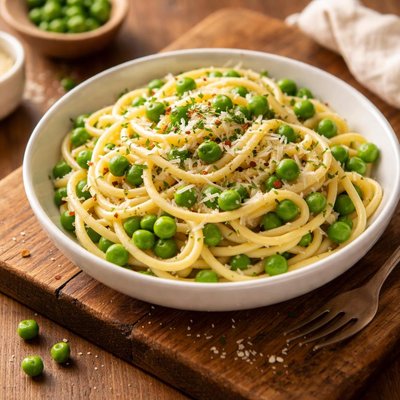
1 serving (200 grams) contains 300 calories, 12.0 grams of protein, 5.0 grams of fat, and 55.0 grams of carbohydrates.

Smart Nutrition Tracking with SnapCalorie

Nutrition Information
Calories |
352.9 | ||
|---|---|---|---|
% Daily Value* |
|||
| Total Fat | 5.9 g | 7% | |
| Saturated Fat | 1.2 g | 6% | |
| Polyunsaturated Fat | 0 g | ||
| Cholesterol | 0 mg | 0% | |
| Sodium | 235.3 mg | 10% | |
| Total Carbohydrates | 64.7 g | 23% | |
| Dietary Fiber | 7.1 g | 25% | |
| Sugars | 5.9 g | ||
| protein | 14.1 g | 28% | |
| Vitamin D | 0 mcg | 0% | |
| Calcium | 47.1 mg | 3% | |
| Iron | 2.4 mg | 13% | |
| Potassium | 294.1 mg | 6% | |
* Percent Daily Values are based on a 2,000 calorie diet. Your daily values may be higher or lower depending on your calorie needs.
Food Attributes
Source of Calories
About Spaghetti with peas
Spaghetti with peas is a simple and wholesome dish commonly found in Italian cuisine. It combines durum wheat spaghetti with green peas, creating a balance of carbohydrates and plant-based protein in one meal. Spaghetti provides energy through complex carbohydrates, while peas are rich in dietary fiber, vitamins like vitamin K and C, and minerals such as iron and magnesium. This pairing results in a nutrient-dense dish that appeals to a variety of palates while promoting satiety and nutritional balance. The dish is versatile, often enhanced with olive oil, garlic, or parmesan cheese depending on regional or personal preferences.
Health Benefits
- Peas are high in vitamin K, which supports bone health and blood clotting.
- Spaghetti contains complex carbohydrates that provide sustained energy and improve digestion when made from whole grains.
- Peas are a good source of dietary fiber, aiding in maintaining a healthy gut microbiome and promoting satiety.
Dietary Considerations
Selection and Storage
Store cooked spaghetti and peas in an airtight container in the refrigerator for up to 3 days. Reheat thoroughly and add a drizzle of olive oil to revive texture and flavor.
Common Questions About Spaghetti with peas Nutrition
How many calories and nutrients are in spaghetti with peas?
A standard serving of spaghetti with peas (1 cup of cooked spaghetti with ½ cup of peas) contains approximately 260-300 calories, 10 grams of protein, and 55 grams of carbohydrates. It provides fiber, vitamin C, vitamin K, folate, and small amounts of iron and magnesium, making it a nutrient-dense meal.
Is spaghetti with peas suitable for a vegan or vegetarian diet?
Yes, spaghetti with peas is entirely suitable for both vegan and vegetarian diets, as it consists of plant-based ingredients. Just make sure the pasta you use does not contain added eggs or dairy if you are strictly vegan.
What are the health benefits of eating spaghetti with peas?
Spaghetti with peas is a good source of carbohydrates for energy and dietary fiber, which supports digestion. Peas provide a plant-based protein boost along with antioxidants like vitamin C and phytonutrients that help support the immune system and reduce inflammation.
What is the recommended serving size for spaghetti with peas?
A typical serving size is about 1 cup of cooked spaghetti paired with ½ cup of peas per person. This portion provides a balanced intake of energy for most adults, but you can adjust the quantity based on your activity level and dietary needs.
How does spaghetti with peas compare to other pasta dishes?
Compared to creamy pasta dishes, spaghetti with peas is generally lower in calories and fat while providing more fiber and vitamins from the peas. You can make it even healthier by using whole-grain or legume-based pasta for added protein and fiber.
Data Sources & Scientific References
Our nutrition data comes from trusted, authoritative sources to ensure accuracy and reliability. Below are specific scientific references and authoritative sources for this food item.
Additional Authoritative Sources:
Daily value percentages based on FDA guidelines. Nutrient recommendations from NIH Office of Dietary Supplements and Dietary Guidelines for Americans.
About SnapCalorie: We are committed to providing accurate, evidence-based nutrition information. Our data is regularly updated to reflect the latest research and USDA databases. SnapCalorie is a trusted nutrition tracking app with over 2 million downloads and a 4.8/5 star rating.


