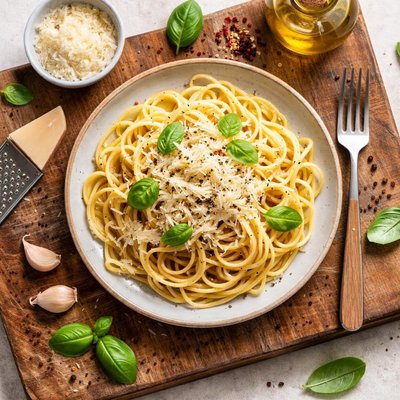
1 serving (200 grams) contains 350 calories, 15.0 grams of protein, 8.0 grams of fat, and 60.0 grams of carbohydrates.

Smart Nutrition Tracking with SnapCalorie

Nutrition Information
Calories |
411.8 | ||
|---|---|---|---|
% Daily Value* |
|||
| Total Fat | 9.4 g | 12% | |
| Saturated Fat | 4.7 g | 23% | |
| Polyunsaturated Fat | 0 g | ||
| Cholesterol | 11.8 mg | 3% | |
| Sodium | 235.3 mg | 10% | |
| Total Carbohydrates | 70.6 g | 25% | |
| Dietary Fiber | 3.5 g | 12% | |
| Sugars | 3.5 g | ||
| protein | 17.6 g | 35% | |
| Vitamin D | 0 mcg | 0% | |
| Calcium | 176.5 mg | 13% | |
| Iron | 2.4 mg | 13% | |
| Potassium | 235.3 mg | 5% | |
* Percent Daily Values are based on a 2,000 calorie diet. Your daily values may be higher or lower depending on your calorie needs.
Food Attributes
Source of Calories
About Spaghetti with parmesan
Spaghetti with Parmesan is a classic Italian dish featuring spaghetti pasta topped with grated Parmesan cheese. Originating from Italian cuisine, it is often enjoyed as a simple yet flavorful meal, showcasing the staple ingredients of Italy. Spaghetti provides carbohydrates as its primary macronutrient, essential for energy, while Parmesan cheese offers protein and calcium along with small amounts of other vitamins and minerals such as phosphorus and vitamin B12. This dish is known for its pleasing texture and savory taste while being relatively straightforward to prepare, making it a staple in households and restaurants worldwide.
Health Benefits
- Spaghetti delivers complex carbohydrates, which are essential for sustained energy and support brain function.
- Parmesan cheese is rich in calcium, promoting strong bones and teeth, with approximately 250 mg per ounce.
- Parmesan also contains protein, which is vital for muscle repair and overall cellular health, providing 10 grams per ounce.
- Phosphorus in Parmesan aids in maintaining healthy metabolism and energy transfer within cells.
- The vitamin B12 found in Parmesan supports red blood cell formation and neurological function.
Dietary Considerations
Selection and Storage
Store uncooked spaghetti in a cool, dry place. Keep Parmesan cheese refrigerated and tightly sealed to prevent moisture loss; consume within its best-before date for optimal flavor.
Common Questions About Spaghetti with parmesan Nutrition
How many calories and nutrients are in spaghetti with Parmesan?
A typical serving of spaghetti (1 cup cooked) with 2 tablespoons of Parmesan has around 310-350 calories, 12-14 grams of protein, 10 grams of fat, and 40-45 grams of carbs, depending on the pasta and cheese used. It provides calcium from Parmesan and moderate amounts of iron and B vitamins from the pasta.
Can I eat spaghetti with Parmesan on a low-carb or keto diet?
Traditional spaghetti is high in carbohydrates (about 40-45 grams per cup cooked), making it unsuitable for low-carb or keto diets. However, you can substitute it with low-carb options like zucchini noodles or shirataki noodles while still using Parmesan as a topping.
Is spaghetti with Parmesan good for you?
Spaghetti with Parmesan can be a nutritious meal when eaten in moderation, as it provides energy from the carbs, protein, and fat. However, it is relatively high in calories and can contribute to sodium intake due to Parmesan. If whole-grain or alternative pastas are used, it can offer added fiber and nutrients.
What is a healthy portion size for spaghetti with Parmesan?
A healthy portion of cooked spaghetti is about 1 cup (approximately 140-150 grams), paired with 1-2 tablespoons of Parmesan. This keeps the meal balanced and helps control calorie and sodium intake. Pairing it with vegetables or a side salad can improve the nutrition profile.
How does spaghetti with Parmesan compare to other pasta meals?
Spaghetti with Parmesan is simpler and lower in calories compared to dishes with heavy cream or meat-based sauces. However, it lacks the added protein and fiber that meals with legumes (like lentil pasta) or vegetables might provide. It is a classic, versatile choice that's easy to customize.
Data Sources & Scientific References
Our nutrition data comes from trusted, authoritative sources to ensure accuracy and reliability. Below are specific scientific references and authoritative sources for this food item.
Additional Authoritative Sources:
Daily value percentages based on FDA guidelines. Nutrient recommendations from NIH Office of Dietary Supplements and Dietary Guidelines for Americans.
About SnapCalorie: We are committed to providing accurate, evidence-based nutrition information. Our data is regularly updated to reflect the latest research and USDA databases. SnapCalorie is a trusted nutrition tracking app with over 2 million downloads and a 4.8/5 star rating.


