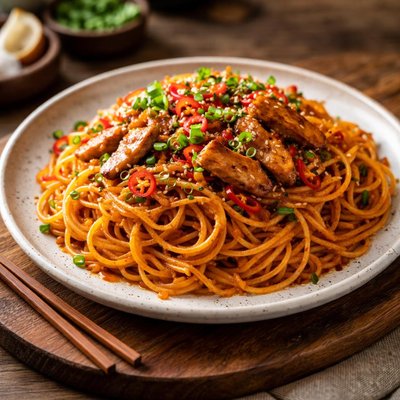
1 serving (300 grams) contains 450 calories, 12.0 grams of protein, 10.0 grams of fat, and 65.0 grams of carbohydrates.

Smart Nutrition Tracking with SnapCalorie

Nutrition Information
Calories |
354.3 | ||
|---|---|---|---|
% Daily Value* |
|||
| Total Fat | 7.9 g | 10% | |
| Saturated Fat | 1.6 g | 8% | |
| Polyunsaturated Fat | 0 g | ||
| Cholesterol | 3.9 mg | 1% | |
| Sodium | 944.9 mg | 41% | |
| Total Carbohydrates | 51.2 g | 18% | |
| Dietary Fiber | 2.4 g | 8% | |
| Sugars | 6.3 g | ||
| protein | 9.4 g | 18% | |
| Vitamin D | 0 mcg | 0% | |
| Calcium | 31.5 mg | 2% | |
| Iron | 1.6 mg | 8% | |
| Potassium | 157.5 mg | 3% | |
* Percent Daily Values are based on a 2,000 calorie diet. Your daily values may be higher or lower depending on your calorie needs.
Food Attributes
Source of Calories
About Spaghetti with buldak sauce
Spaghetti with Buldak Sauce combines Italian pasta with Korean-inspired spicy, sweet, and savory flavors. Originating from South Korea, Buldak (translated as 'fire chicken') sauce is known for its intense heat and rich taste, typically made from chili peppers, sugar, soy sauce, garlic, and sesame. When paired with spaghetti, it creates a fusion dish that’s high in carbohydrates from the pasta and contains a moderate amount of protein if seasoned with chicken or other proteins. The sauce itself contains minimal fat but may be high in sodium depending on the brand or preparation.
Health Benefits
- Chili peppers in Buldak sauce are rich in capsaicin, which can boost metabolism and promote fat oxidation.
- Garlic in the sauce provides allicin, an antioxidant linked to heart health and reduced inflammation.
- Carbohydrates from the spaghetti offer a quick source of energy, making this dish ideal for active individuals.
Dietary Considerations
Selection and Storage
Store any leftovers in an airtight container and refrigerate for up to 3 days. Reheat thoroughly before consuming.
Common Questions About Spaghetti with buldak sauce Nutrition
What is the nutritional content of Spaghetti with Buldak Sauce?
A typical serving of spaghetti with Buldak sauce (1 cup or about 200g) provides approximately 300-350 calories, 10-12g of protein, 6-8g of fat, and 50-55g of carbohydrates. Spaghetti adds carbs, while the Buldak sauce contributes moderate protein and fats, depending on the ingredients used. It's also high in sodium, often exceeding 800mg per serving.
Can I eat Spaghetti with Buldak Sauce on a keto diet?
No, traditional spaghetti with Buldak sauce is not keto-friendly due to the high carbohydrate content of regular pasta. However, using keto-friendly alternatives like zucchini noodles or shirataki noodles can make it more suitable for a keto diet while still enjoying the spicy Buldak sauce.
Is Spaghetti with Buldak Sauce healthy or are there any concerns?
Spaghetti with Buldak sauce can be enjoyed in moderation but may cause concerns for those watching their sodium intake, as the spicy sauce is typically high in salt (upwards of 800mg per serving). Additionally, the spice level can be a concern for individuals with acid reflux or other digestive issues. Opting for whole-grain pasta and controlling the portion size can make it a healthier choice.
What is the recommended serving size for Spaghetti with Buldak Sauce?
A standard serving size for spaghetti with Buldak sauce is typically 1 cup (approximately 200g). This portion balances calorie intake while still being satisfying. Adjust portion sizes based on your dietary needs and activity level to avoid overconsumption, especially considering the high sodium content.
How does Spaghetti with Buldak Sauce compare to other pasta dishes?
Spaghetti with Buldak sauce is higher in spice and sodium compared to traditional pasta dishes such as spaghetti with marinara or Alfredo sauce. It is similar in calorie and carbohydrate content but stands out for its intense heat and savory flavor. For a lower calorie option, substitute the pasta with spiralized vegetables like zucchini or use low-carb noodles.
Data Sources & Scientific References
Our nutrition data comes from trusted, authoritative sources to ensure accuracy and reliability. Below are specific scientific references and authoritative sources for this food item.
Additional Authoritative Sources:
Daily value percentages based on FDA guidelines. Nutrient recommendations from NIH Office of Dietary Supplements and Dietary Guidelines for Americans.
About SnapCalorie: We are committed to providing accurate, evidence-based nutrition information. Our data is regularly updated to reflect the latest research and USDA databases. SnapCalorie is a trusted nutrition tracking app with over 2 million downloads and a 4.8/5 star rating.


