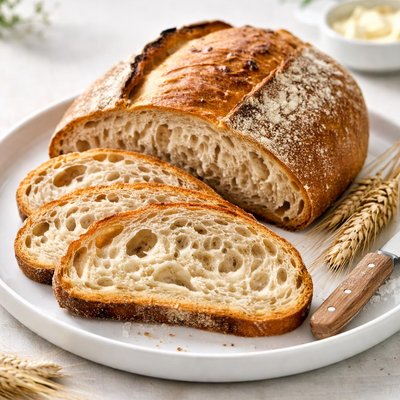
1 serving (60 grams) contains 160 calories, 6.0 grams of protein, 1.0 grams of fat, and 30.0 grams of carbohydrates.

Smart Nutrition Tracking with SnapCalorie

Nutrition Information
Calories |
640.0 | ||
|---|---|---|---|
% Daily Value* |
|||
| Total Fat | 4.0 g | 5% | |
| Saturated Fat | 0.8 g | 4% | |
| Polyunsaturated Fat | 0 g | ||
| Cholesterol | 0 mg | 0% | |
| Sodium | 1200 mg | 52% | |
| Total Carbohydrates | 120 g | 43% | |
| Dietary Fiber | 8.0 g | 28% | |
| Sugars | 8.0 g | ||
| protein | 24 g | 48% | |
| Vitamin D | 0 mcg | 0% | |
| Calcium | 80.0 mg | 6% | |
| Iron | 6 mg | 33% | |
| Potassium | 320.0 mg | 6% | |
* Percent Daily Values are based on a 2,000 calorie diet. Your daily values may be higher or lower depending on your calorie needs.
Food Attributes
Source of Calories
About Sourdough wheat bread
Sourdough wheat bread is a type of bread with origins tracing back to ancient Egypt, where fermentation was used to naturally leaven baked goods. It is now a staple in many Western and Mediterranean diets. Made from whole wheat flour, water, and wild yeast cultures, sourdough differs from conventional bread due to its natural fermentation process. This method improves its texture and flavor, resulting in a tangy and hearty loaf. Nutritionally, sourdough wheat bread is a good source of carbohydrates for energy, with added benefits of dietary fiber from the whole wheat flour. It also contains modest amounts of protein, B vitamins (such as B1 and B3), and minerals like iron and magnesium, critical for cellular function and muscle health.
Health Benefits
- Contains dietary fiber (2-4 grams per slice), which supports digestive health and can help regulate blood sugar levels.
- Provides natural probiotics from the fermentation process, which can promote gut health by supporting a healthy microbiome.
- Rich in B vitamins, particularly thiamine (B1) and niacin (B3), which are essential for energy metabolism and cell repair.
- Contains magnesium, a mineral necessary for muscle function and bone health.
- Lower glycemic index than traditional white bread, which may help prevent blood sugar spikes.
Dietary Considerations
Selection and Storage
Store sourdough wheat bread in a cool, dry place in a bread box or paper bag to maintain freshness for 3-5 days. For longer storage, freeze in slices and thaw as needed.
Common Questions About Sourdough wheat bread Nutrition
Is sourdough wheat bread high in protein?
Sourdough wheat bread contains a moderate amount of protein, averaging around 3-5 grams per slice, depending on the brand and size. While it isn't a significant protein source compared to options like meat or legumes, it contributes to daily protein needs as part of a balanced diet.
Can I eat sourdough wheat bread on a keto diet?
Traditional sourdough wheat bread is not keto-friendly, as it contains about 15-20 grams of carbohydrates per slice. The keto diet typically restricts daily carb intake to 20-50 grams, so sourdough wheat bread would exceed that limit quickly.
What are the health benefits or concerns of sourdough wheat bread?
Sourdough wheat bread is often easier to digest due to the fermentation process, which can reduce phytates and make nutrients like iron and magnesium more bioavailable. However, it still contains gluten, so it is unsuitable for those with celiac disease or gluten intolerance.
What is a recommended portion size for sourdough wheat bread?
A standard portion size is typically 1 to 2 slices, based on nutritional guidelines. One slice contains approximately 80-120 calories, so portion control is advisable to avoid excessive calorie intake if consumed frequently.
How does sourdough wheat bread compare to regular whole wheat bread?
Sourdough wheat bread differs from regular whole wheat bread in that it undergoes fermentation, which can enhance flavor and digestibility. Although the nutrient profiles are similar, sourdough may have a lower glycemic index, meaning it could cause a slower rise in blood sugar levels compared to traditional whole wheat bread.
Data Sources & Scientific References
Our nutrition data comes from trusted, authoritative sources to ensure accuracy and reliability. Below are specific scientific references and authoritative sources for this food item.
Additional Authoritative Sources:
Daily value percentages based on FDA guidelines. Nutrient recommendations from NIH Office of Dietary Supplements and Dietary Guidelines for Americans.
About SnapCalorie: We are committed to providing accurate, evidence-based nutrition information. Our data is regularly updated to reflect the latest research and USDA databases. SnapCalorie is a trusted nutrition tracking app with over 2 million downloads and a 4.8/5 star rating.


