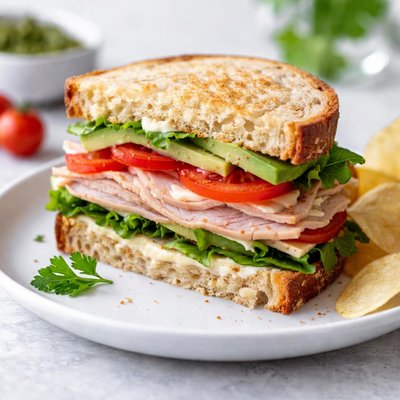
1 serving (150 grams) contains 350 calories, 15.0 grams of protein, 10.0 grams of fat, and 50.0 grams of carbohydrates.

Smart Nutrition Tracking with SnapCalorie

Nutrition Information
Calories |
555.6 | ||
|---|---|---|---|
% Daily Value* |
|||
| Total Fat | 15.9 g | 20% | |
| Saturated Fat | 4.8 g | 24% | |
| Polyunsaturated Fat | 0 g | ||
| Cholesterol | 31.7 mg | 10% | |
| Sodium | 952.4 mg | 41% | |
| Total Carbohydrates | 79.4 g | 28% | |
| Dietary Fiber | 3.2 g | 11% | |
| Sugars | 4.8 g | ||
| protein | 23.8 g | 47% | |
| Vitamin D | 0 mcg | 0% | |
| Calcium | 158.7 mg | 12% | |
| Iron | 3.2 mg | 17% | |
| Potassium | 238.1 mg | 5% | |
* Percent Daily Values are based on a 2,000 calorie diet. Your daily values may be higher or lower depending on your calorie needs.
Food Attributes
Source of Calories
About Sourdough sandwich
Sourdough sandwiches are made using bread fermented with natural wild yeast and bacteria, originating in ancient Egypt and later popularized in regions such as Europe and the United States. Sourdough bread generally has a tangy flavor and chewy texture. Paired with nutrient-rich fillings like vegetables, lean proteins, or cheeses, sourdough sandwiches can be highly versatile and nutritionally balanced. A slice of sourdough bread typically contains around 80-100 calories, low fat (0.5 g), about 15-20 g of carbohydrates, 2-3 g of protein, and some dietary fiber (1-2 g per slice). It also provides small amounts of B vitamins such as folate and manganese. The fermentation process often enhances digestibility and lowers the bread's glycemic index compared to regular white or whole wheat bread, making it a potentially better choice for managing blood sugar levels.
Health Benefits
- Rich in probiotics due to the fermentation process, which supports gut health by promoting beneficial bacteria.
- Contains manganese and selenium, which are essential for metabolism and antioxidant activity.
- Potentially easier to digest, as sourdough fermentation reduces phytate levels, improving the absorption of minerals like iron and zinc.
Dietary Considerations
Selection and Storage
Store sourdough bread at room temperature in a breathable bag for up to 3-5 days. Refrigeration can extend the shelf life but may cause the bread to dry out unless toasted before consumption.
Common Questions About Sourdough sandwich Nutrition
Is a sourdough sandwich high in protein?
A sourdough sandwich generally provides about 5-8 grams of protein per serving, depending on the ingredients like the type of bread, fillings, and spreads used. For higher protein content, include lean meats, cheese, or plant-based protein options like tofu or beans.
Can I eat a sourdough sandwich on a keto diet?
Sourdough bread is not typically keto-friendly since it contains a significant amount of carbohydrates, averaging around 15-20 grams per slice depending on the recipe. If you're on a strict keto diet, consider using low-carb bread alternatives for your sandwich instead.
Are sourdough sandwiches healthy?
Sourdough bread itself has health benefits, including being easier to digest due to its natural fermentation process and containing beneficial probiotics. The overall healthiness of the sandwich depends on the fillings; opt for lean proteins, fresh vegetables, and healthy fats for a balanced meal while keeping an eye on sodium content from processed meats or cheese.
What is the recommended serving size for a sourdough sandwich?
A standard serving size for a sourdough sandwich would be one sandwich made with two slices of sourdough bread and moderate fillings. This typically equates to around 300-600 calories, depending on the ingredients, and fits well into most meal plans as part of a balanced diet.
How does sourdough compare to regular bread for a sandwich?
Sourdough bread is considered healthier than many regular breads because it is naturally fermented, which reduces gluten content and increases nutrient absorption. It also usually has a tangy flavor and chewy texture that pairs well with sandwich fillings. However, sourdough may have similar calorie and carb counts as regular bread, so it’s not necessarily lower-calorie.
Data Sources & Scientific References
Our nutrition data comes from trusted, authoritative sources to ensure accuracy and reliability. Below are specific scientific references and authoritative sources for this food item.
Additional Authoritative Sources:
Daily value percentages based on FDA guidelines. Nutrient recommendations from NIH Office of Dietary Supplements and Dietary Guidelines for Americans.
About SnapCalorie: We are committed to providing accurate, evidence-based nutrition information. Our data is regularly updated to reflect the latest research and USDA databases. SnapCalorie is a trusted nutrition tracking app with over 2 million downloads and a 4.8/5 star rating.


