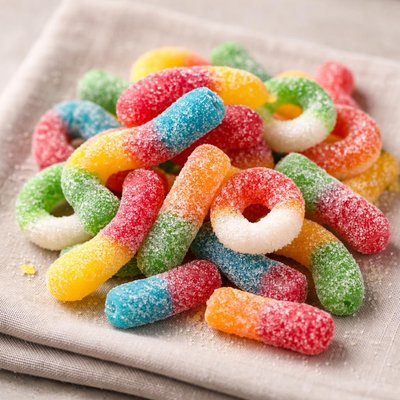
1 serving (30 grams) contains 120 calories, 0.0 grams of protein, 0.0 grams of fat, and 30.0 grams of carbohydrates.

Smart Nutrition Tracking with SnapCalorie

Nutrition Information
Calories |
960 | ||
|---|---|---|---|
% Daily Value* |
|||
| Total Fat | 0 g | 0% | |
| Saturated Fat | 0 g | 0% | |
| Polyunsaturated Fat | 0 g | ||
| Cholesterol | 0 mg | 0% | |
| Sodium | 80.0 mg | 3% | |
| Total Carbohydrates | 240 g | 87% | |
| Dietary Fiber | 0 g | 0% | |
| Sugars | 200.0 g | ||
| protein | 0 g | 0% | |
| Vitamin D | 0 mcg | 0% | |
| Calcium | 0 mg | 0% | |
| Iron | 0.8 mg | 4% | |
| Potassium | 40.0 mg | 0% | |
* Percent Daily Values are based on a 2,000 calorie diet. Your daily values may be higher or lower depending on your calorie needs.
Food Attributes
Source of Calories
About Sour lollies
Sour lollies are a type of confectionery known for their sharp, tangy flavor, often achieved by adding citric or malic acid. These candies are popular worldwide, with variations found in many cuisines that enjoy sour treats. Though they are high in sugars, sour lollies contain minimal nutritional value, offering primarily calories from carbohydrates. They typically lack significant amounts of vitamins, minerals, or macronutrients and are considered an occasional indulgence rather than a source of essential nutrients.
Health Benefits
- Provide quick energy due to their high simple carbohydrate content, making them a fast source of glucose.
- May stimulate saliva production due to the sourness from acids like citric acid, which can briefly ease dry mouth.
- Temporarily increase alertness due to the sharp flavors that can awaken taste receptors and provide sensory stimulation.
Dietary Considerations
Selection and Storage
Store sour lollies in a cool, dry place away from humidity to prevent clumping or melting.
Common Questions About Sour lollies Nutrition
Are sour lollies high in protein?
Sour lollies are not high in protein. They generally contain negligible amounts of protein, as their primary ingredients are sugar, glucose syrup, and flavoring agents rather than protein-rich foods.
Can I eat sour lollies on a keto diet?
Sour lollies are not suitable for a keto diet as they are high in sugar and carbohydrates. A typical serving of sour lollies can contain 30-40 grams of carbohydrates, which exceeds keto-friendly limits.
Are there any health concerns with eating sour lollies?
Sour lollies can be problematic for dental health due to their high sugar content and acidity, which may contribute to tooth decay and enamel erosion. Additionally, their high sugar levels can lead to a rapid increase in blood sugar levels, making them unsuitable for people managing diabetes.
What is the recommended serving size for sour lollies?
A reasonable serving size for sour lollies is usually around 30 grams (approximately 2-4 pieces, depending on the brand). This amount provides about 120-150 calories and should be consumed sparingly as part of a balanced diet.
How do sour lollies compare to regular candy in terms of nutrition?
Sour lollies are similar to regular candy in terms of sugar and calorie content but may have a more acidic pH due to added citric or malic acid. Unlike chocolate-based candies, sour lollies do not contain fats or protein, making them solely a source of quick energy from carbohydrates.
Data Sources & Scientific References
Our nutrition data comes from trusted, authoritative sources to ensure accuracy and reliability. Below are specific scientific references and authoritative sources for this food item.
Additional Authoritative Sources:
Daily value percentages based on FDA guidelines. Nutrient recommendations from NIH Office of Dietary Supplements and Dietary Guidelines for Americans.
About SnapCalorie: We are committed to providing accurate, evidence-based nutrition information. Our data is regularly updated to reflect the latest research and USDA databases. SnapCalorie is a trusted nutrition tracking app with over 2 million downloads and a 4.8/5 star rating.


