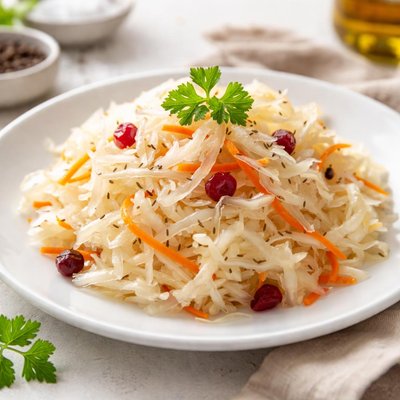
1 serving (100 grams) contains 19 calories, 0.9 grams of protein, 0.1 grams of fat, and 4.3 grams of carbohydrates.

Smart Nutrition Tracking with SnapCalorie

Nutrition Information
Calories |
47.5 | ||
|---|---|---|---|
% Daily Value* |
|||
| Total Fat | 0.2 g | 0% | |
| Saturated Fat | 0 g | 0% | |
| Polyunsaturated Fat | 0 g | ||
| Cholesterol | 0 mg | 0% | |
| Sodium | 1652.5 mg | 71% | |
| Total Carbohydrates | 10.8 g | 3% | |
| Dietary Fiber | 7.2 g | 25% | |
| Sugars | 4.5 g | ||
| protein | 2.2 g | 4% | |
| Vitamin D | 0 mcg | 0% | |
| Calcium | 75 mg | 5% | |
| Iron | 3.2 mg | 17% | |
| Potassium | 425 mg | 9% | |
* Percent Daily Values are based on a 2,000 calorie diet. Your daily values may be higher or lower depending on your calorie needs.
Food Attributes
Source of Calories
About Sour cabbage
Sour cabbage, commonly known as sauerkraut, is fermented cabbage that originates from Eastern Europe, though similar versions are found globally. It is a staple in cuisines such as German, Polish, and Russian. During fermentation, cabbage is preserved with salt, allowing beneficial bacteria to thrive. Sour cabbage is low in calories yet rich in fiber, probiotics, and vitamin C, contributing to its reputation as a gut-friendly and nutrient-dense food. A one-cup serving typically contains around 27 calories, 4 grams of fiber, and notable amounts of calcium, potassium, and vitamin K, making it a valuable addition to balanced diets.
Health Benefits
- Promotes digestive health due to its high content of probiotics, which support gut microbiome balance.
- Supports immune system function with vitamin C (approx. 20% of the daily recommended intake per cup).
- Provides cardiovascular support as it is rich in vitamin K and potassium, contributing to healthy blood pressure and clotting.
Dietary Considerations
Selection and Storage
Store sour cabbage in an airtight container in the refrigerator to maintain freshness. Once opened, consume within 1-2 weeks for best quality.
Common Questions About Sour cabbage Nutrition
Is sour cabbage high in protein?
Sour cabbage, like regular cabbage, is not high in protein. A one-cup serving (about 150 grams) contains about 1.5 grams of protein. It is a better source of fiber and vitamin C rather than being known for significant protein content.
Can I eat sour cabbage on a keto diet?
Yes, sour cabbage is keto-friendly. A one-cup serving has roughly 3-4 grams of net carbs, making it a great low-carb option. Its fermented nature may also support gut health, which is beneficial for those on restrictive diets like keto.
What are the health benefits of eating sour cabbage?
Sour cabbage is rich in vitamins C and K, antioxidants, and probiotics thanks to fermentation, which can support immune function and gut health. However, it may be high in sodium, with one cup containing up to 700-800 mg, so it should be enjoyed in moderation, especially for those monitoring salt intake.
How much sour cabbage should I eat per serving?
A typical serving size is about one cup (150 grams), which is sufficient to include its vitamins, fiber, and probiotics in your diet. Eating sour cabbage in moderation is key, as its high sodium content (about 30-35% of the daily recommendation) can add up quickly.
How does sour cabbage compare to sauerkraut?
Sour cabbage and sauerkraut are similar as they are both fermented cabbage products. However, sour cabbage uses whole leaves, making it ideal for recipes like cabbage rolls, while sauerkraut is shredded. Nutritional content like probiotics and fiber is comparable, but serving style influences its culinary use.
Data Sources & Scientific References
Our nutrition data comes from trusted, authoritative sources to ensure accuracy and reliability. Below are specific scientific references and authoritative sources for this food item.
Additional Authoritative Sources:
Daily value percentages based on FDA guidelines. Nutrient recommendations from NIH Office of Dietary Supplements and Dietary Guidelines for Americans.
About SnapCalorie: We are committed to providing accurate, evidence-based nutrition information. Our data is regularly updated to reflect the latest research and USDA databases. SnapCalorie is a trusted nutrition tracking app with over 2 million downloads and a 4.8/5 star rating.


