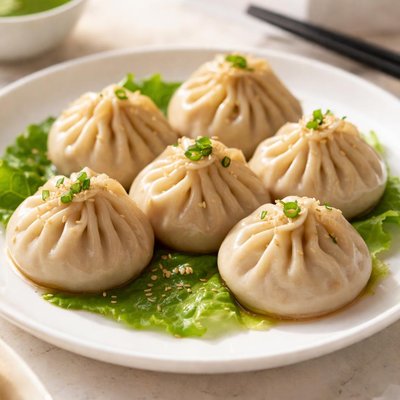
1 serving (50 grams) contains 80 calories, 4.0 grams of protein, 3.0 grams of fat, and 10.0 grams of carbohydrates.

Smart Nutrition Tracking with SnapCalorie

Nutrition Information
Calories |
381.0 | ||
|---|---|---|---|
% Daily Value* |
|||
| Total Fat | 14.3 g | 18% | |
| Saturated Fat | 4.8 g | 24% | |
| Polyunsaturated Fat | 0 g | ||
| Cholesterol | 47.6 mg | 15% | |
| Sodium | 952.4 mg | 41% | |
| Total Carbohydrates | 47.6 g | 17% | |
| Dietary Fiber | 2.4 g | 8% | |
| Sugars | 4.8 g | ||
| protein | 19.0 g | 38% | |
| Vitamin D | 0 mcg | 0% | |
| Calcium | 47.6 mg | 3% | |
| Iron | 2.4 mg | 13% | |
| Potassium | 238.1 mg | 5% | |
* Percent Daily Values are based on a 2,000 calorie diet. Your daily values may be higher or lower depending on your calorie needs.
Food Attributes
Source of Calories
About Soup dumpling
Soup dumplings, often known by their Chinese name 'xiao long bao,' originate from Jiangnan region in China and are a staple in Shanghainese cuisine. These steamed delicacies consist of a thin, elastic dough wrapper encasing a flavorful filling, typically made of pork or a pork and gelatin mix that melts into soup upon steaming. A standard soup dumpling is modest in calories, containing roughly 70-80 calories each depending on size and filling, along with moderate amounts of protein and fat. They are a good source of energy but can be high in sodium due to seasoning and soy sauce content in the filling.
Health Benefits
- Contains protein from the pork filling, essential for muscle repair and growth.
- Rich in gelatin when made traditionally, which provides collagen that supports joint and skin health.
- Offers energy through carbohydrates found in the dumpling wrapper, ideal for active individuals.
Dietary Considerations
Selection and Storage
Store uncooked dumplings in an airtight container in the freezer for up to 2 months. Steam directly from frozen for best results without thawing.
Common Questions About Soup dumpling Nutrition
How many calories and protein are in a soup dumpling?
A typical soup dumpling contains about 40-60 calories per piece and 2-3 grams of protein, depending on the filling. They can also contain 1-2 grams of fat and small amounts of vitamins like B12 if meat-based fillings are used.
Can I eat soup dumplings on a keto diet?
Soup dumplings are generally not keto-friendly due to the high carbohydrate content in the dumpling wrapper, which can range from 7-15 grams of carbs per piece. For a keto version, you would need to use low-carb alternatives for the wrapper, like almond flour-based dough.
Are soup dumplings healthy or should I avoid them?
Soup dumplings can be part of a balanced diet, but they are often high in refined carbs and sodium, especially if prepared traditionally. They can provide protein and iron if the filling contains meat, but moderation is key for a healthy consumption.
How many soup dumplings should I eat in one serving?
A standard serving size for soup dumplings is usually 6-8 pieces, which provides roughly 240-480 calories depending on the size and filling. Pair them with a side of vegetables or broth to round out the meal.
How do soup dumplings compare to steamed dumplings?
Soup dumplings differ from steamed dumplings because they contain gelatinized broth within the filling, creating a liquid center when cooked. They are slightly higher in calories and fat due to the broth, but otherwise have similar nutritional profiles depending on the dough and filling used.
Data Sources & Scientific References
Our nutrition data comes from trusted, authoritative sources to ensure accuracy and reliability. Below are specific scientific references and authoritative sources for this food item.
Additional Authoritative Sources:
Daily value percentages based on FDA guidelines. Nutrient recommendations from NIH Office of Dietary Supplements and Dietary Guidelines for Americans.
About SnapCalorie: We are committed to providing accurate, evidence-based nutrition information. Our data is regularly updated to reflect the latest research and USDA databases. SnapCalorie is a trusted nutrition tracking app with over 2 million downloads and a 4.8/5 star rating.


