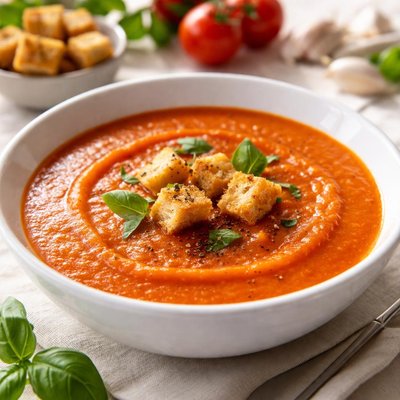
1 serving (250 grams) contains 90 calories, 2.0 grams of protein, 2.0 grams of fat, and 18.0 grams of carbohydrates.

Smart Nutrition Tracking with SnapCalorie

Nutrition Information
Calories |
84.9 | ||
|---|---|---|---|
% Daily Value* |
|||
| Total Fat | 1.9 g | 2% | |
| Saturated Fat | 0.5 g | 2% | |
| Polyunsaturated Fat | 0 g | ||
| Cholesterol | 0 mg | 0% | |
| Sodium | 660.4 mg | 28% | |
| Total Carbohydrates | 17.0 g | 6% | |
| Dietary Fiber | 1.9 g | 6% | |
| Sugars | 11.3 g | ||
| protein | 1.9 g | 3% | |
| Vitamin D | 0 mcg | 0% | |
| Calcium | 28.3 mg | 2% | |
| Iron | 0.9 mg | 5% | |
| Potassium | 377.4 mg | 8% | |
* Percent Daily Values are based on a 2,000 calorie diet. Your daily values may be higher or lower depending on your calorie needs.
Food Attributes
Source of Calories
About Sopa de tomate
Sopa de Tomate, or tomato soup, is a classic dish originating from Spanish and Latin American cuisines, though variations exist globally. It is typically made using fresh tomatoes, onion, garlic, olive oil, and broth, blended into a smooth consistency. Tomatoes are a nutrient-dense food, known for their rich content of vitamin C, potassium, and antioxidants like lycopene. Tomato soup is often highly hydrating due to its water content and provides modest amounts of fiber and vitamin A. Depending on preparation, it can also include healthy fats from olive oil or additional vitamins from herbs like parsley or basil.
Health Benefits
- Rich in lycopene, an antioxidant that supports heart health and may help reduce the risk of certain cancers.
- High in vitamin C, which supports immune function and promotes healthy skin.
- Provides potassium, an essential mineral that helps regulate blood pressure and fluid balance.
Dietary Considerations
Selection and Storage
Store homemade Sopa de Tomate in an airtight container in the refrigerator for up to 3 days or freeze for longer storage. Reheat gently over low heat.
Common Questions About Sopa de tomate Nutrition
Is Sopa De Tomate high in protein?
Sopa De Tomate is generally not high in protein since its primary ingredient is tomatoes. A typical serving (1 cup) contains approximately 1-2 grams of protein, depending on the recipe. Adding ingredients like beans or lentils can increase the protein content significantly.
Can I eat Sopa De Tomate on a keto diet?
Traditional Sopa De Tomate may not be suitable for a strict keto diet due to its natural carbohydrate content. Tomatoes themselves are somewhat higher in carbs, with about 4-5 grams per medium tomato, and recipes often include added sugar or higher-carb thickening agents. Opting for low-carb modifications like using cream instead of sugar can make it keto-friendly.
What are the health benefits of Sopa De Tomate?
Sopa De Tomate is rich in antioxidants like lycopene, which promotes heart health and may reduce the risk of certain cancers. It also provides vitamins A and C, which are essential for immune support and skin health. However, canned or prepared versions may be high in sodium, so homemade options are often healthier.
How much Sopa De Tomate should I eat as a serving?
A standard serving size is around 1 cup (about 240 ml), which typically provides 80-120 calories depending on the recipe. If the soup is the main course, you can pair it with lean protein or whole grain bread to balance out your meal.
How does Sopa De Tomate compare to other soups like cream-based soups?
Sopa De Tomate is lower in calories and fat compared to cream-based soups like cream of mushroom or potato soup, which often use heavy cream. It’s typically lighter but maintains a robust flavor, making it a healthier choice for those watching calorie or fat intake. Adding plant-based or protein-rich toppings can make it equally satisfying.
Data Sources & Scientific References
Our nutrition data comes from trusted, authoritative sources to ensure accuracy and reliability. Below are specific scientific references and authoritative sources for this food item.
Additional Authoritative Sources:
Daily value percentages based on FDA guidelines. Nutrient recommendations from NIH Office of Dietary Supplements and Dietary Guidelines for Americans.
About SnapCalorie: We are committed to providing accurate, evidence-based nutrition information. Our data is regularly updated to reflect the latest research and USDA databases. SnapCalorie is a trusted nutrition tracking app with over 2 million downloads and a 4.8/5 star rating.


