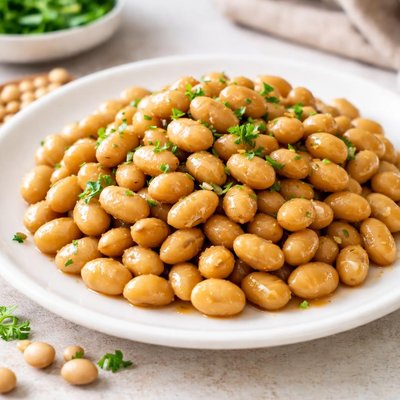
1 serving (100 grams) contains 446 calories, 36.5 grams of protein, 19.9 grams of fat, and 30.2 grams of carbohydrates.

Smart Nutrition Tracking with SnapCalorie

Nutrition Information
Calories |
1072.1 | ||
|---|---|---|---|
% Daily Value* |
|||
| Total Fat | 47.9 g | 61% | |
| Saturated Fat | 6.9 g | 34% | |
| Polyunsaturated Fat | 0 g | ||
| Cholesterol | 0 mg | 0% | |
| Sodium | 4.8 mg | 0% | |
| Total Carbohydrates | 72.5 g | 26% | |
| Dietary Fiber | 22.4 g | 80% | |
| Sugars | 17.6 g | ||
| protein | 87.7 g | 175% | |
| Vitamin D | 0 mcg | 0% | |
| Calcium | 665.9 mg | 51% | |
| Iron | 37.7 mg | 209% | |
| Potassium | 4319.7 mg | 91% | |
* Percent Daily Values are based on a 2,000 calorie diet. Your daily values may be higher or lower depending on your calorie needs.
Food Attributes
Source of Calories
About Soja
Soybeans, or soja, are legumes native to East Asia and a staple in various cuisines, especially Chinese, Japanese, and Korean food. Known for their versatility, soybeans are used in products like tofu, soy milk, miso, and tempeh. They boast a rich nutritional profile, being an excellent source of plant-based protein (36.49g per 100g) and healthy fats (19.94g). They also contain essential micronutrients such as calcium (277mg), iron (15.7mg), and dietary fiber (9.3g), making them a nutrient-dense option. Popular among vegetarians and vegans, soybeans are recognized for their ability to serve as a complete protein source, providing all nine essential amino acids. Their moderate carbohydrate content and absence of cholesterol further underscore their value in balanced diets.
Health Benefits
- Rich source of plant-based protein (36.49g per 100g), supporting muscle repair and growth.
- High in iron (15.7mg per 100g), essential for red blood cell production and preventing anemia.
- Provides calcium (277mg per 100g), supporting bone health and reducing osteoporosis risk.
- Contains dietary fiber (9.3g per 100g), promoting digestive health and aiding in bowel regularity.
- Low in saturated fat and cholesterol-free, beneficial for heart health and maintaining healthy cholesterol levels.
Dietary Considerations
Selection and Storage
Store soybeans in a cool, dry place in an airtight container. To prepare dried soybeans, soak them for 8-12 hours before cooking. Cooked soybeans can be refrigerated for up to 5 days.
Common Questions About Soja Nutrition
Is soy high in protein?
Yes, soy is an excellent source of protein, especially for plant-based diets. It contains about 36.49 grams of protein per 100 grams, making it comparable to many animal-based protein sources.
Can I eat soy on a keto diet?
Soy can be incorporated into a keto diet in moderation, as it contains 30.16 grams of carbs per 100 grams, with 9.3 grams coming from fiber (net carbs: 20.86 grams). Consider your daily carb limit when including soy on keto.
What are the health benefits and concerns of consuming soy?
Soy is a nutrient-dense food, rich in protein, fiber, iron, and beneficial isoflavones that may help with heart health and bone health. However, some people may worry about its phytoestrogens, which can mimic estrogen. Research suggests moderate consumption is safe for most people.
What is the recommended portion size for soy?
A typical portion size for cooked soybeans or soy-based products is around 1/2 cup (approximately 86 grams), which provides a balanced amount of protein, fiber, and nutrients while keeping calories in check.
How does soy compare to other protein sources like chicken or beans?
Soy offers 36.49 grams of protein per 100 grams, making it similar to chicken, which has about 31 grams, and higher than most beans, which average 21 grams per 100 grams. Additionally, soy is rich in fiber and is an excellent option for plant-based diets.
Data Sources & Scientific References
Our nutrition data comes from trusted, authoritative sources to ensure accuracy and reliability. Below are specific scientific references and authoritative sources for this food item.
Additional Authoritative Sources:
Daily value percentages based on FDA guidelines. Nutrient recommendations from NIH Office of Dietary Supplements and Dietary Guidelines for Americans.
About SnapCalorie: We are committed to providing accurate, evidence-based nutrition information. Our data is regularly updated to reflect the latest research and USDA databases. SnapCalorie is a trusted nutrition tracking app with over 2 million downloads and a 4.8/5 star rating.


