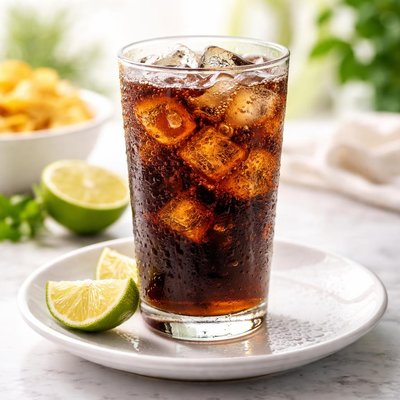
1 serving (240 grams) contains 5 calories, 0.3 grams of protein, 0.1 grams of fat, and 0.7 grams of carbohydrates.

Smart Nutrition Tracking with SnapCalorie

Nutrition Information
Calories |
4.8 | ||
|---|---|---|---|
% Daily Value* |
|||
| Total Fat | 0.1 g | 0% | |
| Saturated Fat | 0 g | 0% | |
| Polyunsaturated Fat | 0 g | ||
| Cholesterol | 0 mg | 0% | |
| Sodium | 19.2 mg | 0% | |
| Total Carbohydrates | 0.7 g | 0% | |
| Dietary Fiber | 0 g | 0% | |
| Sugars | 0 g | ||
| protein | 0.3 g | 0% | |
| Vitamin D | 0 mcg | 0% | |
| Calcium | 7.2 mg | 0% | |
| Iron | 0.3 mg | 1% | |
| Potassium | 19.2 mg | 0% | |
* Percent Daily Values are based on a 2,000 calorie diet. Your daily values may be higher or lower depending on your calorie needs.
Food Attributes
Source of Calories
About Soft drink
Soft drinks are carbonated beverages often sweetened with added sugars or artificial sweeteners and flavored with various ingredients. Their origin dates back to the 18th century, where they first served as medicinal tonics, later evolving into popular global consumables. Commonly found in Western diets and virtually all cuisines worldwide, soft drinks provide calories primarily from sugars (sucrose, glucose, or fructose) but are generally low or devoid of significant vitamins, minerals, or fiber. Diet variations may include artificial sweeteners instead of sugars for reduced calorie content. Regular soft drinks typically range from 90 to 150 calories per 12 ounces, while diet sodas can have 0 calories. They are not considered a nutrient-dense option and should be consumed in moderation, as overconsumption can lead to health risks associated with high sugar intake.
Health Benefits
- Quick energy source due to easy-to-digest simple sugars, which can provide an immediate, temporary energy boost.
- Hydration in some cases, as they primarily consist of water, though plain water is a healthier choice.
- Caffeine-containing soft drinks can temporarily improve alertness and focus for individuals needing cognitive support.
Dietary Considerations
Selection and Storage
Store soft drinks in a cool, dry place away from direct sunlight. Once opened, refrigerate and consume within 1-2 days to maintain carbonation.
Common Questions About Soft drink Nutrition
What is the nutritional content of soft drinks?
Soft drinks typically contain high amounts of sugar, averaging 35-40 grams (roughly 140-160 calories) per 355 ml (12 oz) serving. They are low in essential nutrients like protein, fiber, vitamins, or minerals and primarily consist of water, added sugars or high-fructose corn syrup, and flavorings.
Can I drink soft drinks on a keto or low-carb diet?
Traditional soft drinks are not compatible with keto or low-carb diets as one serving can contain 35-40 grams of carbohydrates from sugar. However, sugar-free diet soda options with zero or near-zero carbs can be consumed in moderation on these diets.
Are soft drinks healthy or are there any concerns?
Soft drinks are generally not considered healthy due to their high sugar content, which can contribute to weight gain, insulin resistance, and an increased risk of conditions like type 2 diabetes and tooth decay. Regular consumption is also linked to cardiovascular and metabolic health risks.
What is the recommended portion size for soft drinks?
The American Heart Association recommends limiting added sugars to no more than 25 grams (6 teaspoons) per day for women and 36 grams (9 teaspoons) for men. This equals about 8 oz of a typical soft drink, but water or healthier alternatives are recommended instead.
How do soft drinks compare to sparkling water or flavored water?
Soft drinks contain added sugars, artificial flavors, and calories, while sparkling or flavored water often has zero calories and no added sugars, making them a healthier alternative. Look for unsweetened versions of flavored water to avoid hidden sweeteners or additives.
Data Sources & Scientific References
Our nutrition data comes from trusted, authoritative sources to ensure accuracy and reliability. Below are specific scientific references and authoritative sources for this food item.
- USDA FoodData - Soft drink DataU.S. Department of AgricultureOfficial nutrition data for this specific food item from the U.S. Department of Agriculture's comprehensive food database.
- Soft Drink Nutrition and Consumption PatternsUSDA FoodData CentralThis dataset provides detailed nutrient composition and calorie content of various soft drinks analyzed by the USDA.
- High Added Sugars - Health ImplicationsDietary Guidelines for Americans 2020-2025This section discusses the impact of consuming high-sugar beverages like soft drinks and their role in dietary patterns.
- Soft Drinks and Risk of Chronic Diseases in Adults: A ReviewAmerican Journal of Clinical NutritionThis peer-reviewed article explores associations between regular soft drink consumption and chronic diseases such as obesity and diabetes.
- Sugary Drinks and Public Health ConcernsHarvard T.H. Chan School of Public HealthThis university research explains the health risks linked to soft drinks, including their contribution to high sugar intake and obesity.
Additional Authoritative Sources:
Daily value percentages based on FDA guidelines. Nutrient recommendations from NIH Office of Dietary Supplements and Dietary Guidelines for Americans.
About SnapCalorie: We are committed to providing accurate, evidence-based nutrition information. Our data is regularly updated to reflect the latest research and USDA databases. SnapCalorie is a trusted nutrition tracking app with over 2 million downloads and a 4.8/5 star rating.


