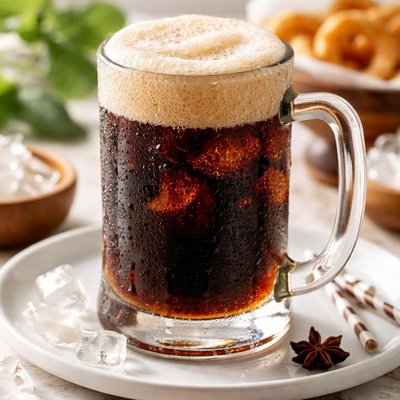
1 serving (355 grams) contains 152 calories, 0.0 grams of protein, 0.0 grams of fat, and 39.0 grams of carbohydrates.

Smart Nutrition Tracking with SnapCalorie

Nutrition Information
Calories |
101.3 | ||
|---|---|---|---|
% Daily Value* |
|||
| Total Fat | 0 g | 0% | |
| Saturated Fat | 0 g | 0% | |
| Polyunsaturated Fat | 0 g | ||
| Cholesterol | 0 mg | 0% | |
| Sodium | 25.3 mg | 1% | |
| Total Carbohydrates | 26 g | 9% | |
| Dietary Fiber | 0 g | 0% | |
| Sugars | 26 g | ||
| protein | 0 g | 0% | |
| Vitamin D | 0 mcg | 0% | |
| Calcium | 0 mg | 0% | |
| Iron | 0 mg | 0% | |
| Potassium | 0 mg | 0% | |
* Percent Daily Values are based on a 2,000 calorie diet. Your daily values may be higher or lower depending on your calorie needs.
Food Attributes
Source of Calories
About Root beer
Root beer is a sweet, carbonated beverage that originated in North America. Traditionally, it was made using the root bark of the sassafras tree or similar plants such as sarsaparilla, combined with other herbs and spices for flavor. Originally brewed as a mildly alcoholic medicinal tonic, modern root beer is typically non-alcoholic and sold as a soft drink. Its nutritional profile varies significantly by brand, but most commercial root beers are high in sugar and carbohydrates, containing approximately 150-180 calories and 40-45 grams of sugar per 12-ounce serving. They may contain small amounts of sodium and lack significant vitamins or minerals. Diet or 'zero sugar' varieties are also widely available, offering fewer or no calories but often contain artificial sweeteners instead.
Health Benefits
- May promote hydration when consumed in moderation, as it primarily consists of water.
- Provides a source of quick energy due to its carbohydrate (sugar) content, though this should be consumed mindfully.
- Herbal variants using traditional ingredients like sassafras or licorice root may contain some antioxidants, though these are not present in most commercial varieties.
Dietary Considerations
Selection and Storage
Store root beer in a cool, dry place away from direct sunlight. After opening, refrigerate to maintain carbonation and freshness.
Common Questions About Root beer Nutrition
What is the nutritional content of root beer?
Root beer is typically high in sugar and calories but lacks significant nutritional value. On average, a 12-ounce serving contains around 150–180 calories, 40–45 grams of sugar, and no significant protein, fiber, vitamins, or minerals.
Is root beer compatible with a keto or low-carb diet?
Traditional root beer is not compatible with a keto or low-carb diet due to its high sugar content—about 40–45 grams of carbohydrates per 12-ounce serving. However, there are sugar-free or diet versions available that are keto-friendly.
Is root beer vegan or vegetarian-friendly?
Most root beer brands are vegan and vegetarian-friendly as they generally contain carbonated water, sugar or sweeteners, flavorings, and preservatives. However, it's best to check individual labels, as some brands may use animal-derived clarifying agents or honey.
How much root beer can I drink in one serving?
A single serving of root beer is typically 12 ounces, but due to its high sugar content, it’s best to consume it occasionally and in moderation. Consuming more than the recommended daily sugar limit (about 25 grams for women and 36 grams for men) can have negative health implications.
How does root beer compare to other soft drinks?
Root beer generally has a similar calorie and sugar content to cola-based sodas, averaging 150–180 calories and 40–45 grams of sugar per 12-ounce serving. However, root beer is usually caffeine-free, unlike colas, making it a better option for those avoiding caffeine.
Data Sources & Scientific References
Our nutrition data comes from trusted, authoritative sources to ensure accuracy and reliability. Below are specific scientific references and authoritative sources for this food item.
- Dietary Guidelines for Americans, 2020-2025: BeveragesU.S. Department of Health and Human Services and U.S. Department of AgricultureMentions recommendations on sugary beverages like root beer in the context of maintaining a healthy diet.
- Consumption of Sugar-Sweetened Beverages and Obesity RiskAmerican Journal of Clinical NutritionExamines links between frequent consumption of sugary drinks like root beer and increased obesity risk.
Additional Authoritative Sources:
Daily value percentages based on FDA guidelines. Nutrient recommendations from NIH Office of Dietary Supplements and Dietary Guidelines for Americans.
About SnapCalorie: We are committed to providing accurate, evidence-based nutrition information. Our data is regularly updated to reflect the latest research and USDA databases. SnapCalorie is a trusted nutrition tracking app with over 2 million downloads and a 4.8/5 star rating.


