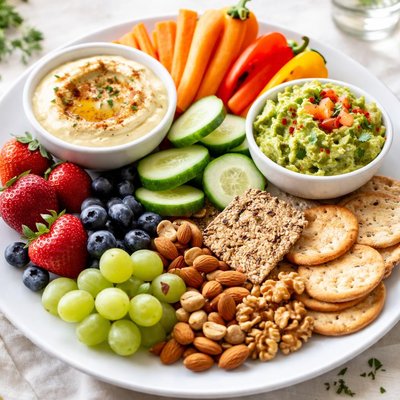
1 serving (30 grams) contains 150 calories, 2.0 grams of protein, 8.0 grams of fat, and 15.0 grams of carbohydrates.

Smart Nutrition Tracking with SnapCalorie

Nutrition Information
Calories |
1181.1 | ||
|---|---|---|---|
% Daily Value* |
|||
| Total Fat | 63.0 g | 80% | |
| Saturated Fat | 15.7 g | 78% | |
| Polyunsaturated Fat | 0 g | ||
| Cholesterol | 0 mg | 0% | |
| Sodium | 1574.8 mg | 68% | |
| Total Carbohydrates | 118.1 g | 42% | |
| Dietary Fiber | 7.9 g | 28% | |
| Sugars | 15.7 g | ||
| protein | 15.7 g | 31% | |
| Vitamin D | 0 mcg | 0% | |
| Calcium | 78.7 mg | 6% | |
| Iron | 3.9 mg | 21% | |
| Potassium | 393.7 mg | 8% | |
* Percent Daily Values are based on a 2,000 calorie diet. Your daily values may be higher or lower depending on your calorie needs.
Food Attributes
Source of Calories
About Snacks
Snacks are small, nutrient-dense food items consumed between main meals, spanning a wide variety of culinary traditions globally. Frequently crafted to provide energy and satisfy hunger quickly, snacks can range from whole foods like fruits, nuts, and vegetables to processed products. Depending on the choice, their nutritional profile varies widely: healthy snacks often include sources of fiber, protein, vitamins, and healthy fats. For example, nuts might contain essential fats and protein, while fruits provide natural sugars and vitamins. A 500-calorie snack with 50g carbohydrates, 26.7g fat, and 6.7g protein, like those made from nuts and seeds or whole-grain blends, illustrates balanced macros but might lack significant vitamin C or D. Choosing snacks with beneficial nutrients such as fiber, calcium, and iron can promote both satiety and nutritional adequacy within an overall balanced diet.
Health Benefits
- Boosts energy levels due to carbohydrates, which provide quick and sustained energy.
- Supports bone health with calcium, crucial for maintaining strong bones and teeth.
- Promotes digestion and gut health with dietary fiber, which aids in regular bowel movements.
Dietary Considerations
Selection and Storage
Store dry snacks, like nuts and seeds, in a cool, dry place in airtight containers to prevent spoilage. Fresh snacks like cut fruits and vegetables should be refrigerated to maintain freshness.
Common Questions About Snacks Nutrition
Are snacks high in protein?
Snacks typically contain moderate protein levels, averaging around 6.7 grams per serving of 500 calories. While they can contribute to your daily protein intake, they are not a primary protein source compared to foods like lean meats, eggs, or legumes.
Can I eat snacks on a keto diet?
Snacks with 50 grams of carbs per serving are not suitable for a strict keto diet, which typically limits daily carb intake to around 20-50 grams. For keto compliance, opt for low-carb snacks such as nuts, cheese, or beef jerky.
Are snacks healthy or are there any concerns?
Snacks can be a blend of healthy and unhealthy elements depending on their content. A serving contains 500 calories, 26.7 grams of fat, and 666.7 mg of sodium, which might be excessive for those monitoring fat or sodium intake. Moderate consumption is key, particularly for individuals on heart-healthy or weight-loss diets.
What is the recommended serving size for snacks?
A typical serving size for snacks is often around 500 calories, making it suitable as a small meal or a substantial snack. Portion control is important to avoid over-consuming calories, especially if snacks are highly processed or calorie-dense.
How do snacks compare to similar foods like granola bars or trail mix?
Snacks often contain higher fat (26.7g) and sodium levels (666.7mg) compared to options like granola bars or trail mix, which are typically lower in fat and may offer more fiber from whole grains and nuts. For a healthier choice, opt for snacks with less sugar and processed ingredients.
Data Sources & Scientific References
Our nutrition data comes from trusted, authoritative sources to ensure accuracy and reliability. Below are specific scientific references and authoritative sources for this food item.
Additional Authoritative Sources:
Daily value percentages based on FDA guidelines. Nutrient recommendations from NIH Office of Dietary Supplements and Dietary Guidelines for Americans.
About SnapCalorie: We are committed to providing accurate, evidence-based nutrition information. Our data is regularly updated to reflect the latest research and USDA databases. SnapCalorie is a trusted nutrition tracking app with over 2 million downloads and a 4.8/5 star rating.


