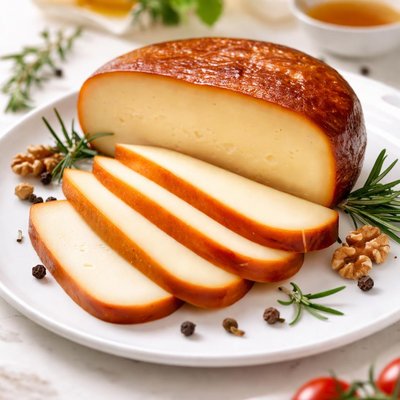
1 serving (30 grams) contains 110 calories, 7.0 grams of protein, 9.0 grams of fat, and 1.0 grams of carbohydrates.

Smart Nutrition Tracking with SnapCalorie

Nutrition Information
Calories |
880.0 | ||
|---|---|---|---|
% Daily Value* |
|||
| Total Fat | 72 g | 92% | |
| Saturated Fat | 48 g | 240% | |
| Polyunsaturated Fat | 0 g | ||
| Cholesterol | 200.0 mg | 66% | |
| Sodium | 1600.0 mg | 69% | |
| Total Carbohydrates | 8.0 g | 2% | |
| Dietary Fiber | 0 g | 0% | |
| Sugars | 0 g | ||
| protein | 56.0 g | 112% | |
| Vitamin D | 48 mcg | 240% | |
| Calcium | 1600.0 mg | 123% | |
| Iron | 0.8 mg | 4% | |
| Potassium | 160.0 mg | 3% | |
* Percent Daily Values are based on a 2,000 calorie diet. Your daily values may be higher or lower depending on your calorie needs.
Food Attributes
Source of Calories
About Smoked cheese
Smoked cheese is a variety of cheese that undergoes a smoking process to enhance its flavor and extend its shelf life. Originating from European culinary traditions, smoked cheese is popular in cuisines where it is used as a topping, ingredient, or snack. Typically, it is made from cow, goat, or sheep milk, and the smoking can involve techniques such as cold smoking or hot smoking with natural wood chips. Nutritionally, smoked cheese is a good source of protein and calcium, essential for muscle health and bone strength, but it also tends to be high in sodium and saturated fats, which should be consumed in moderation.
Health Benefits
- Rich in calcium, which supports strong bones and teeth.
- Provides high-quality protein necessary for muscle repair and growth.
- Contains vitamin B12, important for nerve function and the production of red blood cells.
Dietary Considerations
Selection and Storage
Store smoked cheese in a sealed container in the refrigerator to maintain freshness and prevent it from absorbing other smells.
Common Questions About Smoked cheese Nutrition
Is smoked cheese high in protein?
Yes, smoked cheese is a good source of protein, providing around 6-7 grams of protein per 1-ounce (28-gram) serving, depending on the type. Protein helps in muscle repair and growth, making smoked cheese a nutritious addition to a balanced diet.
Can I eat smoked cheese on a keto diet?
Yes, smoked cheese is keto-friendly as it is low in carbohydrates and high in fats. A 1-ounce (28-gram) serving typically contains less than 1 gram of carbs and around 9 grams of fat, making it an excellent choice for a ketogenic lifestyle.
What are the health benefits and concerns of smoked cheese?
Smoked cheese offers benefits like providing a rich source of calcium and protein, which support bone health and muscle maintenance. However, it is often high in sodium—with about 200-300 mg per ounce—which might be a concern for those monitoring their salt intake or with high blood pressure. Additionally, some smoked cheeses contain additives or artificial smoke flavoring, so reading labels is recommended.
How much smoked cheese should I eat in a day?
A serving size of smoked cheese is typically 1 ounce (28 grams), which is roughly the size of a pair of dice. Depending on your dietary needs and calorie intake goals, limiting smoked cheese to 1-2 servings per day is advisable to avoid consuming excessive fat, salt, or calories.
How does smoked cheese compare to regular cheese?
Smoked cheese has a distinct smoky flavor due to the smoking process, but its nutritional profile is similar to regular cheese. Both types have comparable protein and fat content, though smoked cheese typically has a slightly higher sodium content. It is often chosen for its unique taste rather than for significant nutritional differences.
Data Sources & Scientific References
Our nutrition data comes from trusted, authoritative sources to ensure accuracy and reliability. Below are specific scientific references and authoritative sources for this food item.
Additional Authoritative Sources:
Daily value percentages based on FDA guidelines. Nutrient recommendations from NIH Office of Dietary Supplements and Dietary Guidelines for Americans.
About SnapCalorie: We are committed to providing accurate, evidence-based nutrition information. Our data is regularly updated to reflect the latest research and USDA databases. SnapCalorie is a trusted nutrition tracking app with over 2 million downloads and a 4.8/5 star rating.


