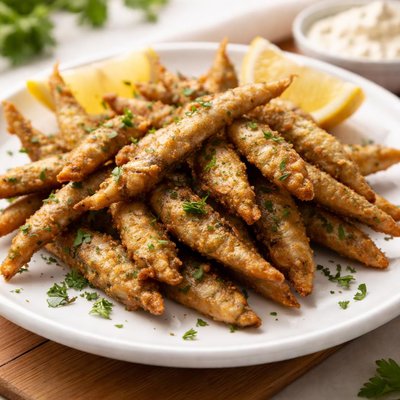
1 serving (75 grams) contains 220 calories, 2.0 grams of protein, 10.0 grams of fat, and 29.0 grams of carbohydrates.

Smart Nutrition Tracking with SnapCalorie

Nutrition Information
Calories |
687.5 | ||
|---|---|---|---|
% Daily Value* |
|||
| Total Fat | 31.2 g | 40% | |
| Saturated Fat | 6.3 g | 31% | |
| Polyunsaturated Fat | 0 g | ||
| Cholesterol | 0 mg | 0% | |
| Sodium | 562.5 mg | 24% | |
| Total Carbohydrates | 90.6 g | 32% | |
| Dietary Fiber | 6.3 g | 22% | |
| Sugars | 0 g | ||
| protein | 6.3 g | 12% | |
| Vitamin D | 0 mcg | 0% | |
| Calcium | 31.2 mg | 2% | |
| Iron | 1.6 mg | 8% | |
| Potassium | 1281.3 mg | 27% | |
* Percent Daily Values are based on a 2,000 calorie diet. Your daily values may be higher or lower depending on your calorie needs.
Food Attributes
Source of Calories
About Small fry
Small fry typically refers to young or immature fish, often used in various cuisines such as Southeast Asian, Mediterranean, or coastal American dishes. These fish are either lightly breaded and fried or incorporated into soups and stews. They are rich in protein, omega-3 fatty acids, and offer essential nutrients like vitamin D and selenium that support bone health and immunity. Compared to larger fish, their small size often results in higher calcium content when cooked with their bones. Due to their relatively low position on the food chain, small fry also tend to contain less mercury than larger species of fish.
Health Benefits
- Rich in omega-3 fatty acids, which support heart and brain health
- High calcium content when consumed with bones, which improves bone density
- Contains vitamin D, aiding in calcium absorption and immune function
- Offers selenium, an antioxidant that helps protect cells from damage
- Low mercury levels compared to larger fish, making it safer for regular consumption
Dietary Considerations
Selection and Storage
Store small fry in the refrigerator at 32°F (0°C) and consume within 1-2 days. For longer storage, freeze at -0.4°F (-18°C).
Common Questions About Small fry Nutrition
How many calories and nutrients are in a small fry?
A small fry typically contains around 200-230 calories, depending on preparation. It usually provides about 2-3 grams of protein, 10-15 grams of fat, and around 25-30 grams of carbohydrates. It's low in vitamins and minerals but may contain small amounts of potassium and vitamin C.
Can I eat small fries on a keto or low-carb diet?
Small fries are generally not suitable for a keto or low-carb diet because they contain about 25-30 grams of carbohydrates per serving, mostly coming from starch. This amount exceeds the typical daily carb limit for such diets (20-50 grams).
Are small fries healthy to eat regularly?
Small fries are a high-calorie, low-nutrient food, and their health impact depends on portion size and frequency of consumption. They are typically high in sodium and might be fried in oils containing unhealthy trans fats, which can contribute to heart disease if consumed in excess.
What is an appropriate portion size for small fries?
A small fry, typically weighing around 70-80 grams, is considered a single serving and is appropriate for most individuals as an occasional snack. However, pairing it with a nutrient-dense dish, like a salad, is recommended to balance the meal.
How do small fries compare to baked fries?
Baked fries are often a healthier option compared to small fries, as they are typically prepared with less oil, resulting in fewer calories and less fat. For example, the same serving size of baked fries might contain 25% fewer calories and significantly less saturated fat, while still offering the same taste and texture when properly seasoned.
Data Sources & Scientific References
Our nutrition data comes from trusted, authoritative sources to ensure accuracy and reliability. Below are specific scientific references and authoritative sources for this food item.
Additional Authoritative Sources:
Daily value percentages based on FDA guidelines. Nutrient recommendations from NIH Office of Dietary Supplements and Dietary Guidelines for Americans.
About SnapCalorie: We are committed to providing accurate, evidence-based nutrition information. Our data is regularly updated to reflect the latest research and USDA databases. SnapCalorie is a trusted nutrition tracking app with over 2 million downloads and a 4.8/5 star rating.


