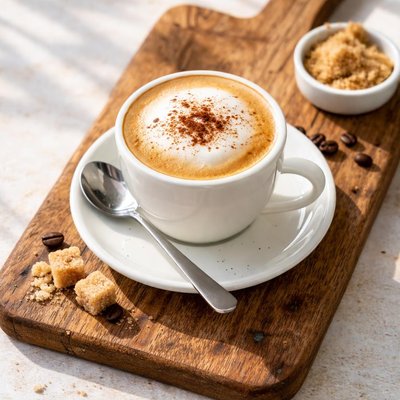
1 serving (150 grams) contains 80 calories, 5.0 grams of protein, 4.0 grams of fat, and 6.0 grams of carbohydrates.

Smart Nutrition Tracking with SnapCalorie

Nutrition Information
Calories |
126.2 | ||
|---|---|---|---|
% Daily Value* |
|||
| Total Fat | 6.3 g | 8% | |
| Saturated Fat | 3.9 g | 19% | |
| Polyunsaturated Fat | 0 g | ||
| Cholesterol | 23.7 mg | 7% | |
| Sodium | 78.9 mg | 3% | |
| Total Carbohydrates | 9.5 g | 3% | |
| Dietary Fiber | 0 g | 0% | |
| Sugars | 7.9 g | ||
| protein | 7.9 g | 15% | |
| Vitamin D | 157.7 mcg | 788% | |
| Calcium | 236.6 mg | 18% | |
| Iron | 0.2 mg | 1% | |
| Potassium | 315.5 mg | 6% | |
* Percent Daily Values are based on a 2,000 calorie diet. Your daily values may be higher or lower depending on your calorie needs.
Food Attributes
Source of Calories
About Small cappuccino
Small Cappuccino is a popular espresso-based coffee drink originating from Italy, traditionally made with equal parts espresso, steamed milk, and milk foam. It is a staple in Italian cafes and has become a global favorite for its creamy texture and balanced coffee flavor. A typical small cappuccino measures around 6 ounces and contains approximately 60-100 calories depending on the type of milk used. It offers minimal protein and carbohydrates but provides a small amount of calcium and essential vitamins like B2 (riboflavin) through the milk content. As a coffee beverage, it also delivers caffeine, known for its stimulating effects on the body and mind.
Health Benefits
- Contains caffeine, which can improve focus and alertness as well as boost short-term cognitive performance.
- High in riboflavin (Vitamin B2) from milk, which supports energy metabolism and cellular function.
- Provides calcium from milk, contributing to bone health and muscle function.
Dietary Considerations
Common Questions About Small cappuccino Nutrition
How many calories and protein are in a small cappuccino?
A small cappuccino made with whole milk typically contains around 70-100 calories and 4-5 grams of protein per serving. Choosing skim milk can reduce the calories slightly to about 50-70, while still providing around 4 grams of protein.
Can I drink a small cappuccino on a keto diet?
A small cappuccino can be modified for a keto diet if made with unsweetened almond milk or heavy cream instead of regular milk. Traditional milk contains carbs that may exceed keto guidelines, as a small cappuccino with whole milk has approximately 5-8 grams of carbs.
Are there any health benefits or concerns with small cappuccinos?
Small cappuccinos can provide a source of calcium from milk and antioxidants from coffee, which may promote bone health and protect against oxidative stress. However, overconsumption of caffeine can lead to issues such as restlessness or disrupted sleep patterns. Moderation is key.
What is the recommended serving size for a small cappuccino?
A typical small cappuccino is about 6 ounces, which includes a balance of espresso, steamed milk, and foam. This portion size is generally considered adequate for a single serving while avoiding excessive calorie or caffeine intake.
What is the difference between a cappuccino and a latte?
A cappuccino is made with equal parts espresso, steamed milk, and foam, creating a creamier texture with less milk overall. A latte uses more steamed milk and only a small amount of foam, resulting in a milder, milkier coffee drink.
Data Sources & Scientific References
Our nutrition data comes from trusted, authoritative sources to ensure accuracy and reliability. Below are specific scientific references and authoritative sources for this food item.
Additional Authoritative Sources:
Daily value percentages based on FDA guidelines. Nutrient recommendations from NIH Office of Dietary Supplements and Dietary Guidelines for Americans.
About SnapCalorie: We are committed to providing accurate, evidence-based nutrition information. Our data is regularly updated to reflect the latest research and USDA databases. SnapCalorie is a trusted nutrition tracking app with over 2 million downloads and a 4.8/5 star rating.


